


Cardiopulmonary exercise testing in congenital heart disease: (contra)indications and interpretation
- PMID: 19949648
- PMCID: PMC2773030
- DOI: 10.1007/BF03086289
Cardiopulmonary exercise testing in congenital heart disease: (contra)indications and interpretation
Abstract
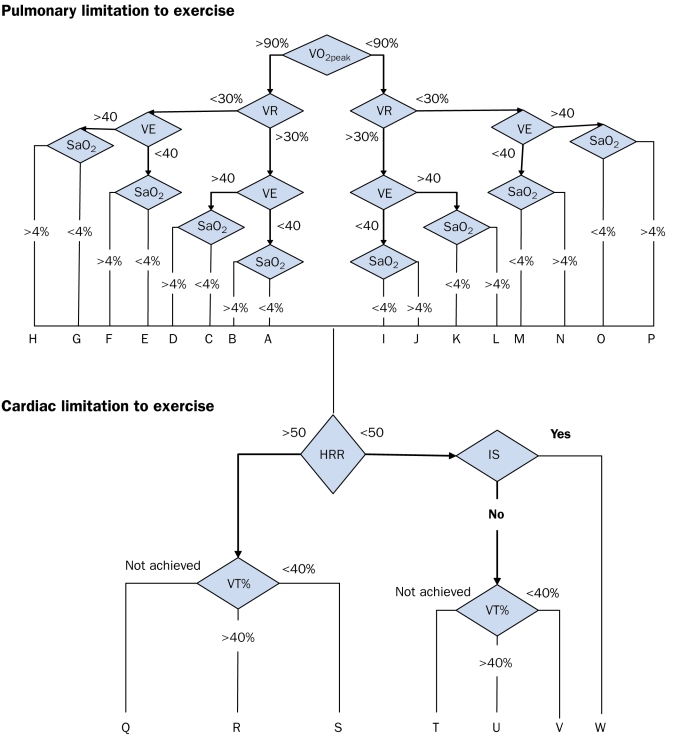
Cardiopulmonary exercise testing (CPET) in paediatric cardiology differs in many aspects from the tests performed in adult cardiology. Children's cardiovascular responses during exercise testing present different characteristics, particularly oxygen uptake, heart rate and blood pressure response, which are essential in interpreting haemodynamic data. Diseases that are associated with myocardial ischaemia are rare in children. The main indications for CPET in children are evaluation of exercise capacity and the identification of exercise-induced arrhythmias. In this article we will review the main indications for CPET in children with congenital heart disease, the contraindications for exercise testing and the indications for terminating an exercise test. Moreover, we will address the interpretation of gas exchange data from CPET in children with congenital heart disease. (Neth Heart J 2009;17:385-92.).
Keywords: children; ergometry; exercise physiology; exercise test; oxygen uptake.
Figures
References
-
- Connuck DM. The role of exercise stress testing in pediatric patients with heart disease. Pediatr Cardiol. 2005;20:45–52.
-
- Bar-Or O. Pathophysiological factors which limit the exercise capacity of the sick child. Med Sci Sports Exerc. 1986;18:276–82. - PubMed
-
- Lunt D, Briffa T, Briffa NK, Ramsay J. Physical activity levels of adolescents with congenital heart disease. Aust J Physiother. 2003; 49:43–50. - PubMed
-
- Rich MW. Heart failure disease management: a critical review. J Card Fail. 1999;5:64–75. - PubMed
-
- Alpert BS, Verrill DE, Flood NL, Boineau JP, Strong WB. Complications of ergometer exercise in children. Pediatr Cardiol. 1983; 4:91–6. - PubMed
LinkOut - more resources
Full Text Sources