


Adenosine in fibrosis
- PMID: 19949965
- PMCID: PMC3129242
- DOI: 10.1007/s10165-009-0251-4
Adenosine in fibrosis
Abstract
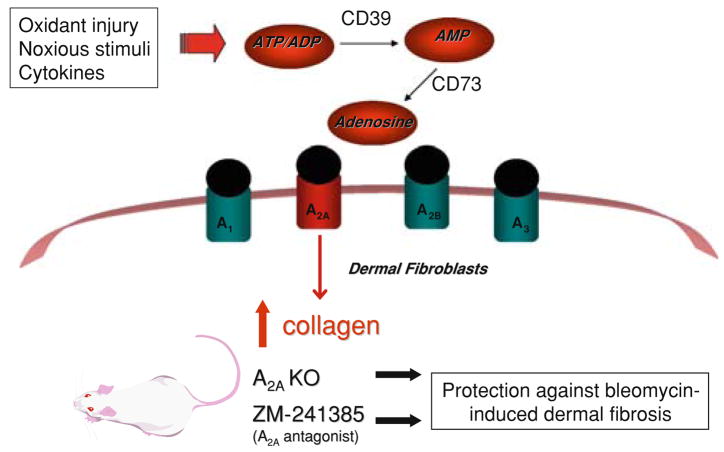
Adenosine is an endogenous autocoid that regulates a multitude of bodily functions. Its anti-inflammatory actions are well known to rheumatologists since it mediates many of the anti-inflammatory effects of a number of antirheumatic drugs such as methotrexate. However, inflammatory and tissue regenerative responses are intricately linked, with wound healing being a prime example. It has only recently been appreciated that adenosine has a key role in tissue regenerative and fibrotic processes. An understanding of these processes may shed new light on potential therapeutic options in diseases such as scleroderma where tissue fibrosis features prominently.
Conflict of interest statement
Figures
References
-
- Sattin A, Rall TW. The effect of adenosine and adenine nucleotides on the cyclic adenosine-3′,5′-phosphate content of guinea pig cerebral cortex slices. Mol Pharmacol. 1970;6:13–23. - PubMed
-
- Olah ME, Stiles GL. Adenosine receptor subtypes: characterization and therapeutic regulation. Ann Rev Pharmacol Toxicol. 1995;35:581–606. - PubMed
-
- Fredholm BB, Arslan G, Halldner L, Kull B, Schulte G, Wass-erman W. Structure and function of adenosine receptors and their genes. Naunyn Schmiedebergs Arch Pharmacol. 2000;362(4–5):364–74. - PubMed
-
- Montesinos MC, Cronstein BN. Role of P1 receptors in inflam-mation. In: Abbracchio MP, Williams M, editors. Handbook of experimental pharmacology, vol 151/II: Purinergic and pyrimid-inergic signaling II. Cardiovascular respiratory, immune, metabolic and gastrointestinal tract function. Berlin: Springer; 2001. pp. 303–21.
Publication types
MeSH terms
Substances
Grants and funding
LinkOut - more resources
Full Text Sources
Other Literature Sources
