


Inflammatory arthritis in caspase 1 gene-deficient mice: contribution of proteinase 3 to caspase 1-independent production of bioactive interleukin-1beta
- PMID: 19950280
- PMCID: PMC2993325
- DOI: 10.1002/art.25006
Inflammatory arthritis in caspase 1 gene-deficient mice: contribution of proteinase 3 to caspase 1-independent production of bioactive interleukin-1beta
Abstract
Objective: Caspase 1, a known cysteine protease, is a critical component of the inflammasome. Both caspase 1 and neutrophil serine proteases such as proteinase 3 (PR3) can process pro-interleukin-1beta (proIL-1beta), a crucial cytokine linked to the pathogenesis of rheumatoid arthritis. This study was undertaken to establish the relative importance of caspase 1 and serine proteases in mouse models of acute and chronic inflammatory arthritis.
Methods: Acute and chronic arthritis were induced in caspase 1-/- mice, and the lack of caspase 1 was investigated for its effects on joint swelling, cartilage metabolism, and histopathologic features. In addition, caspase 1 activity was inhibited in mice lacking active cysteine proteases, and the effects of dual blockade of caspase 1 and serine proteases on arthritis severity and histopathologic features were evaluated.
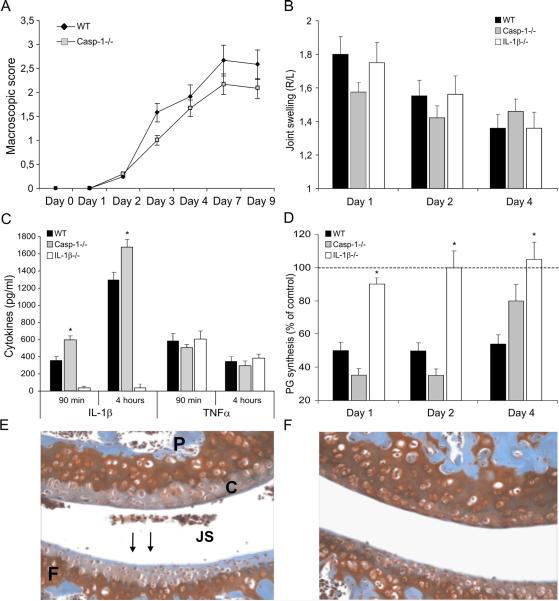
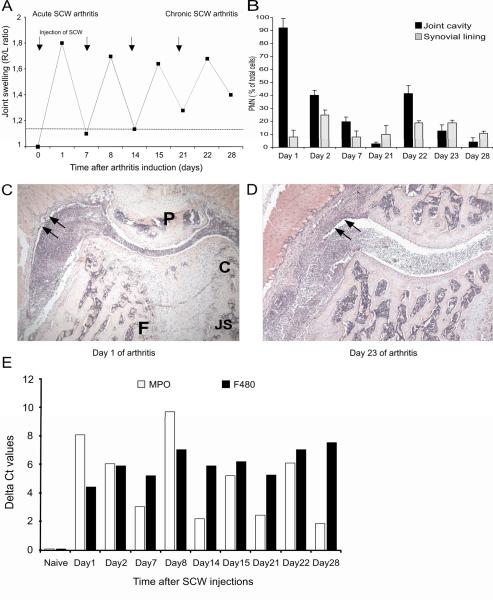
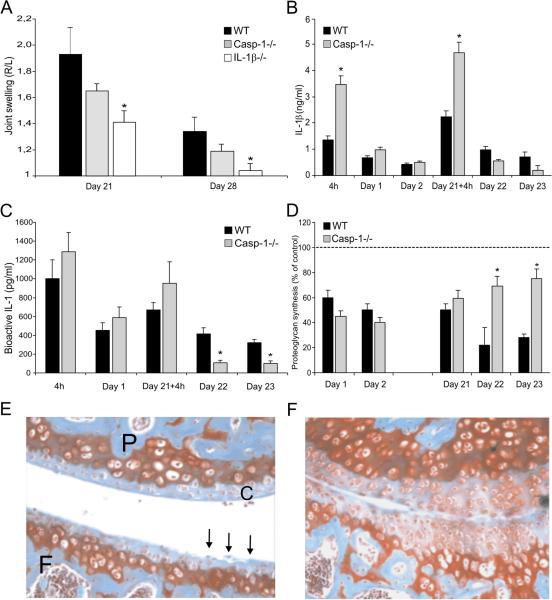
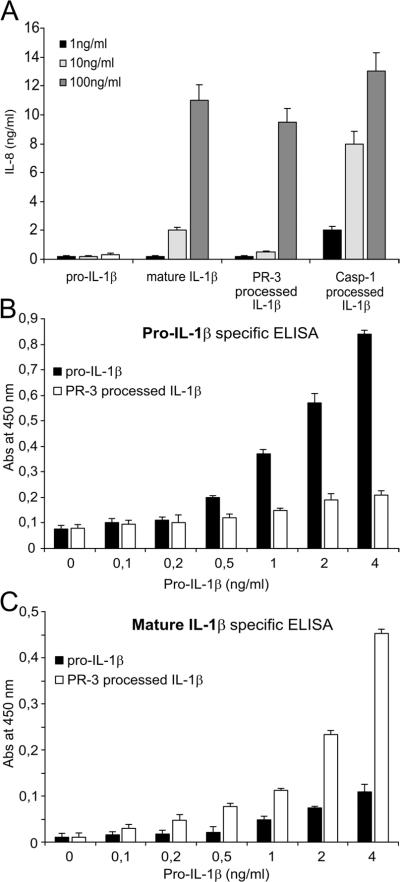
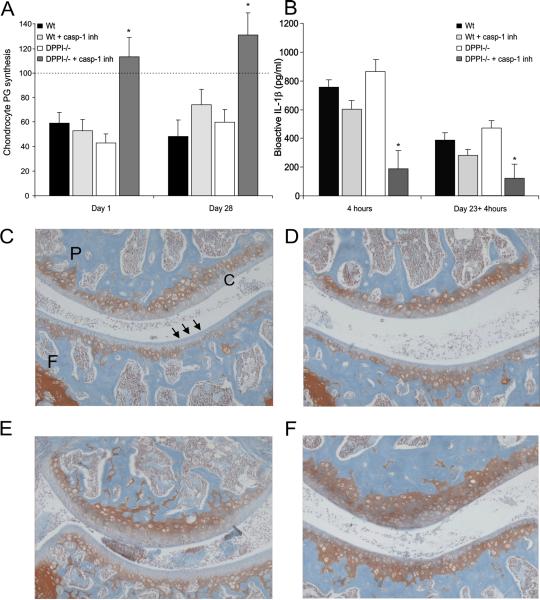
Results: Surprisingly, caspase 1-/- mice, in a model of acute (neutrophil-dominated) arthritis, developed joint swelling to an extent similar to that in wild-type control mice. Joint fluid concentrations of bioactive IL-1beta were comparable in caspase 1-/- mice and controls. In contrast, induction of chronic arthritis (characterized by minimal numbers of neutrophils) in caspase 1-/- mice led to reduced joint inflammation and less cartilage damage, implying a caspase 1-dependent role in this process. In mice lacking neutrophil serine PR3, inhibition of caspase 1 activity resulted in decreased bioactive IL-1beta concentrations in the synovial tissue and less suppression of chondrocyte anabolic function. In addition, dual blockade of both PR3 and caspase 1 led to protection against cartilage and bone destruction.
Conclusion: Caspase 1 deficiency does not affect neutrophil-dominated joint inflammation, whereas in chronic arthritis, the lack of caspase 1 results in reduced joint inflammation and cartilage destruction. These findings suggest that inhibitors of caspase 1 are not able to interfere with the whole spectrum of IL-1beta production, and therefore such inhibitors may be of therapeutic value only in inflammatory conditions in which limited numbers of neutrophils are present.
Figures
Comment in
-
Multiple interleukin-1beta-converting enzymes contribute to inflammatory arthritis.Arthritis Rheum. 2009 Dec;60(12):3524-30. doi: 10.1002/art.24961. Arthritis Rheum. 2009. PMID: 19950297 Free PMC article. No abstract available.
References
-
- Dinarello CA. Biologic basis for interleukin-1 in disease. Blood. 1996;87:2095–2147. - PubMed
-
- Wilson KP, Black JA, Thomson JA, Kim EE, Griffith JP, Navia MA, et al. Structure and mechanism of interleukin-1 beta converting enzyme. Nature. 1994;370:270–5. - PubMed
-
- Perregaux D, Gabel CA. Interleukin-1 beta maturation and release in response to ATP and nigericin. Evidence that potassium depletion mediated by these agents is a necessary and common feature of their activity. J Biol Chem. 1994;269:15195–203. - PubMed
Publication types
MeSH terms
Substances
Grants and funding
LinkOut - more resources
Full Text Sources
Other Literature Sources
Medical
