


Matrix metalloproteinase 13-deficient mice are resistant to osteoarthritic cartilage erosion but not chondrocyte hypertrophy or osteophyte development
- PMID: 19950295
- PMCID: PMC2832925
- DOI: 10.1002/art.25002
Matrix metalloproteinase 13-deficient mice are resistant to osteoarthritic cartilage erosion but not chondrocyte hypertrophy or osteophyte development
Abstract
Objective: To investigate the role of matrix metalloproteinase 13 (MMP-13; collagenase 3) in osteoarthritis (OA).
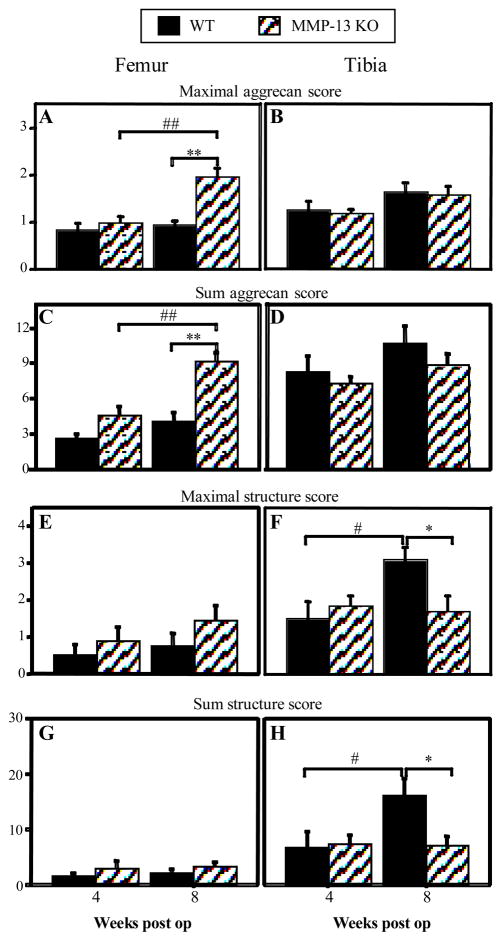
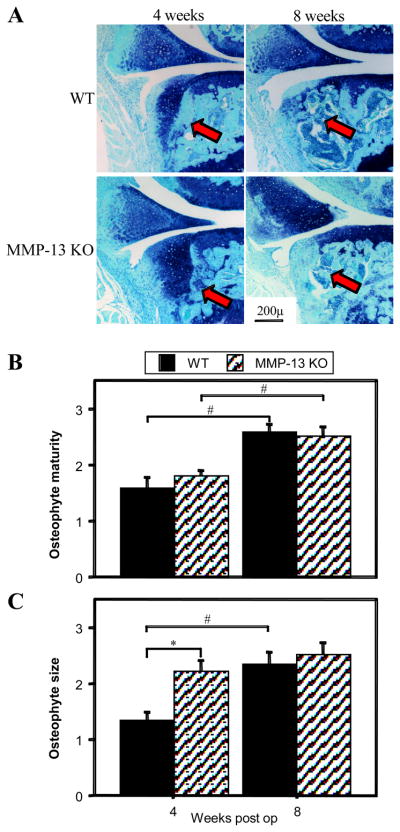
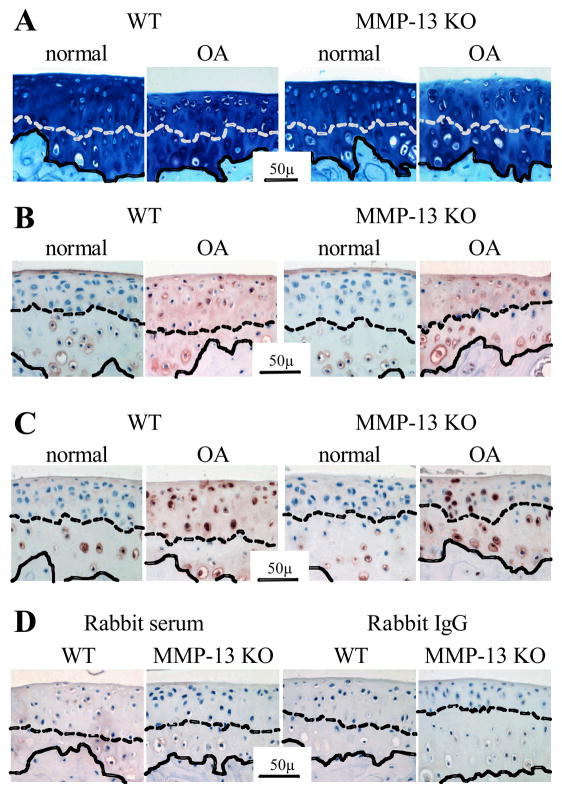
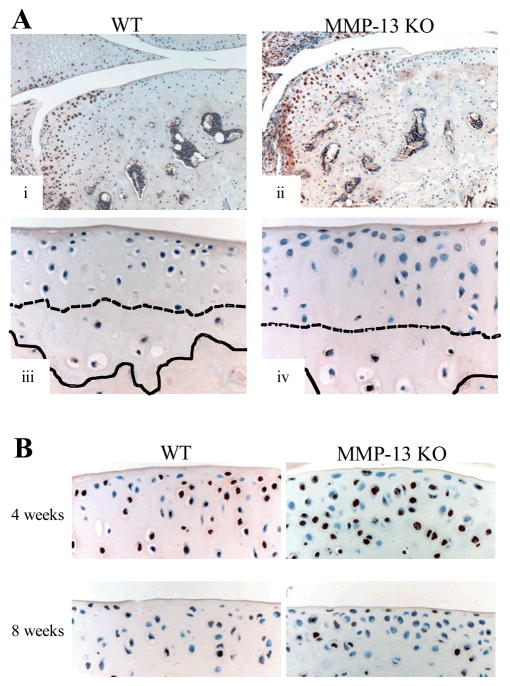
Methods: OA was surgically induced in the knees of MMP-13-knockout mice and wild-type mice, and mice were compared. Histologic scoring of femoral and tibial cartilage aggrecan loss (0-3 scale), erosion (0-7 scale), and chondrocyte hypertrophy (0-1 scale), as well as osteophyte size (0-3 scale) and maturity (0-3 scale) was performed. Serial sections were stained for type X collagen and the MMP-generated aggrecan neoepitope DIPEN.
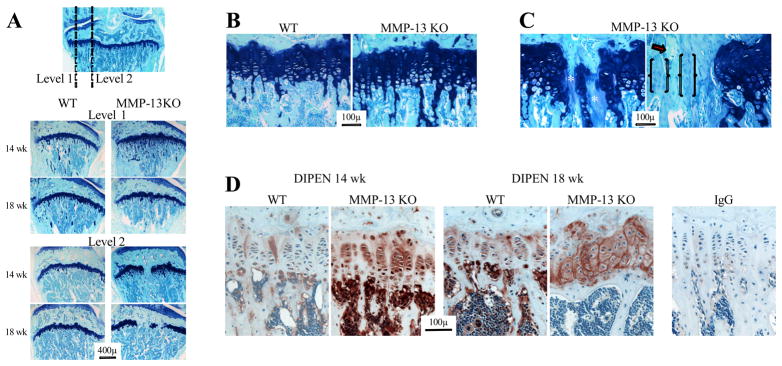
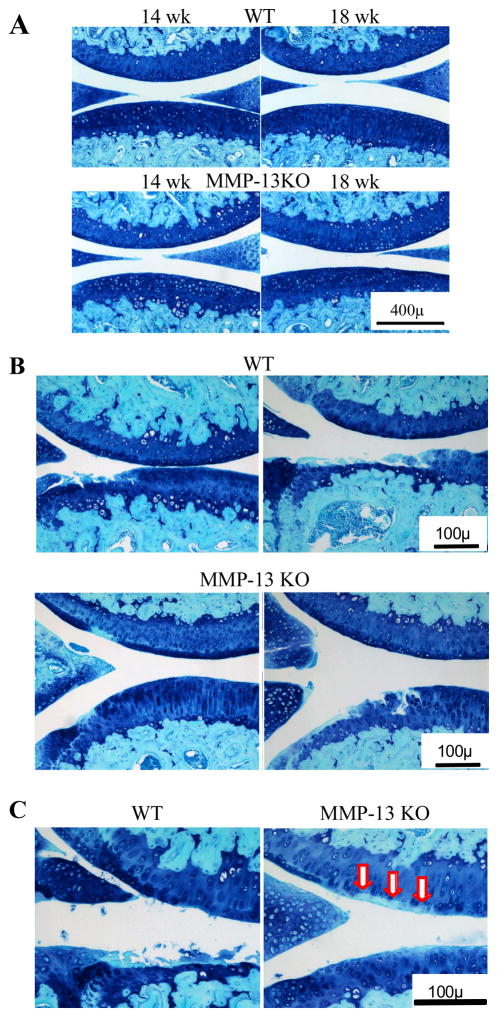
Results: Following surgery, aggrecan loss and cartilage erosion were more severe in the tibia than femur (P<0.01) and tibial cartilage erosion increased with time (P<0.05) in wild-type mice. Cartilaginous osteophytes were present at 4 weeks and underwent ossification, with size and maturity increasing by 8 weeks (P<0.01). There was no difference between genotypes in aggrecan loss or cartilage erosion at 4 weeks. There was less tibial cartilage erosion in knockout mice than in wild-type mice at 8 weeks (P<0.02). Cartilaginous osteophytes were larger in knockout mice at 4 weeks (P<0.01), but by 8 weeks osteophyte maturity and size were no different from those in wild-type mice. Articular chondrocyte hypertrophy with positive type X collagen and DIPEN staining occurred in both wild-type and knockout mouse joints.
Conclusion: Our findings indicate that structural cartilage damage in a mouse model of OA is dependent on MMP-13 activity. Chondrocyte hypertrophy is not regulated by MMP-13 activity in this model and does not in itself lead to cartilage erosion. MMP-13 deficiency can inhibit cartilage erosion in the presence of aggrecan depletion, supporting the potential for therapeutic intervention in established OA with MMP-13 inhibitors.
Figures
Comment in
-
Osteoarthritis: targeting cartilage erosion in OA.Nat Rev Rheumatol. 2010 Feb;6(2):64. doi: 10.1038/nrrheum.2009.266. Nat Rev Rheumatol. 2010. PMID: 20976864 No abstract available.
References
-
- Pratta M, Yao W, Decicco C, Tortorella M, Liu R, Copeland R, et al. Aggrecan protects cartilage collagen from proteolytic cleavage. J Biol Chem. 2003;278:45539–45545. - PubMed
-
- Caterson B, Flannery CR, Hughes CE, Little CB. Mechanisms involved in cartilage proteoglycan catabolism. Matrix Biol. 2000;19:333–344. - PubMed
-
- Glasson SS, Askew R, Sheppard B, Carito B, Blanchet T, Ma HL, et al. Deletion of active ADAMTS5 prevents cartilage degradation in a murine model of osteoarthritis. Nature. 2005;434(7033):644–8. - PubMed
-
- Stanton H, Rogerson FM, East CJ, Golub SB, Lawlor KE, Meeker CT, et al. ADAMTS5 is the major aggrecanase in mouse cartilage in vivo and in vitro. Nature. 2005;434(7033):648–52. - PubMed
Publication types
MeSH terms
Substances
Grants and funding
LinkOut - more resources
Full Text Sources
Other Literature Sources
Medical
