


The association between increased use of labor induction and reduced rate of cesarean delivery
- PMID: 19951208
- PMCID: PMC2828158
- DOI: 10.1089/jwh.2007.0449
The association between increased use of labor induction and reduced rate of cesarean delivery
Abstract
Aim: An association was recently reported between a low cesarean section delivery rate and a method of obstetrical care that involved the frequent use of risk-guided prostaglandin-assisted preventive labor induction. We sought to confirm this finding in a subsequent group of pregnant women.
Methods: A retrospective cohort study design was used to compare the outcomes of 100 consecutively delivered women, who were exposed to the alternative method of care, with the outcomes of 300 randomly chosen women who received standard management. The primary outcome was group cesarean delivery rate. Secondary outcomes were rates of neonatal intensive care unit admission, low 1-minute Apgar score, low 5-minute Apgar score, and major perineal trauma.
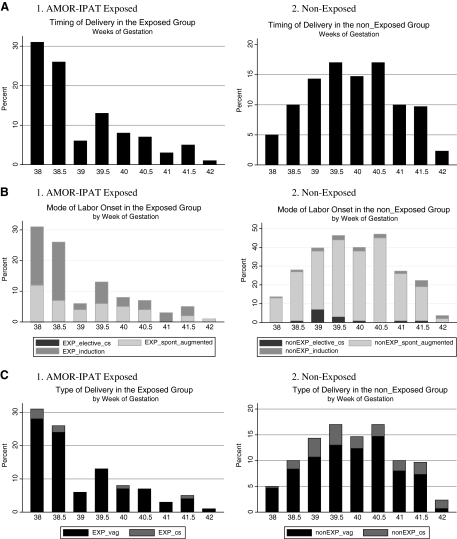
Results: Women exposed to the alternative method of obstetrical care had a higher induction rate (59% vs. 16.3%, p < 0.001), a more frequent use of prostaglandins for cervical ripening (32% vs. 13%, p < 0.001), and a lower cesarean delivery rate (7% vs. 20.3%, p = 0.002). Exposed women did not experience higher rates of other adverse birth outcomes.
Conclusions: Exposure to an alternative method of obstetrical care that used high levels of risk-driven prostaglandin-assisted labor was again associated with two findings: a lower group cesarean delivery rate and no increases in levels of other adverse birth outcomes. An adequately powered randomized controlled trial is needed to further explore this alternative method of care.
Figures
Comment in
-
Preventive induction of labor: can its use lower the cesarean delivery rate?J Womens Health (Larchmt). 2009 Nov;18(11):1743-5. doi: 10.1089/jwh.2009.1559. J Womens Health (Larchmt). 2009. PMID: 19951207 No abstract available.
References
-
- Hamilton BE. Martin JA. Ventura SJ. National vital statistics reports. 7. Vol. 56. Hyattsville, MD: National Center for Health Statistics; 2007. Births: Preliminary data for 2006.
-
- Ecker JL. Frigoletto FD., Jr Cesarean delivery and the risk-benefit calculus. N Engl J Med. 2007;356:885–888. - PubMed
-
- Bailit JL. Love TE. Mercer B. Rising cesarean rates: Are patients sicker? Am J Obstet Gynecol. 2004;191:800–803. - PubMed
-
- Healthy people 2000. National health promotion and disease prevention objectives: Full report, with commentary. Government Printing Office. Vol. 378. Washington, DC: 1990. pp. 91–50212. DHHS publication No. (PHS).
Publication types
MeSH terms
Substances
LinkOut - more resources
Full Text Sources
Medical
