Computational neural modeling of speech motor control in childhood apraxia of speech (CAS)
- PMID: 19951927
- PMCID: PMC2959199
- DOI: 10.1044/1092-4388(2009/07-0283)
Computational neural modeling of speech motor control in childhood apraxia of speech (CAS)
Abstract
Purpose: Childhood apraxia of speech (CAS) has been associated with a wide variety of diagnostic descriptions and has been shown to involve different symptoms during successive stages of development. In the present study, the authors attempted to associate the symptoms of CAS in a particular developmental stage with particular information-processing deficits by using computational modeling with the Directions Into Velocities of Articulators (DIVA) model. The hypothesis was that the speech production system in CAS suffers from poor feed-forward control and, consequently, an increased reliance on the feedback control subsystem.
Method: In a series of computer simulations, the authors systematically varied the ratio between feed-forward and feedback control during production attempts in the acquisition of feed-forward motor commands. The simulations were evaluated acoustically on 4 selected key symptoms of CAS.
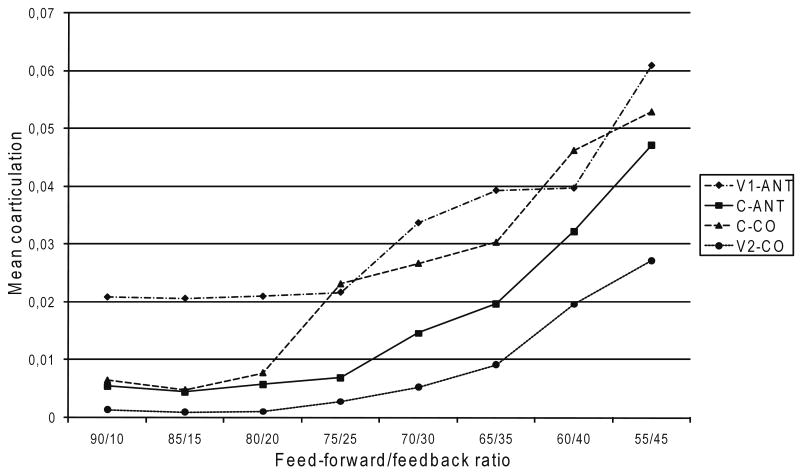
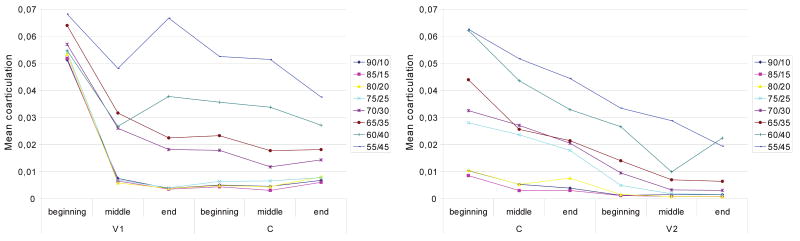
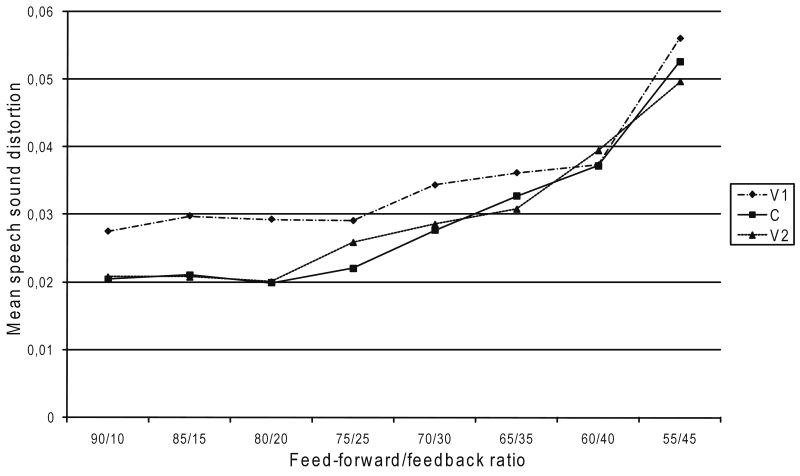
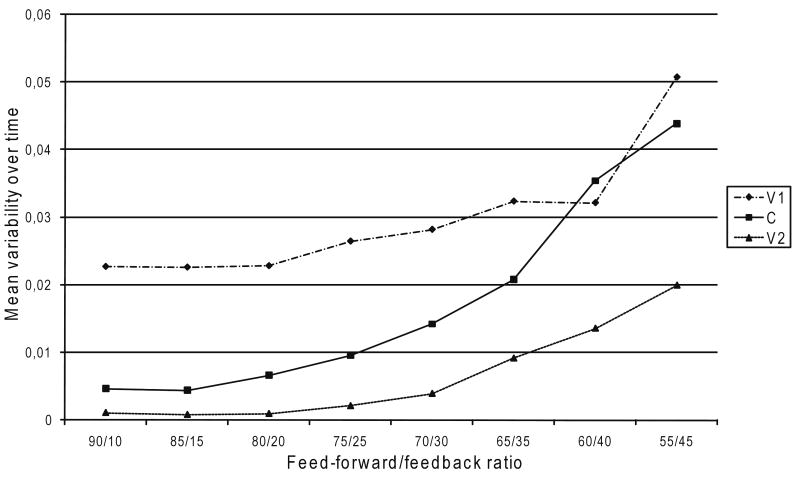
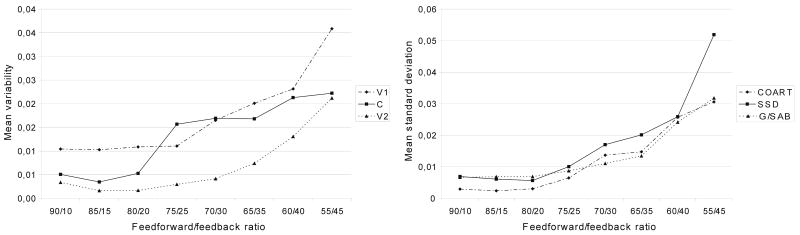
Results: Results showed that increasing the reliance on feedback control causes increased severity of these 4 symptoms of CAS: deviant coarticulation, speech sound distortion, searching articulation, and increased variability.
Conclusions: The findings support the idea that the key symptoms found in CAS could result from an increased reliance on feedback control due to poor feed-forward commands. Two possible root causes of degraded feed-forward control in CAS are discussed: reduced somatosensory information and increased levels of neural noise.
Figures
References
-
- ASHA. Childhood Apraxia of Speech [technical report] American Speech-Language-Hearing Association; 2007. Available from www.asha.org/policy.
-
- Caruso A, Strand E. Clinical management of motor speech disorders in children. New York: Thieme; 1999.
-
- Fitts PM. The information capacity of the human motor system in controlling the amplitude of movement. J Exp Psychol. 1954;47(6):381–391. - PubMed
-
- Gracco VL. Some Organizational Characteristics of Speech Movement Control. Journal of Speech and Hearing Research. 1994;37(1):4. - PubMed
-
- Grigos MI, Saxman JH, Gordon AM. Speech motor development during acquisition of the voicing contrast. J Speech Lang Hear Res. 2005;48(4):739–752. - PubMed
Publication types
MeSH terms
Grants and funding
LinkOut - more resources
Full Text Sources
Medical