Estrogen receptor-alpha as a drug target candidate for preventing lung inflammation
- PMID: 19952273
- PMCID: PMC2803150
- DOI: 10.1210/en.2009-0876
Estrogen receptor-alpha as a drug target candidate for preventing lung inflammation
Abstract
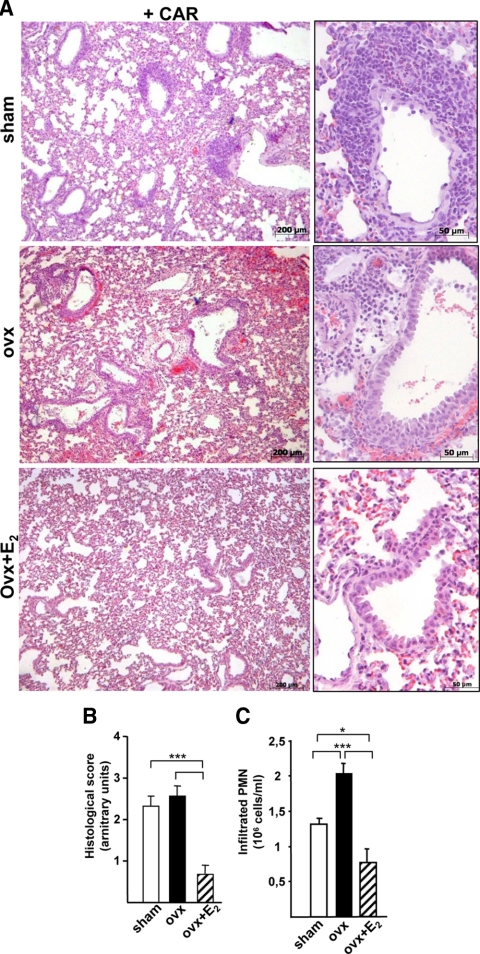
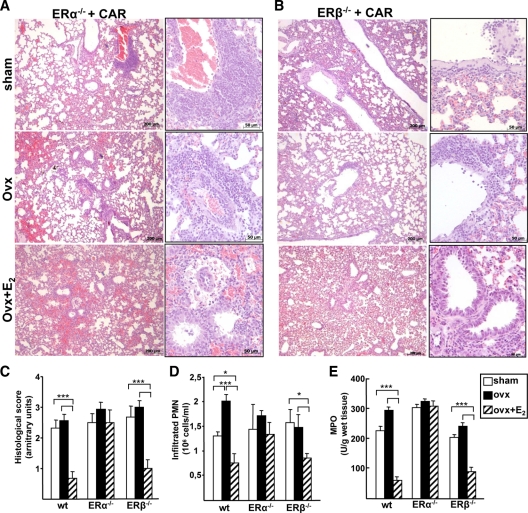
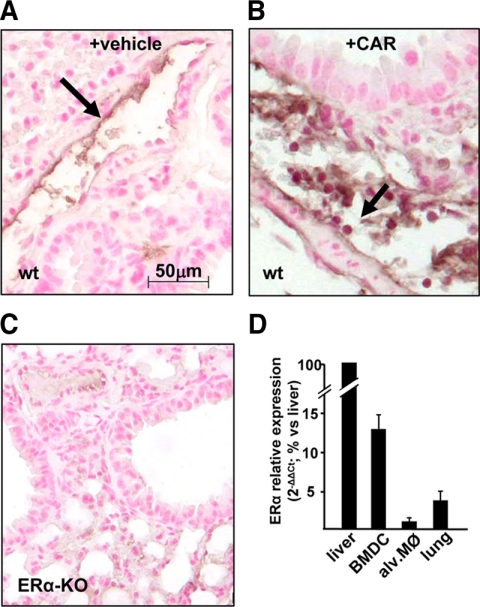
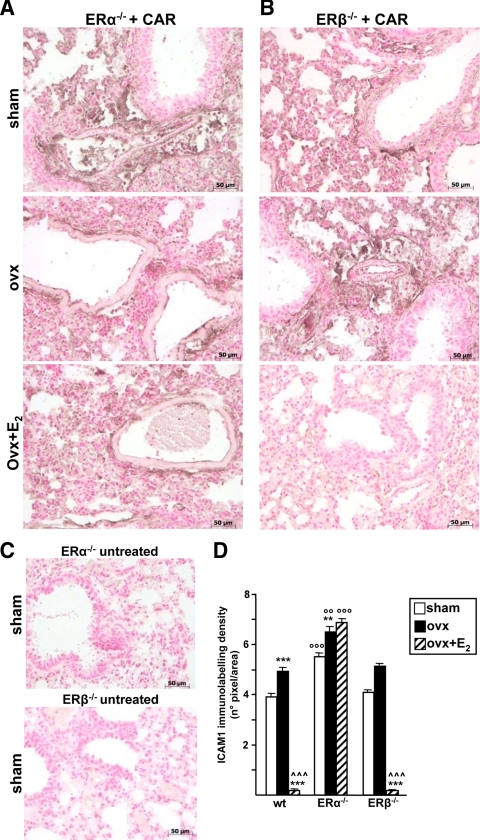
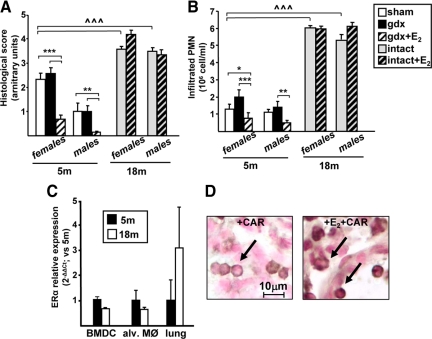
Accumulating evidence shows that estrogens are protective factors in inflammatory lung diseases and are involved in the gender-related incidence of these pathologies. The aim of this study was to identify which estrogen receptor (ER), ER-alpha and/or ER beta, mediates hormone antiinflammatory effects in lung and how gender or aging modify this effect. Acute lung inflammation in wild type, ER alpha or ER beta knockout animals was induced by pleural injection of carrageenan; female mice were used and sham operated, ovariectomized, or ovariectomized and treated with 17beta-estradiol (E(2)) before carrageenan. Our data show that ER alpha, and not ER beta, mediates E(2)-induced reduction of the inflammatory response. By real-time PCR and immunohistochemistry assays, we demonstrate ER alpha expression in the resident and infiltrated inflammatory cells of the lung, in which ER beta could not be detected. In these cells, E(2)-mediated reduction in the expression of inflammatory mediators was also due to ER alpha. In parallel, we observed that female mice were more prone to inflammation as compared with males, suggesting a gender-related difference in lung susceptibility to inflammatory stimuli, whereas the effect of E(2) was similar in the two sexes. Interestingly, aging results in a strong increase in the inflammatory response in both sexes and in the disruption E(2)/ER alpha signaling pathway. In conclusion, our data reveal that E(2) is able to regulate lung inflammation in a gender-unrelated, age-restricted manner. The specific involvement of ER alpha in hormone action opens new ways to identify drug targets that limit the inflammatory component of lung pathologies.
Figures
References
-
- Sweezey N, Tchepichev S, Gagnon S, Fertuck K, O'Brodovich H 1998 Female gender hormones regulate mRNA levels and function of the rat lung epithelial Na channel. Am J Physiol 274:C379–C386 - PubMed
-
- Torday JS, Nielsen HC 1987 The sex difference in fetal lung surfactant production. Exp Lung Res 12:1–19 - PubMed
-
- Carey MA, Card JW, Voltz JW, Germolec DR, Korach KS, Zeldin DC 2007 The impact of sex and sex hormones on lung physiology and disease: lessons from animal studies. Am J Physiol Lung Cell Mol Physiol 293:L272–L278 - PubMed
-
- Massaro GD, Mortola JP, Massaro D 1996 Estrogen modulates the dimensions of the lung’s gas-exchange surface area and alveoli in female rats. Am J Physiol 270:L110–L114 - PubMed
-
- Cuzzocrea S, Santagati S, Sautebin L, Mazzon E, Calabrò G, Serraino I, Caputi AP, Maggi A 2000 17β-Estradiol antiinflammatory activity in CAR-induced pleurisy. Endocrinology 141:1455–1463 - PubMed
Publication types
MeSH terms
Substances
Grants and funding
LinkOut - more resources
Full Text Sources
Medical