


Sensory protection of rat muscle spindles following peripheral nerve injury and reinnervation
- PMID: 19952642
- PMCID: PMC3411540
- DOI: 10.1097/PRS.0b013e3181bcee47
Sensory protection of rat muscle spindles following peripheral nerve injury and reinnervation
Abstract
Background: Skeletal muscle structure and function are dependent on intact innervation. Prolonged muscle denervation results in irreversible muscle fiber atrophy, connective tissue hyperplasia, and deterioration of muscle spindles, specialized sensory receptors necessary for proper skeletal muscle function. The protective effect of temporary sensory innervation on denervated muscle, before motor nerve repair, has been shown in the rat. Sensory-protected muscles exhibit less fiber atrophy and connective tissue hyperplasia and maintain greater functional capacity than denervated muscles. The purpose of this study was to determine whether temporary sensory innervation also protects muscle spindles from degeneration.
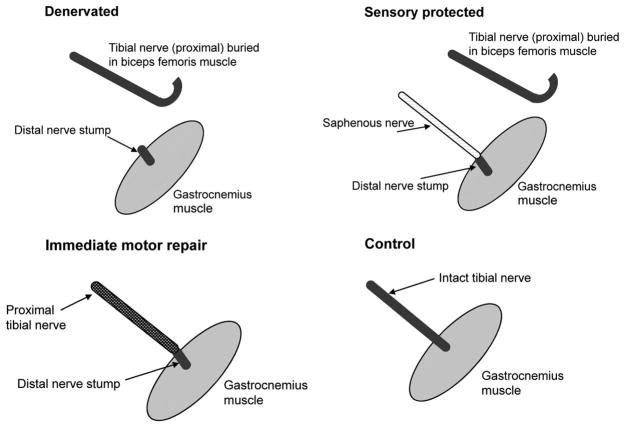
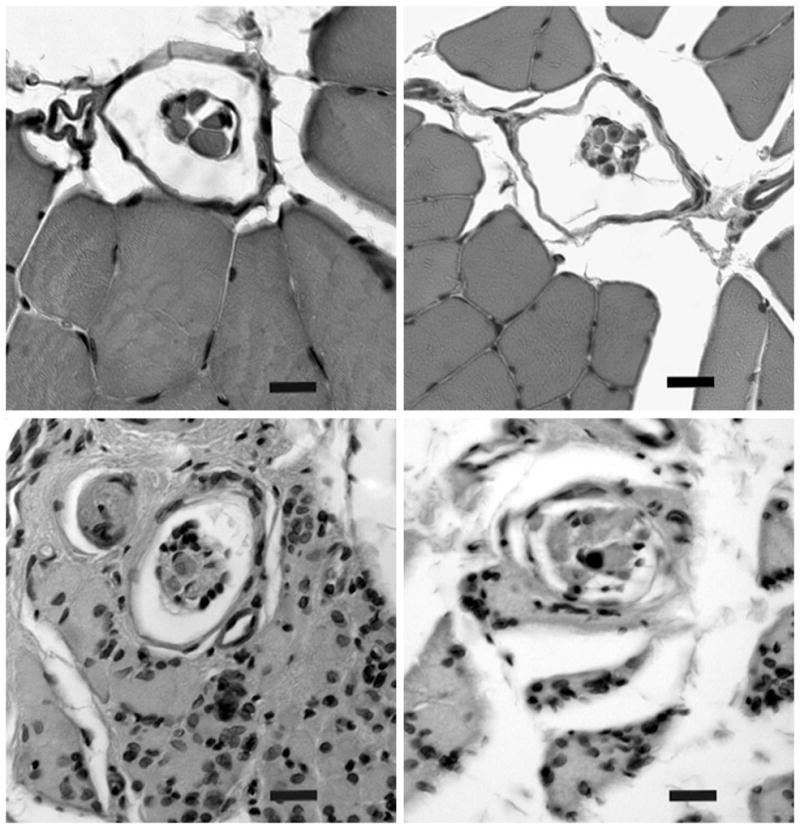
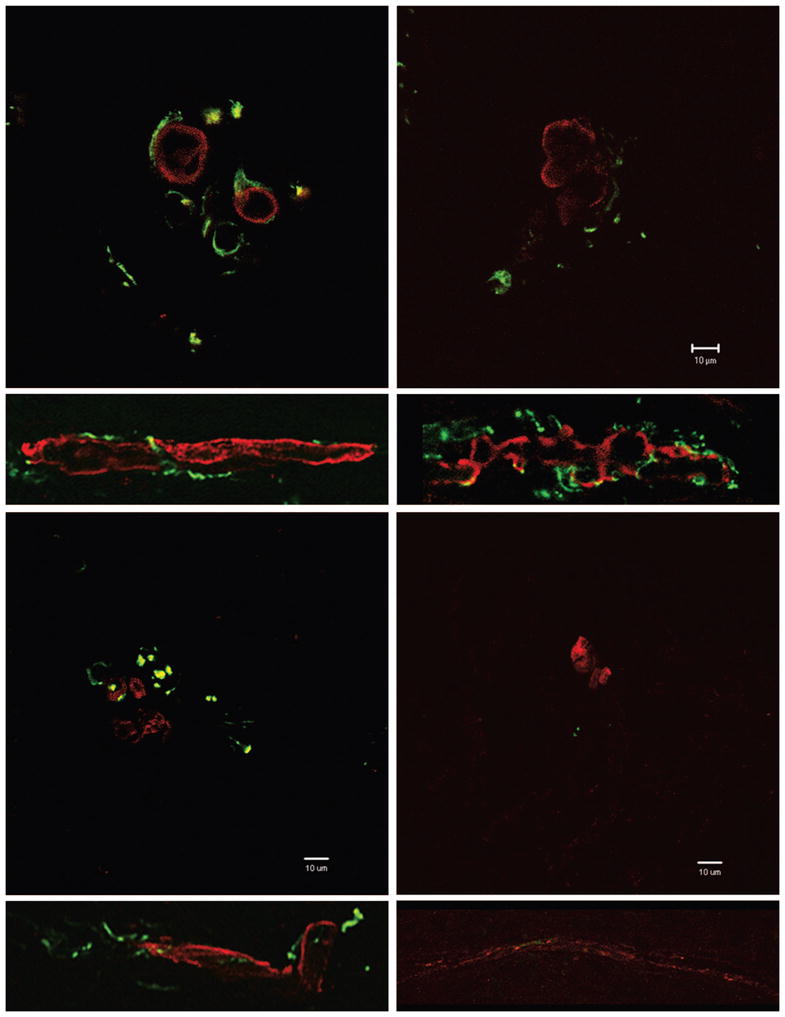
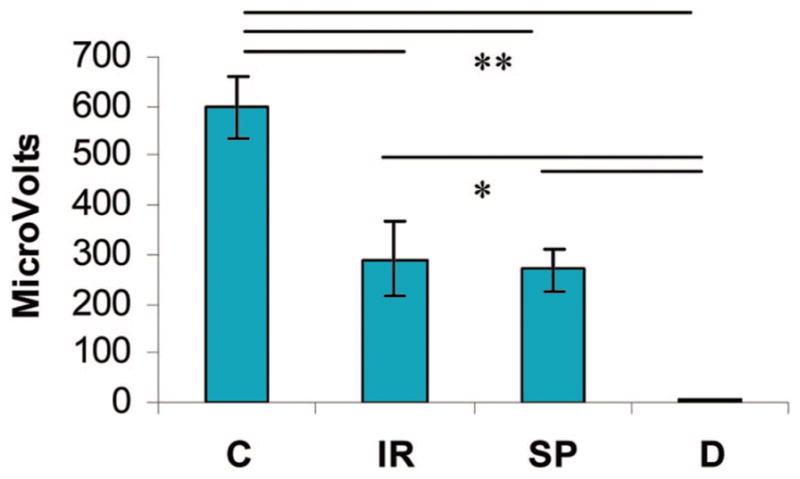
Methods: Rat tibial nerve was transected and repaired with either the saphenous or the original transected nerve. Negative controls remained denervated. After 3 to 6 months, the electrophysiologic response of the nerve to stretch in the rat gastrocnemius muscle was measured (n = 3 per group). After the animals were euthanized, the gastrocnemius muscle was removed, sectioned, stained, and examined for spindle number (n = 3 per group) and morphology (one rat per group). Immunohistochemical assessment of muscle spindle innervation was examined in four additional animals.
Results: Significant deterioration of muscle spindles was seen in denervated muscle, whereas in muscle reinnervated with the tibial or the saphenous nerve, spindle number and morphology were improved. Histologic and functional evidence of spindle reinnervation by the sensory nerve was obtained.
Conclusion: These findings add to the known means by which motor or sensory nerves exert protective effects on denervated muscle, and further promote the use of sensory protection for improving the outcome after peripheral nerve injury.
Conflict of interest statement
Figures
References
-
- Hynes NM, Bain JR, Thoma A, Veltri K, Maguire JA. Preservation of denervated muscle by sensory protection in rats. J Reconstr Microsurg. 1997;13:337–343. - PubMed
-
- Kobayashi J, Mackinnon SE, Watanabe O, et al. The effect of duration of muscle denervation on functional recovery in the rat model. Muscle Nerve. 1997;20:858–866. - PubMed
-
- Bain JR, Veltri KL, Chamberlain D, Fahnestock M. Improved functional recovery of denervated skeletal muscle after temporary sensory nerve innervation. Neuroscience. 2001;103:503–510. - PubMed
-
- Veltri K, Kwiecien JM, Minet W, Fahnestock M, Bain JR. Contribution of the distal nerve sheath to nerve and muscle preservation following denervation and sensory protection. J Reconstr Microsurg. 2005;21:57–70. - PubMed
Publication types
MeSH terms
Grants and funding
LinkOut - more resources
Full Text Sources
