


A cost-utility analysis of amputation versus salvage for Gustilo type IIIB and IIIC open tibial fractures
- PMID: 19952652
- PMCID: PMC2788746
- DOI: 10.1097/PRS.0b013e3181bcf156
A cost-utility analysis of amputation versus salvage for Gustilo type IIIB and IIIC open tibial fractures
Abstract
Background: Lower extremity trauma is common. Despite an abundance of literature on severe injuries that can be treated with salvage or amputation, the appropriate management of these injuries remains uncertain. In this situation, a cost-utility analysis is an important tool in providing an evidence-based practice approach to guide treatment decisions.
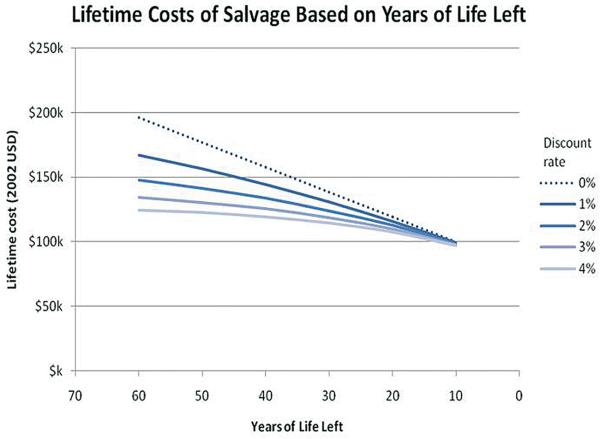
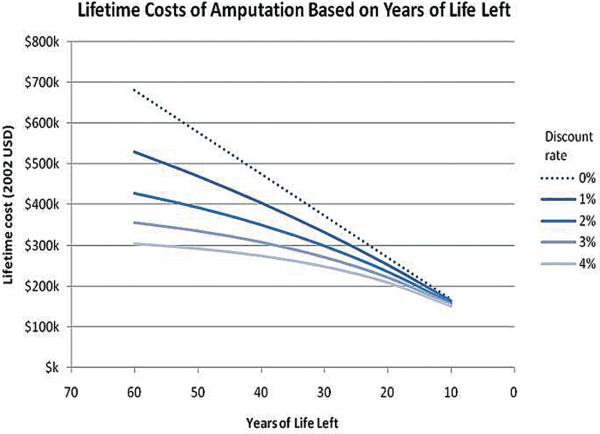
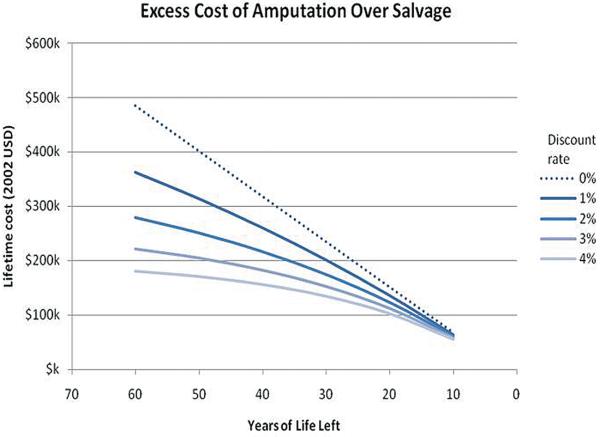
Methods: Costs following amputation and salvage were derived from data presented in a study that emerged from the Lower Extremity Assessment Project. The authors extracted relevant data on projected lifetime costs and analyzed them to include discounting and sensitivity analysis by considering patient age. The utilities for the various health states (amputation or salvage, including possible complications) were measured previously using the standard gamble method and a decision tree simulation to determine quality-adjusted life-years.
Results: Amputation is more expensive than salvage, independently of varied ongoing prosthesis needs, discount rate, and patient age at presentation. Moreover, amputation yields fewer quality-adjusted life-years than salvage. Salvage is deemed the dominant, cost-saving strategy.
Conclusion: Unless the injury is so severe that salvage is not a possibility, based on this economic model, surgeons should consider limb salvage, which will yield lower costs and higher utility when compared with amputation.
Figures
References
-
- Court-Brown CM, Rimmer S, Prakash U, McQueen MM. The epidemiology of open long bone fractures. Injury. 1998;29(7):529–534. - PubMed
-
- Howard M, Court-Brown CM. Epidemiology and management of open fractures of the lower limb. Brit J Hosp Med. 1997;57(11):582–587. - PubMed
-
- Emami A, Mjoberg B, Ragnarsson B, Larsson S. Changing epidemiology of tibial shaft fractures. 513 cases compared between 1971-1975 and 1986-1990. Acta Orthop Scand. 1996;67(6):557–561. - PubMed
-
- Gustilo RB, Mendoza RM, Williams DN. Problems in the management of type III (severe) open fractures: a new classification of type III open fractures. J Trauma. 1984;24:42–46. - PubMed
Publication types
MeSH terms
Grants and funding
LinkOut - more resources
Full Text Sources
Medical
