


The marginating-pulmonary immune compartment in rats: characteristics of continuous inflammation and activated NK cells
- PMID: 19952959
- PMCID: PMC2797825
- DOI: 10.1097/CJI.0b013e3181b0b146
The marginating-pulmonary immune compartment in rats: characteristics of continuous inflammation and activated NK cells
Abstract
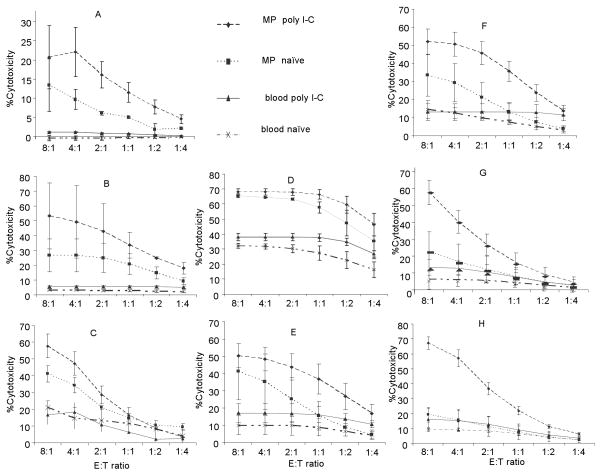
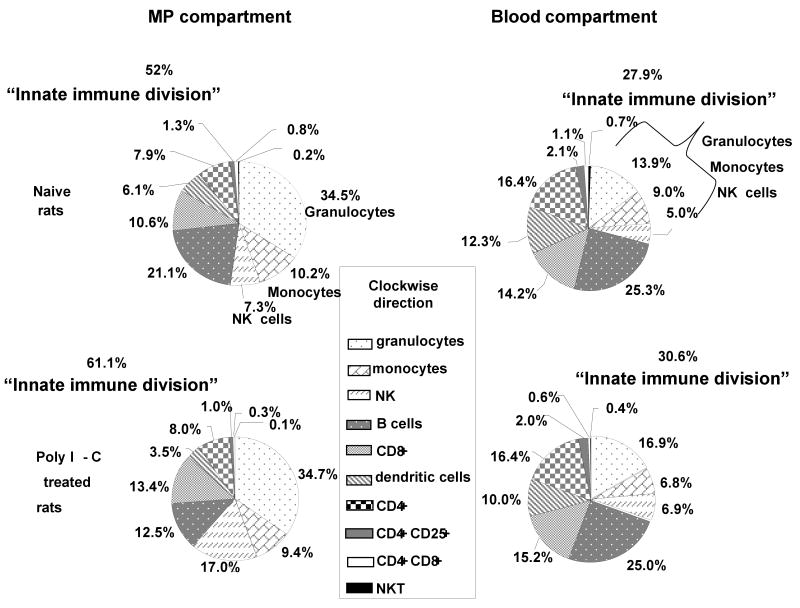
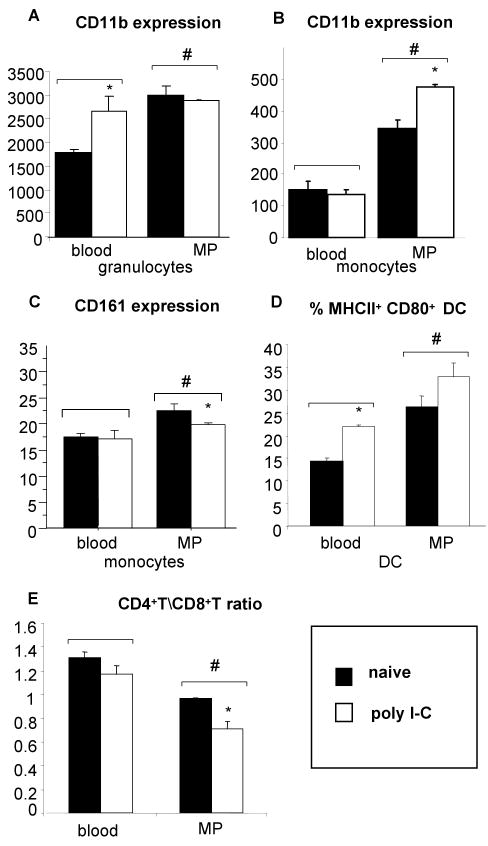
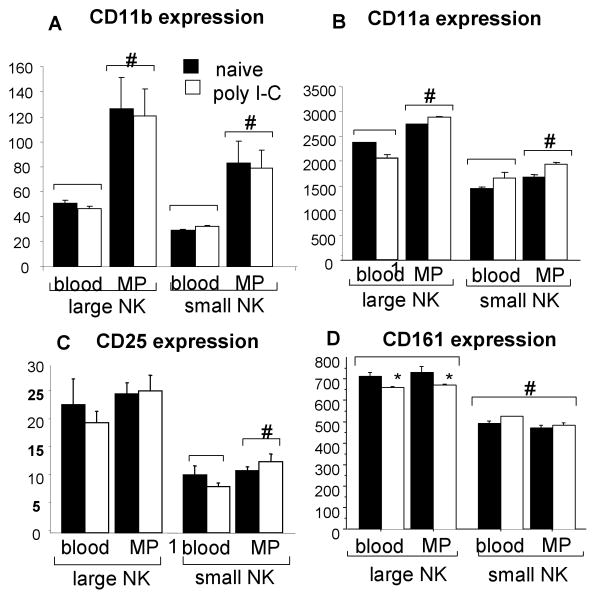
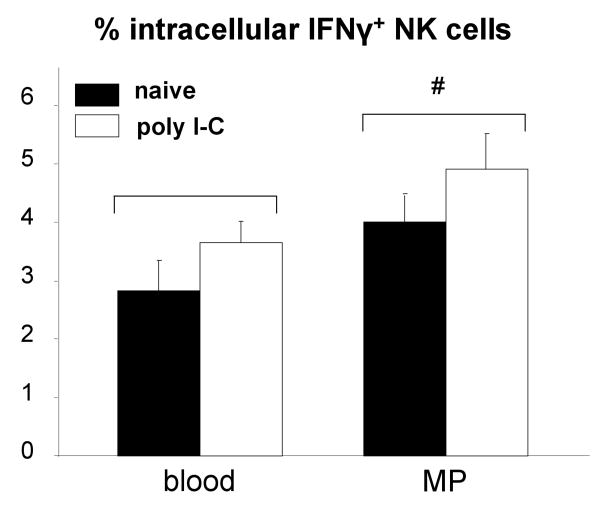
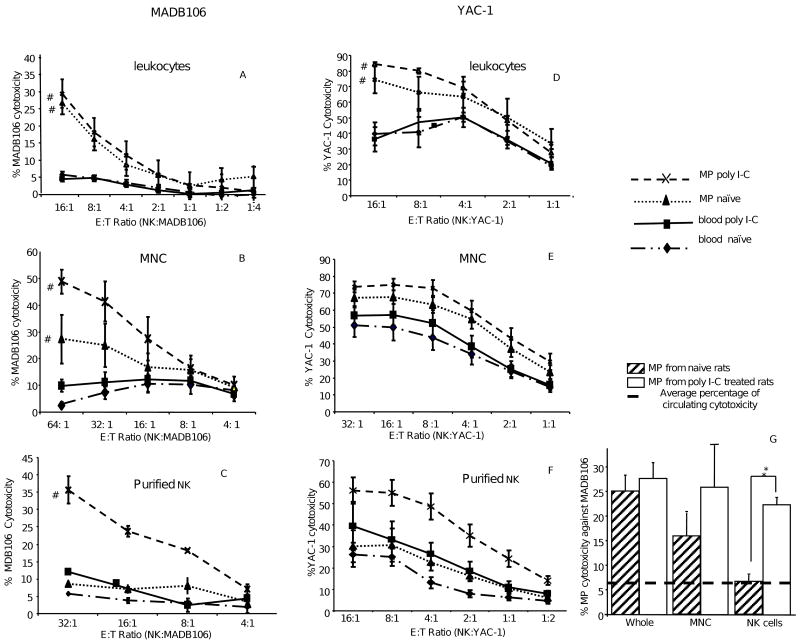
A significant role has been indicated for cellular immunity in controlling circulating cancer cells, but most autologous tumor cells seem resistant, in vitro, to natural killer cell (NKC) and cytotoxic T lymphocytes cytotoxicity. Addressing this apparent contradiction, we recently identified a unique leukocyte population, marginating-pulmonary (MP)-leukocytes, which exhibit potent natural killer (NK) cytotoxicity. Here, we characterize the MP-compartment in naive and immunostimulated rats, and assessed its cytotoxicity against "NK-resistant" tumors cells. Animals were treated with poly I-C (3x0.2 mg/kg) or saline, and circulating-leukocytes and MP-leukocytes were collected and analyzed in terms of cellular composition, cellular activation markers, and NK cytotoxicity of leukocytes and purified NKCs. Compared with circulating-leukocytes, MP-leukocytes showed greater proportion of granulocytes, monocytes, NKCs, and large NKCs; higher expression of activation and adhesion markers (CD25, CD11a, CD11b, and NKR-P1, IFN-gamma); and elevated NK cytotoxicity of leukocytes and purified NKCs against several syngeneic and xenogeneic NK-resistant target cells (from both F344 and BDX inbred rats). In immunostimulated animals (treated with poly I-C), but not in naive animals, purified NKCs from the MP-compartment showed markedly superior cytotoxicity, suggesting that poly I-C immunostimulation uniquely affect MP-NKCs, and that in naive animals other MP-leukocytes support NK cytotoxicity. Overall, the results suggest that the MP-compartment is characterized by a continuous activated inflammatory microenvironment uniquely affected by immunostimulation. If similarly potent MP-NKCs exist in patients, then circulating autologous tumor cells that are considered "NK-resistant" could actually be controlled by MP-NKCs. Innate immunity may assume greater role in controlling malignant spread, especially after immunostimulation.
Figures


References
-
- Shakhar G, Ben-Eliyahu S. Potential prophylactic measures against postoperative immunosuppression: could they reduce recurrence rates in oncological patients? Ann Surg Oncol. 2003;10(8):972–92. - PubMed
-
- Smyth MJ, Godfrey DI, Trapani JA. A fresh look at tumor immunosurveillance and immunotherapy. Nat Immunol. 2001;2(4):293–9. - PubMed
-
- Moretta L, et al. Human natural killer cells: Molecular mechanisms controlling NK cell activation and tumor cell lysis. Immunol Lett. 2005;100(1):7–13. - PubMed
-
- Brittenden J, et al. Natural killer cells and cancer. Cancer. 1996;77(7):1226–43. - PubMed
-
- Cerwenka A, Lanier LL. Natural killer cells, viruses and cancer. Nat Rev Immunol. 2001;1(1):41–9. - PubMed
Publication types
MeSH terms
Substances
Grants and funding
LinkOut - more resources
Full Text Sources
Research Materials
