


Carbohydrates and activity of natural and recombinant tissue factor
- PMID: 19955571
- PMCID: PMC2823427
- DOI: 10.1074/jbc.M109.055178
Carbohydrates and activity of natural and recombinant tissue factor
Abstract
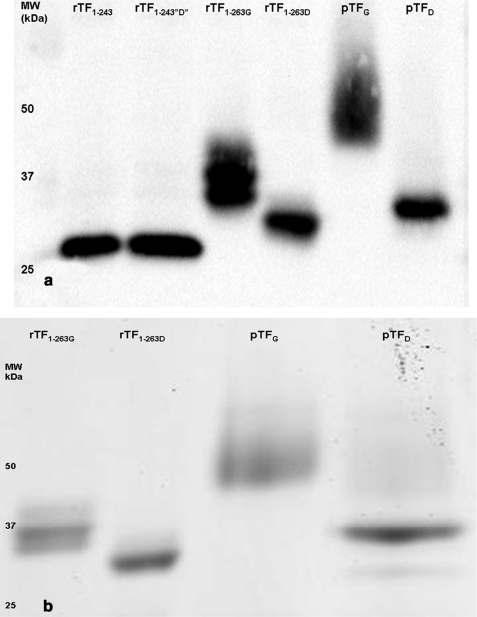
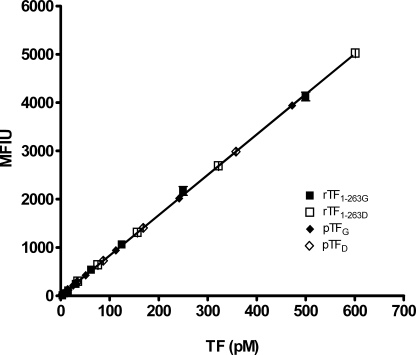
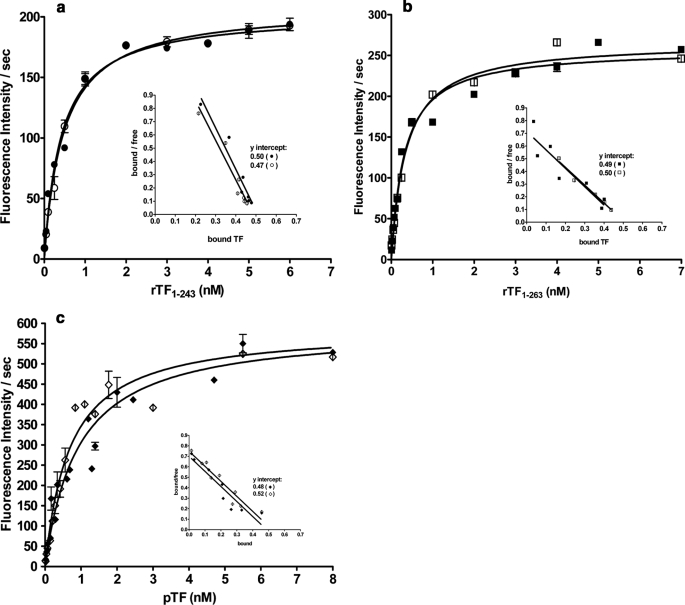
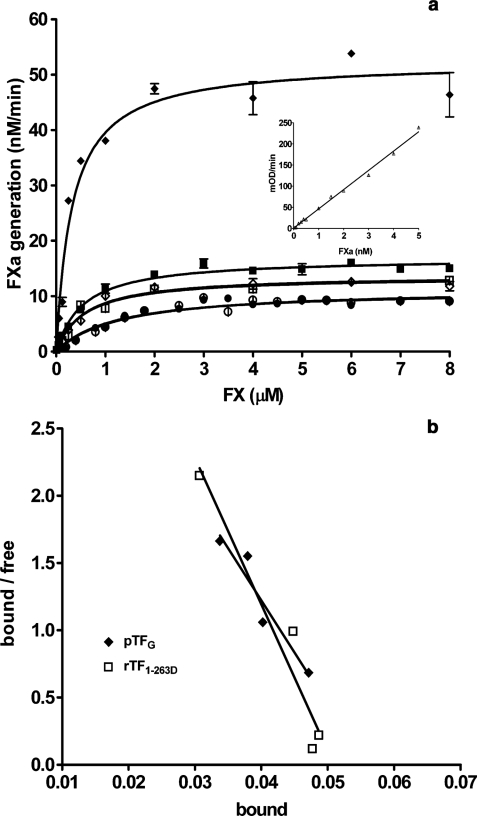
The effect of glycosylation on tissue factor (TF) activity was evaluated, and site-specific glycosylation of full-length recombinant TF (rTF) and that of natural TF from human placenta (pTF) were studied by liquid chromatography-tandem mass spectrometry. The amidolytic activity of the TF.factor VIIa (FVIIa) complex toward a fluorogenic substrate showed that the catalytic efficiency (V(max)) of the complex increased in the order rTF(1-243) (Escherichia coli) < rTF(1-263) (Sf9 insect cells) < pTF for the glycosylated and deglycosylated forms. Substrate hydrolysis was unaltered by deglycosylation. In FXase, the K(m) of FX for rTF(1-263)-FVIIa remained unchanged after deglycosylation, whereas the k(cat) decreased slightly. A pronounced decrease, 4-fold, in k(cat) was observed for pTF.FVIIa upon deglycosylation, whereas the K(m) was minimally altered. The parameters of FX activation by both rTF(1-263D)-FVIIa and pTF(D)-FVIIa were identical and similar to those for rTF(1-243)-FVIIa. In conclusion, carbohydrates significantly influence the activity of TF proteins. Carbohydrate analysis revealed glycosylation on asparagines 11, 124, and 137 in both rTF(1-263) and pTF. The carbohydrates of rTF(1-263) contain high mannose, hybrid, and fucosylated glycans. Natural pTF contains no high mannose glycans but is modified with hybrid, highly fucosylated, and sialylated sugars.
Figures
References
Publication types
MeSH terms
Substances
Grants and funding
LinkOut - more resources
Full Text Sources
Miscellaneous
