Identification of the Schistosoma mansoni TNF-alpha receptor gene and the effect of human TNF-alpha on the parasite gene expression profile
- PMID: 19956564
- PMCID: PMC2779652
- DOI: 10.1371/journal.pntd.0000556
Identification of the Schistosoma mansoni TNF-alpha receptor gene and the effect of human TNF-alpha on the parasite gene expression profile
Abstract
Background: Schistosoma mansoni is the major causative agent of schistosomiasis. The parasite takes advantage of host signals to complete its development in the human body. Tumor necrosis factor-alpha (TNF-alpha) is a human cytokine involved in skin inflammatory responses, and although its effect on the adult parasite's metabolism and egg-laying process has been previously described, a comprehensive assessment of the TNF-alpha pathway and its downstream molecular effects is lacking.
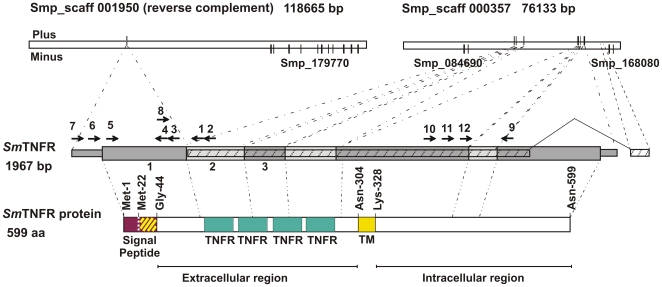
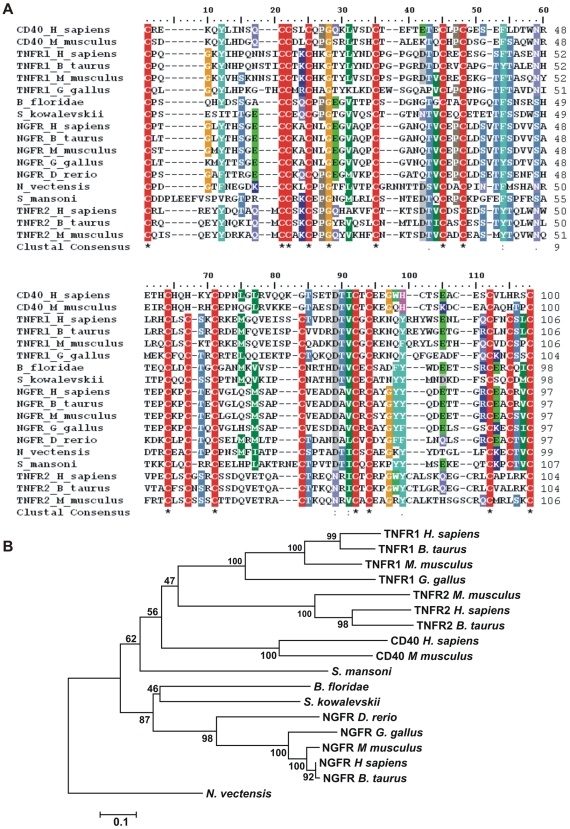
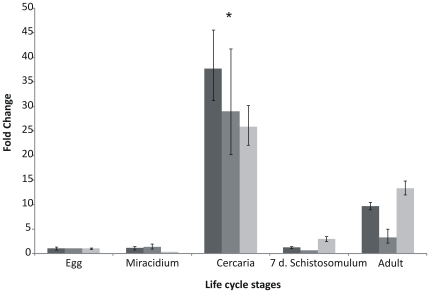
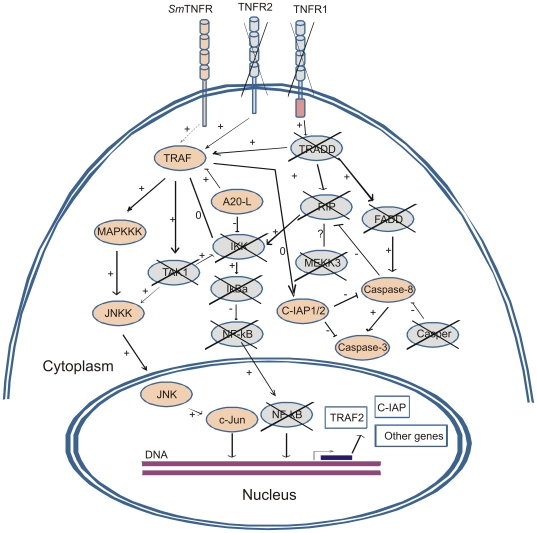
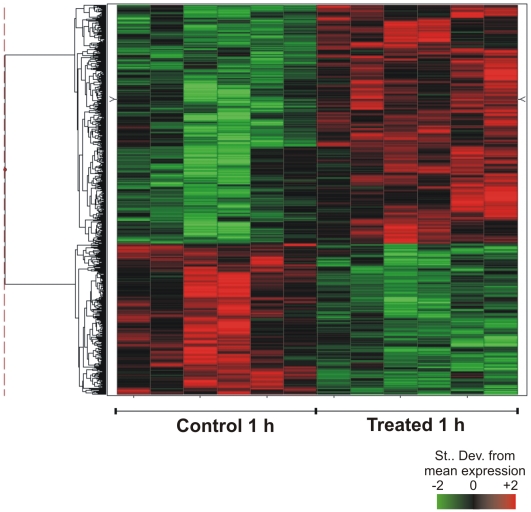
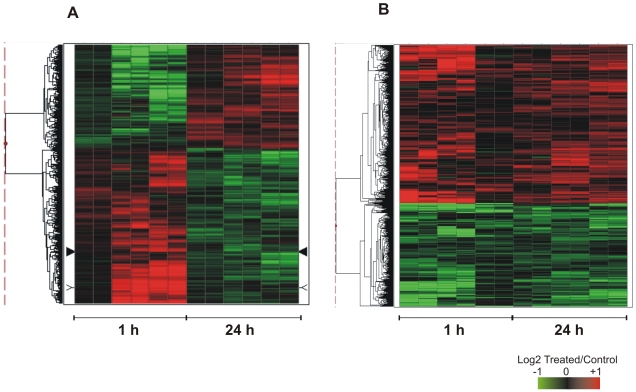
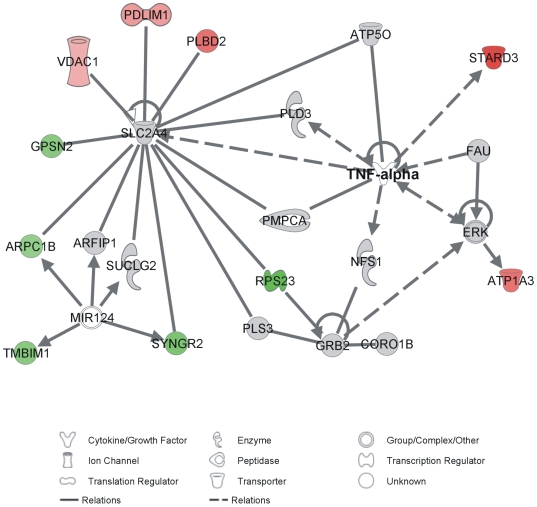
Methodology/principal findings: In the present work we describe a possible TNF-alpha receptor (TNFR) homolog gene in S. mansoni (SmTNFR). SmTNFR encodes a complete receptor sequence composed of 599 amino acids, and contains four cysteine-rich domains as described for TNFR members. Real-time RT-PCR experiments revealed that SmTNFR highest expression level is in cercariae, 3.5 (+/-0.7) times higher than in adult worms. Downstream members of the known human TNF-alpha pathway were identified by an in silico analysis, revealing a possible TNF-alpha signaling pathway in the parasite. In order to simulate parasite's exposure to human cytokine during penetration of the skin, schistosomula were exposed to human TNF-alpha just 3 h after cercariae-to-schistosomula in vitro transformation, and large-scale gene expression measurements were performed with microarrays. A total of 548 genes with significantly altered expression were detected, when compared to control parasites. In addition, treatment of adult worms with TNF-alpha caused a significantly altered expression of 1857 genes. Interestingly, the set of genes altered in adults is different from that of schistosomula, with 58 genes in common, representing 3% of altered genes in adults and 11% in 3 h-old early schistosomula.
Conclusions/significance: We describe the possible molecular elements and targets involved in human TNF-alpha effect on S. mansoni, highlighting the mechanism by which recently transformed schistosomula may sense and respond to this host mediator at the site of cercarial penetration into the skin.
Conflict of interest statement
The authors have declared that no competing interests exist.
Figures

References
-
- WHO-Geneve. WHO Technical Report Series 912: prevention and control of schistosomiasis and soil-transmitted helminthiasis. Geneva: World Health Organization; 2002. - PubMed
-
- Pfeffer K. Biological functions of tumor necrosis factor cytokines and their receptors. Cytokine Growth Factor Rev. 2003;14:185–191. - PubMed
-
- He YX, Chen L, Ramaswamy K. Schistosoma mansoni, S. haematobium, and S. japonicum: early events associated with penetration and migration of schistosomula through human skin. Exp Parasitol. 2002;102:99–108. - PubMed
Publication types
MeSH terms
Substances
Associated data
- Actions
- Actions
- Actions
LinkOut - more resources
Full Text Sources
Molecular Biology Databases