


Chemical analysis and risk assessment of diethyl phthalate in alcoholic beverages with special regard to unrecorded alcohol
- PMID: 19956573
- PMCID: PMC2779849
- DOI: 10.1371/journal.pone.0008127
Chemical analysis and risk assessment of diethyl phthalate in alcoholic beverages with special regard to unrecorded alcohol
Abstract
Background: Phthalates are synthetic compounds with a widespread field of applications. For example, they are used as plasticizers in PVC plastics and food packaging, or are added to personal care products. Diethyl phthalate (DEP) may be used to denature alcohol, e.g., for cosmetic purposes. Public health concerns of phthalates include carcinogenic, teratogenic, hepatotoxic and endocrine effects. The aim of this study was to develop and validate a method for determining phthalates in alcohol samples and to provide a risk assessment for consumers of such products.
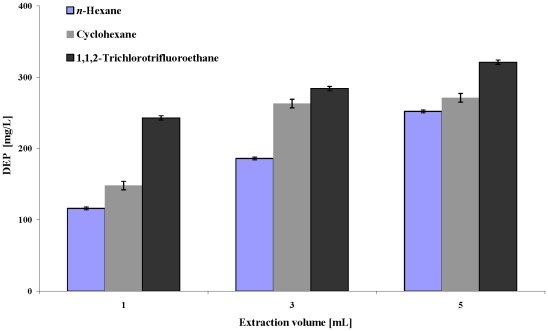
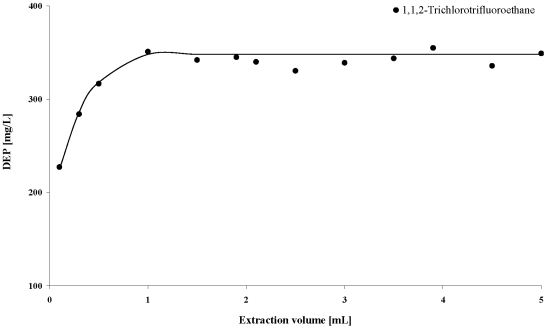
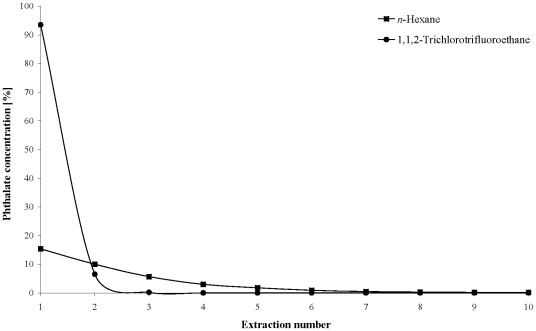
Methodology/principal findings: A liquid-liquid extraction procedure was optimized by varying the following parameters: type of extraction solvent (cyclohexane, n-hexane, 1,1,2-trichlorotrifluoroethane), the ratio extraction solvent/sample volume (1 ratio 1 to 50 ratio 1) and the number of extraction repetitions (1-10). The best extraction yield (99.9%) was achieved with the solvent 1,1,2-trichlorotrifluoroethane, an extraction solvent volume/sample volume ratio of 10 ratio 1 and a double extraction. For quantification, gas chromatography/mass spectrometry with deuterated internal standards was used. The investigated samples were alcoholic beverages and unrecorded alcohol products from different countries (n = 257). Two unrecorded alcohol samples from Lithuania contained diethyl phthalate in concentrations of 608 mg/L and 210 mg/L.
Conclusions/significance: The consumption of the phthalate-positive unrecorded alcohols would exceed tolerable daily intakes as derived from animal experiments. Both positive samples were labelled as cosmetic alcohol, but had clearly been offered for human consumption. DEP seems to be unsuitable as a denaturing agent as it has no effect on the organoleptic properties of ethanol. In light of our results that DEP might be consumed by humans in unrecorded alcohols, the prohibition of its use as a denaturing agent should be considered.
Conflict of interest statement
Figures
References
-
- Mikula P, Svobodova Z, Smutina M. Phthalates: Toxicology and Food Safety – a Review. Czech J Food Sci. 2005;23:217–223.
-
- Heudorf U, Mersch-Sundermann V, Angerer J. Phthalates: Toxicology and Exposure. Int J Hyg Env Health. 2007;210:623–634. - PubMed
-
- Savchuk SA, Nuzhnyi VP, Kolesov GM. Factors affecting the accuracy of the determination of diethyl phthalate in vodka, ethanol, and samples of illegal alcoholic products. J Anal Chem. 2006;61:1198–1203.
-
- Lachenmeier DW, Sarsh B, Rehm J. The composition of alcohol products from markets in Lithuania and Hungary, and potential health consequences: A pilot study. Alcohol Alcohol. 2009;44:93–102. - PubMed
Publication types
MeSH terms
Substances
LinkOut - more resources
Full Text Sources
Other Literature Sources
