


Characterizing the Aedes aegypti population in a Vietnamese village in preparation for a Wolbachia-based mosquito control strategy to eliminate dengue
- PMID: 19956588
- PMCID: PMC2780318
- DOI: 10.1371/journal.pntd.0000552
Characterizing the Aedes aegypti population in a Vietnamese village in preparation for a Wolbachia-based mosquito control strategy to eliminate dengue
Abstract
Background: A life-shortening strain of the obligate intracellular bacteria Wolbachia, called wMelPop, is seen as a promising new tool for the control of Aedes aegypti. However, developing a vector control strategy based on the release of mosquitoes transinfected with wMelPop requires detailed knowledge of the demographics of the target population.
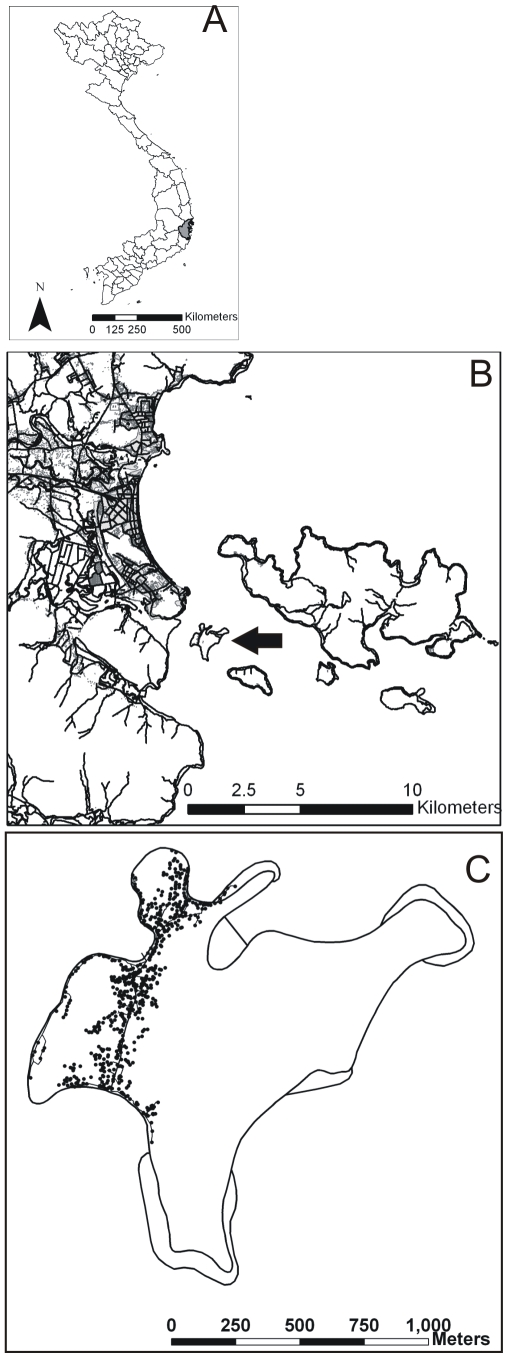
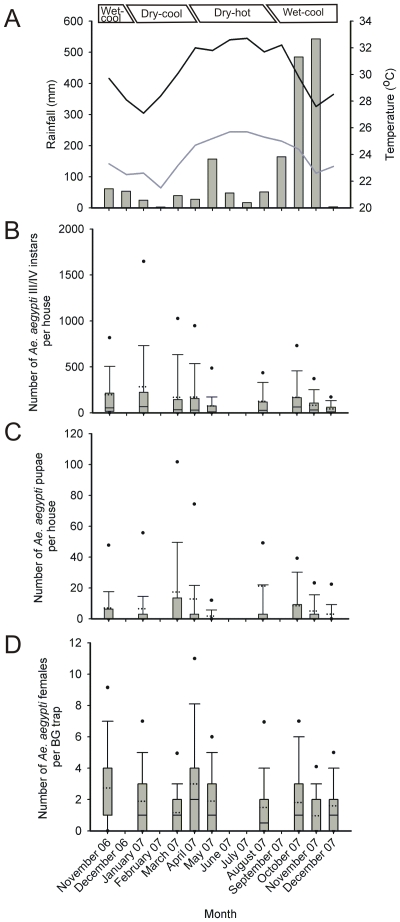
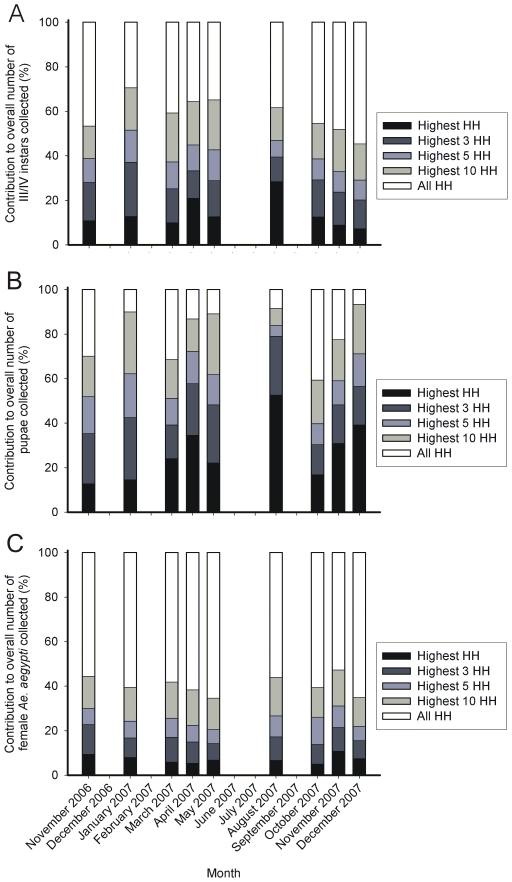
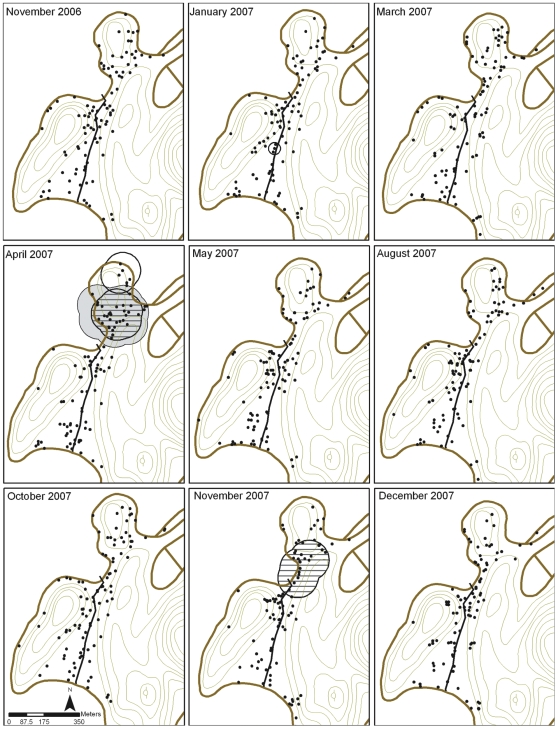
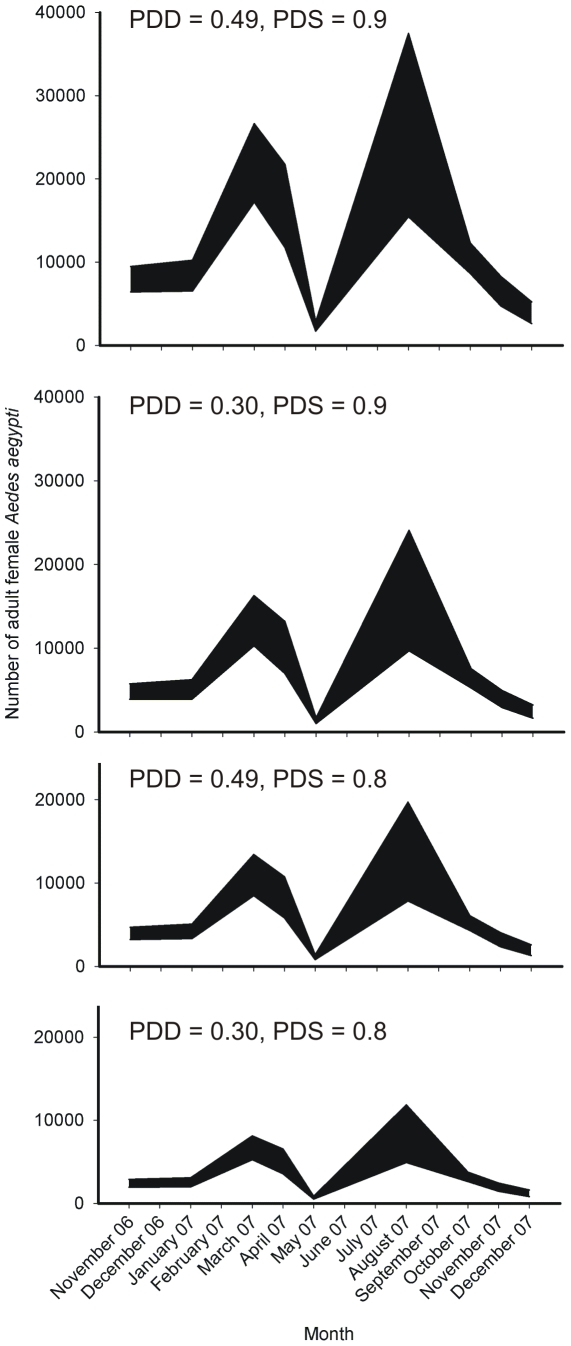
Methodology/principal findings: In Tri Nguyen village (611 households) on Hon Mieu Island in central Vietnam, we conducted nine quantitative entomologic surveys over 14 months to determine if Ae. aegypti populations were spatially and temporally homogenous, and to estimate population size. There was no obvious relationship between mosquito (larval, pupal or adult) abundance and temperature and rainfall, and no area of the village supported consistently high numbers of mosquitoes. In almost all surveys, key premises produced high numbers of Ae. aegypti. However, these premises were not consistent between surveys. For an intervention based on a single release of wMelPop-infected Ae. aegypti, release ratios of infected to uninfected adult mosquitoes of all age classes are estimated to be 1.8-6.7ratio1 for gravid females (and similarly aged males) or teneral adults, respectively. We calculated that adult female mosquito abundance in Tri Nguyen village could range from 1.1 to 43.3 individuals of all age classes per house. Thus, an intervention could require the release of 2-78 wMelPop-infected gravid females and similarly aged males per house, or 7-290 infected teneral female and male mosquitoes per house.
Conclusions/significance: Given the variability we encountered, this study highlights the importance of multiple entomologic surveys when evaluating the spatial structure of a vector population or estimating population size. If a single release of wMelPop-infected Ae. aegypti were to occur when wild Ae. aegypti abundance was at its maximum, a preintervention control program would be necessary to ensure that there was no net increase in mosquito numbers. However, because of the short-term temporal heterogeneity, the inconsistent spatial structure and the impact of transient key premises that we observed, the feasibility of multiple releases of smaller numbers of mosquitoes also needs to be considered. In either case, fewer wMelPop-infected mosquitoes would then need to be released, which will likely be more acceptable to householders.
Conflict of interest statement
The authors have declared that no competing interests exist.
Figures

References
-
- Gubler DJ. Dengue and dengue hemorrhagic fever: its history and resurgence as a global public health problem. In: Gubler DJ, Kuno G, editors. Dengue and dengue hemorrhagic fever. New York: CAB International; 1997. pp. 1–22.
-
- Rodhain F, Rosen L. Mosquito vectors and dengue virus-vector relationships. In: Gubler DJ, Kuno G, editors. Dengue and Dengue Hemorrhagic Fever. New York: CAB International; 1997. pp. 45–60.
-
- Gubler DJ. The global emergence/resurgence of arboviral diseases as public health problems. Arch Med Res. 2002;33:330–342. - PubMed
-
- Townson H. Wolbachia as a potential tool for suppressing filarial transmission. Ann Trop Med Parasitol. 2002;96(Suppl 2):S117–127. - PubMed
-
- Turelli M, Hoffmann AA. Rapid spread of an inherited incompatibility factor in California Drosophila. Nature. 1991;353:440–442. - PubMed
Publication types
MeSH terms
LinkOut - more resources
Full Text Sources
Medical
