


Maggot secretions skew monocyte-macrophage differentiation away from a pro-inflammatory to a pro-angiogenic type
- PMID: 19956650
- PMCID: PMC2778998
- DOI: 10.1371/journal.pone.0008071
Maggot secretions skew monocyte-macrophage differentiation away from a pro-inflammatory to a pro-angiogenic type
Abstract
Background: Maggots of the blowfly Lucilia sericata are used for the treatment of chronic wounds. Earlier we reported maggot secretions to inhibit pro-inflammatory responses of human monocytes. The aim of this study was to investigate the effect of maggot secretions on the differentiation of monocytes into pro-inflammatory (MØ-1) and anti-inflammatory/pro-angiogenic macrophages (MØ-2) as these cells play a central role in wound healing.
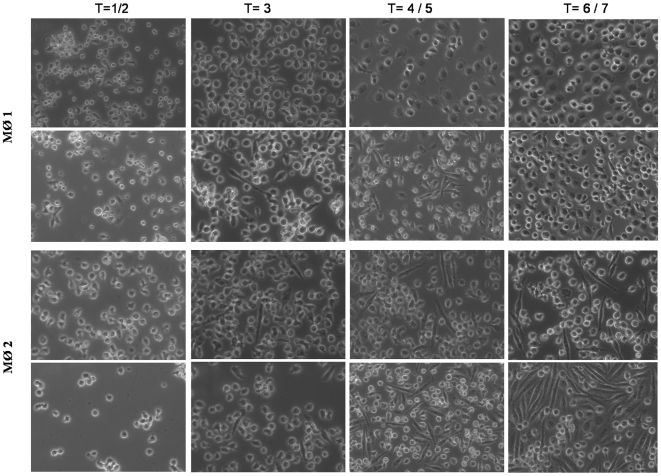
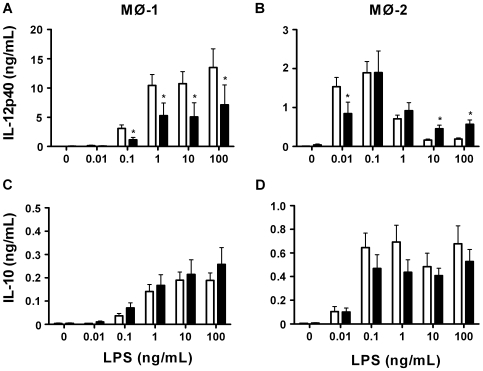
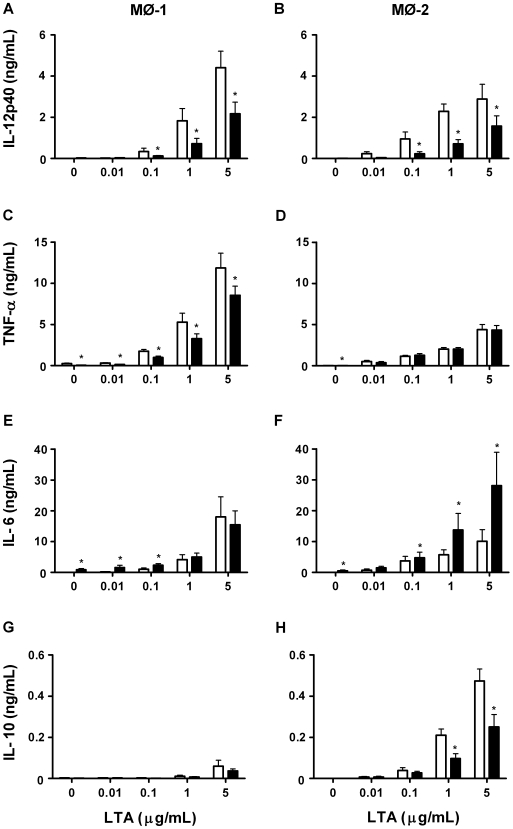
Methodology/principal findings: Freshly isolated monocytes were incubated with secretions and GM-CSF or M-CSF for 6 days and then stimulated with LPS or LTA for 18 h. The expression of cell surface molecules and the levels of cytokines, chemokines and growth factors in supernatants were measured. Our results showed secretions to affect monocyte-macrophage differentiation leading to MØ-1 with a partial MØ-2-like morphology but lacking CD163, which is characteristic for MØ-2. In response to LPS or LTA, secretions-differentiated MØ-1 produced less pro-inflammatory cytokines (TNF-alpha, IL-12p40 and MIF) than control cells. Similar results were observed for MØ-2 when stimulated with low concentrations of LPS. Furthermore, secretions dose-dependently led to MØ-1 and MØ-2 characterized by an altered chemokine production. Secretions led to MØ-2, but not MØ-1, producing enhanced levels of the growth factors bFGF and VEGF, as compared to control cells. The expression of cell-surface receptors involved in LPS/LTA was enhanced by secretions, that of CD86 and HLA-DR down-regulated, while receptors involved in phagocytosis remained largely unaffected.
Conclusions: Maggot secretions skew the differentiation of monocytes into macrophages away from a pro-inflammatory to a pro-angiogenic type.
Conflict of interest statement
Figures
References
-
- Boulton AJ, Vileikyte L, Ragnarson-Tennvall G, Apelqvist J. The global burden of diabetic foot disease. Lancet. 2005;366:1719–1724. - PubMed
-
- Jeffcoate WJ, Harding KG. Diabetic foot ulcers. Lancet. 2003;361:1545–1551. - PubMed
-
- Jeffcoate WJ, Chipchase SY, Ince P, Game FL. Assessing the outcome of the management of diabetic foot ulcers using ulcer-related and person-related measures. Diabetes Care. 2006;29:1784–1787. - PubMed
-
- Oyibo SO, Jude EB, Tarawneh I, Nguyen HC, Armstrong DG, et al. The effects of ulcer size and site, patient's age, sex and type and duration of diabetes on the outcome of diabetic foot ulcers. Diabet Med. 2001;18:133–138. - PubMed
-
- Apelqvist J, Larsson J, Agardh CD. Long-term prognosis for diabetic patients with foot ulcers. J Intern Med. 1993;233:485–491. - PubMed
Publication types
MeSH terms
Substances
LinkOut - more resources
Full Text Sources
Research Materials
Miscellaneous
