


Angiogenic and inflammatory markers of cardiopulmonary changes in children and adolescents with sickle cell disease
- PMID: 19956689
- PMCID: PMC2776981
- DOI: 10.1371/journal.pone.0007956
Angiogenic and inflammatory markers of cardiopulmonary changes in children and adolescents with sickle cell disease
Abstract
Background: Pulmonary hypertension and left ventricular diastolic dysfunction are complications of sickle cell disease. Pulmonary hypertension is associated with hemolysis and hypoxia, but other unidentified factors are likely involved in pathogenesis as well.
Design and methods: Plasma concentrations of three angiogenic markers (fibroblast growth factor, platelet derived growth factor-BB [PDGF-BB], vascular endothelial growth factor [VEGF]) and seven inflammatory markers implicated in pulmonary hypertension in other settings were determined by Bio-Plex suspension array in 237 children and adolescents with sickle cell disease at steady state and 43 controls. Tricuspid regurgitation velocity (which reflects systolic pulmonary artery pressure), mitral valve E/Edti ratio (which reflects left ventricular diastolic dysfunction), and a hemolytic component derived from four markers of hemolysis and hemoglobin oxygen saturation were also determined.
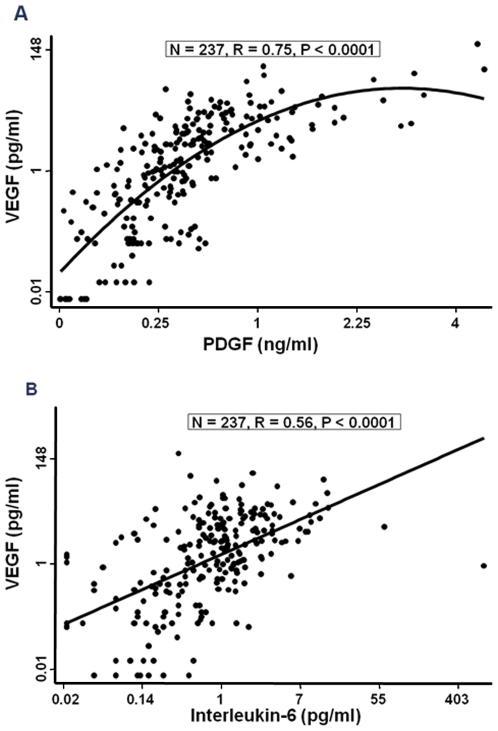
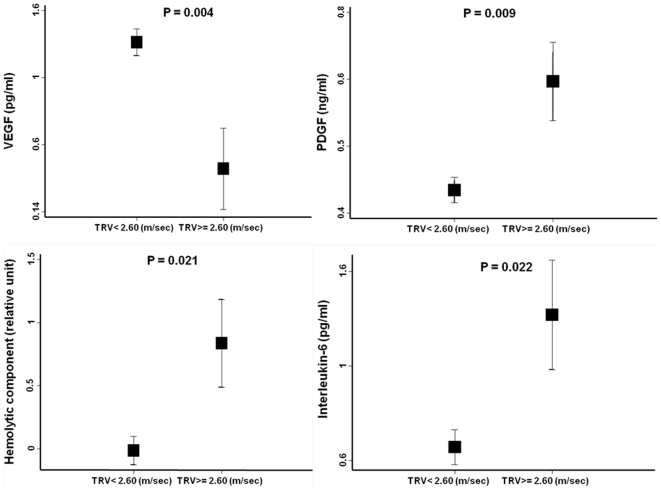
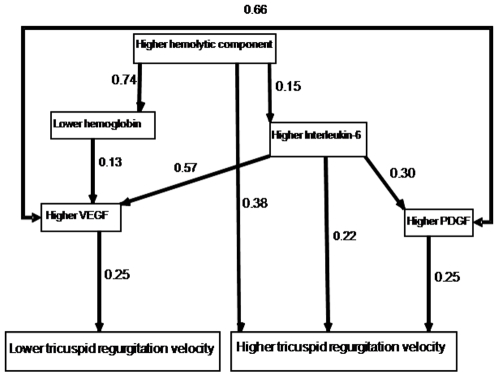
Results: Plasma concentrations of interleukin-8, interleukin-10 and VEGF were elevated in the patients with sickle cell disease compared to controls (P<or=0.003). By logistic regression, greater values for PDGF-BB (P = 0.009), interleukin-6 (P = 0.019) and the hemolytic component (P = 0.026) were independently associated with increased odds of elevated tricuspid regurgitation velocity while higher VEGF concentrations were associated with decreased odds (P = 0.005) among the patients with sickle cell disease. These findings, which are consistent with reports that PDGF-BB stimulates and VEGF inhibits vascular smooth muscle cell proliferation, did not apply to E/Etdi.
Conclusions: Circulating concentrations of angiogenic and pro-Inflammatory markers are altered in sickle cell disease children and adolescents with elevated tricuspid regurgitation velocity, a subgroup that may be at risk for developing worsening pulmonary hypertension. Further studies to understand the molecular changes in these children are indicated.
Conflict of interest statement
Figures
References
-
- Gladwin MT, Sachdev V, Jison ML, Shizukuda Y, Plehn JF, et al. Pulmonary hypertension as a risk factor for death in patients with sickle cell disease. N Engl J Med. 2004;350:886–895. - PubMed
-
- Pashankar FD, Carbonella J, Bazzy-Asaad A, Friedman A. Prevalence and risk factors of elevated pulmonary artery pressures in children with sickle cell disease. Pediatrics. 2008;121:777–782. - PubMed
-
- Liem RI, Young LT, Thompson AA. Tricuspid regurgitant jet velocity is associated with hemolysis in children and young adults with sickle cell disease evaluated for pulmonary hypertension. Haematologica. 2007;92:1549–1552. - PubMed
Publication types
MeSH terms
Substances
Grants and funding
LinkOut - more resources
Full Text Sources
Other Literature Sources
Medical
Molecular Biology Databases
