


Relationship of impairment induced by intracellular S-adenosylhomocysteine accumulation with DNA methylation in human umbilical vein endothelial cells treated with 3-deazaadenosine
- PMID: 19958400
- PMCID: PMC2803255
- DOI: 10.1111/j.1365-2613.2009.00687.x
Relationship of impairment induced by intracellular S-adenosylhomocysteine accumulation with DNA methylation in human umbilical vein endothelial cells treated with 3-deazaadenosine
Abstract
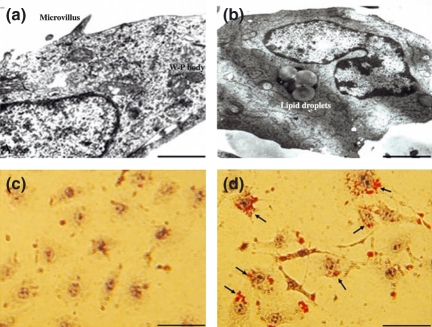
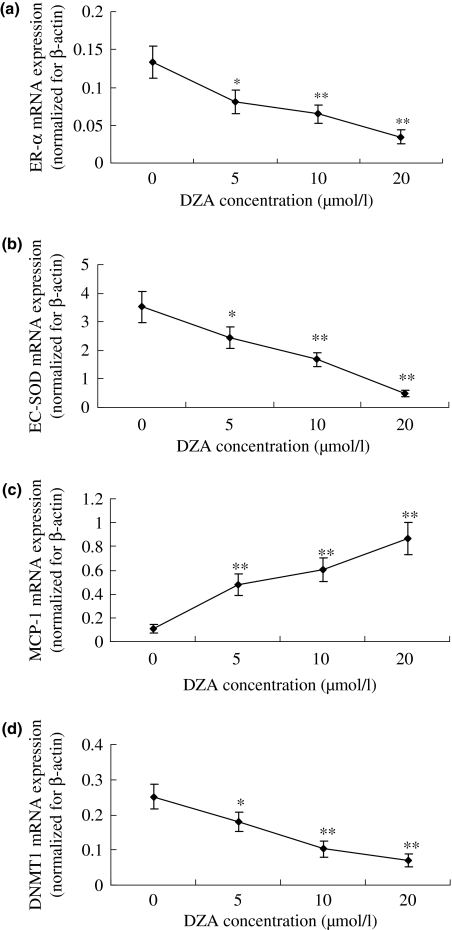
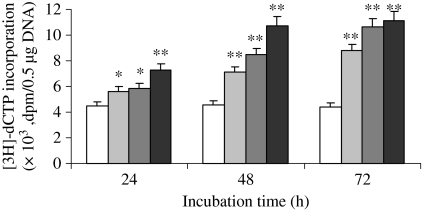
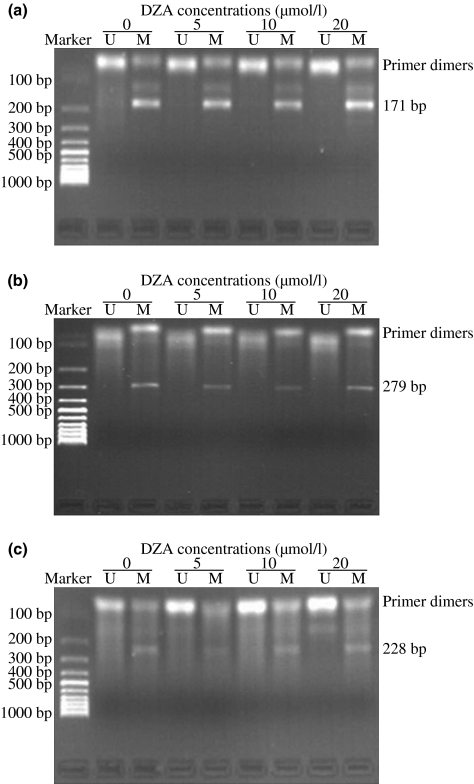
The aim of this study was to estimate the relationship of endothelial dysfunction induced by intracellular S-adenosylhomocysteine (SAH) accumulation and DNA methylation in human umbilical vein endothelial cells (HUVEC). The isolated HUVEC were incubated with 3-deazaadenosine (DZA) to induce experimental intracellular SAH accumulation. The impairment of HUVEC function was assessed by changes in morphology and proliferative ability. The expression of DNA methyltransferase-1 (DNMT1) and the atherosclerosis related genes [oestrogen receptor-alpha (ER-alpha), extracellular superoxide dismutase (EC-SOD) and monocyte chemoattractant protein-1 (MCP-1)] were analysed using quantitative real-time PCR. Global DNA methylated status was measured using the cytosine extension assay. The methylated patterns of ER-alpha, EC-SOD and MCP-1 genes were determined with methylation-specific PCR. We found that DZA administration increased intracellular SAH levels progressively and simultaneously decreased Hcy content in medium. Moreover, the supplementation induced HUVEC apoptosis, inhibited proliferation ability and DNMT1 mRNA expression (P < 0.05) and furthermore reduced global DNA methylation status (P < 0.05). Correlation analysis showed the presence of a negative correlation between intracellular SAH concentration, proliferative ability, and expression of ER-alpha, EC-SOD, and DNMT1 (r = -0.89, -0.86, -0.92 and -0.88 respectively, P < 0.001); and a positive correlation with MCP-1 expression and DNA [(3)H]-dCTP incorporation (r = 0.89 and 0.93 respectively, P < 0.001). Our results showed that endothelial dysfunction induced by intracellular SAH accumulation is mediated by regulating the expression of atherosclerosis related genes in HUVEC, which is not related with gene promoter methylated patterns, but may be associated with altered global DNA hypomethylated status. These findings suggest that SAH can act as the potential molecular biological marker in the promotion of atherogenesis.
Figures


References
-
- Ambrosi P, Rolland PH, Bodard H, et al. Effects of folate supplementation in hyperhomocysteinemic pigs. J. Am. Coll. Cardiol. 1999;34:274–279. - PubMed
-
- Auer J, Rammer M, Berent R, Weber T, Lassnig E, Eber B. Lack of association between plasma lipoprotein(a) concentrations and the presence or absence of coronary atherosclerosis. Acta Cardiol. 2002;57:409–414. - PubMed
-
- Boers GH. Mild hyperhomocysteinemia is an independent risk factor of arterial vascular disease. Semin. Thromb. Hemost. 2000;26:291–295. - PubMed
-
- Boushey CJ, Beresford SA, Omenn GS, Motulsky AG. A quantitative assessment of plasma homocysteine as a risk factor for vascular disease. Probable benefits of increasing folic acid intakes. JAMA. 1995;274:1049–1057. - PubMed
-
- Boyle JJ. Macrophage activation in atherosclerosis pathogenesis and pharmacology of plaque rupture. Curr. Vasc. Pharmacol. 2005;3:63–68. - PubMed
Publication types
MeSH terms
Substances
LinkOut - more resources
Full Text Sources
Research Materials
Miscellaneous
