


Vitamin B12 deficiency reduces proliferation and promotes differentiation of neuroblastoma cells and up-regulates PP2A, proNGF, and TACE
- PMID: 19959661
- PMCID: PMC2788478
- DOI: 10.1073/pnas.0811794106
Vitamin B12 deficiency reduces proliferation and promotes differentiation of neuroblastoma cells and up-regulates PP2A, proNGF, and TACE
Abstract
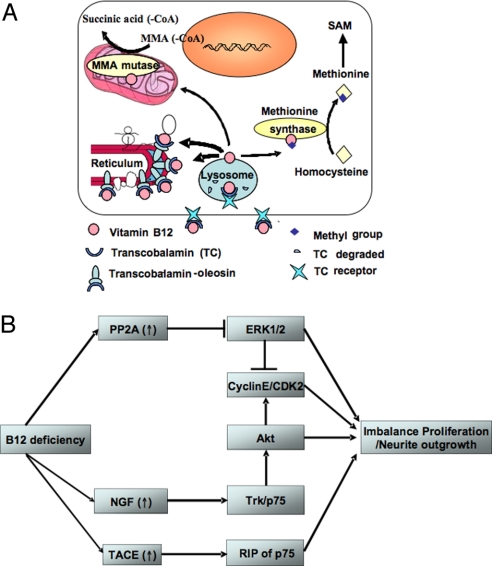
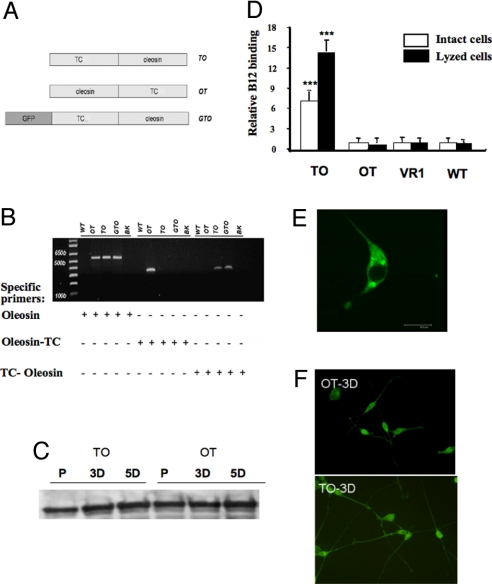
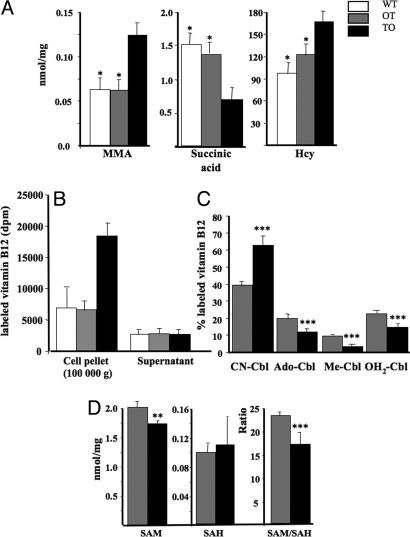
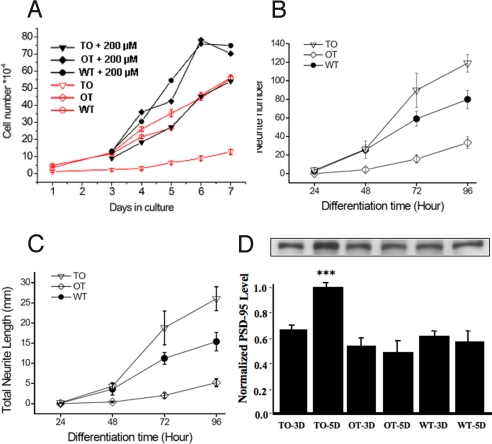
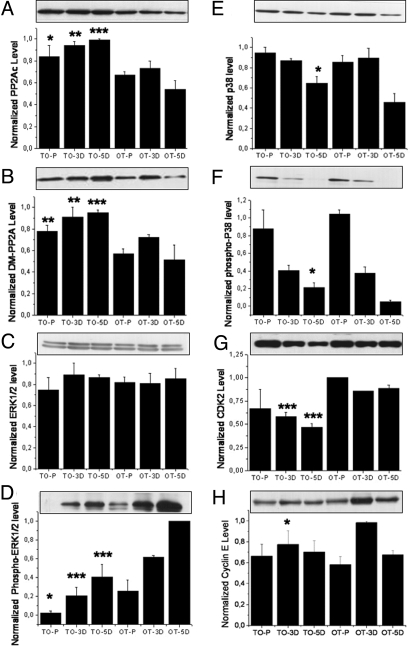
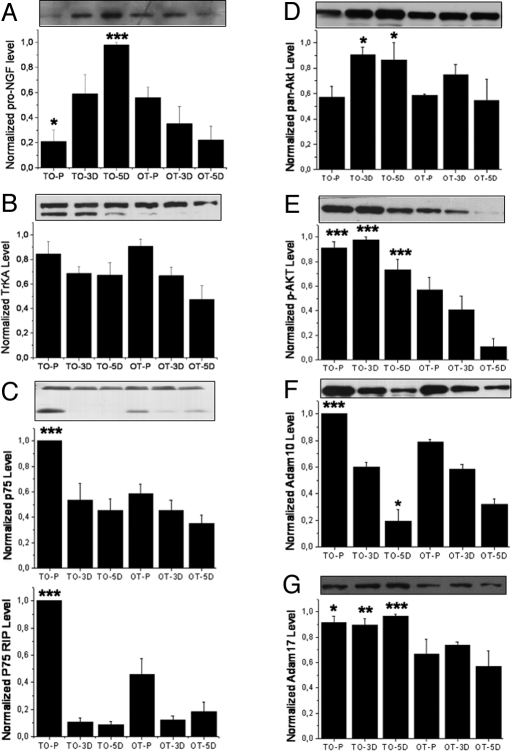
Vitamin B12 (cobalamin, Cbl) is indispensable for proper brain development and functioning, suggesting that it has neurotrophic effects beside its well-known importance in metabolism. The molecular basis of these effects remains hypothetical, one of the reasons being that no efficient cell model has been made available for investigating the consequences of B12 cellular deficiency in neuronal cells. Here, we designed an approach by stable transfection of NIE115 neuroblastoma cells to impose the anchorage of a chimeric B12-binding protein, transcobalamin-oleosin (TO) to the intracellular membrane. This model produced an intracellular sequestration of B12 evidenced by decreased methyl-Cbl and S-adenosylmethionine and increased homocysteine and methylmalonic acid concentrations. B12 deficiency affected the proliferation of NIE115 cells through an overall increase in catalytic protein phosphatase 2A (PP2A), despite its demethylation. It promoted cellular differentiation by improving initial outgrowth of neurites and, at the molecular level, by augmenting the levels of proNGF and p75(NTR). The up-regulation of PP2A and pro-nerve growth factor (NGF) triggered changes in ERK1/2 and Akt, two signaling pathways that influence the balance between proliferation and neurite outgrowth. Compared with control cells, a 2-fold increase of p75(NTR)-regulated intramembraneous proteolysis (RIP) was observed in proliferating TO cells (P < 0.0001) that was associated with an increased expression of two tumor necrosis factor (TNF)-alpha converting enzyme (TACE) secretase enzymes, Adam 10 and Adam 17. In conclusion, our data show that B12 cellular deficiency produces a slower proliferation and a speedier differentiation of neuroblastoma cells through interacting signaling pathways that are related with increased expression of PP2A, proNGF, and TACE.
Conflict of interest statement
The authors declare no conflict of interest.
Figures
References
-
- Russell JSR, Batten FE, Collier J. Subacute combined degeneration of the spinal cord. Brain. 1900;23:39–110.
-
- Gillette Guyonnet S, et al. IANA task force on nutrition and cognitive decline with aging. J Nutr Health Aging. 2007;11:132–152. - PubMed
-
- Pons L, Guy M, Lambert D, Hatier R, Guéant J. Transcytosis and coenzymatic conversion of [(57)Co]cobalamin bound to either endogenous transcobalamin or exogenous intrinsic factor in caco-2 cells. Cell Physiol Biochem. 2000;10:135–148. - PubMed
-
- McLean GR, et al. Antibodies to transcobalamin II block in vitro proliferation of leukemic cells. Blood. 1997;89:235–242. - PubMed
-
- Hsieh K, Huang AH. Lipid-rich tapetosomes in Brassica tapetum are composed of oleosin-coated oil droplets and vesicles, both assembled in and then detached from the endoplasmic reticulum. Plant J. 2005;43:889–899. - PubMed
Publication types
MeSH terms
Substances
LinkOut - more resources
Full Text Sources
Other Literature Sources
Medical
Research Materials
Miscellaneous
