


Phospholamban ablation rescues sarcoplasmic reticulum Ca(2+) handling but exacerbates cardiac dysfunction in CaMKIIdelta(C) transgenic mice
- PMID: 19959778
- PMCID: PMC2818826
- DOI: 10.1161/CIRCRESAHA.109.207423
Phospholamban ablation rescues sarcoplasmic reticulum Ca(2+) handling but exacerbates cardiac dysfunction in CaMKIIdelta(C) transgenic mice
Abstract
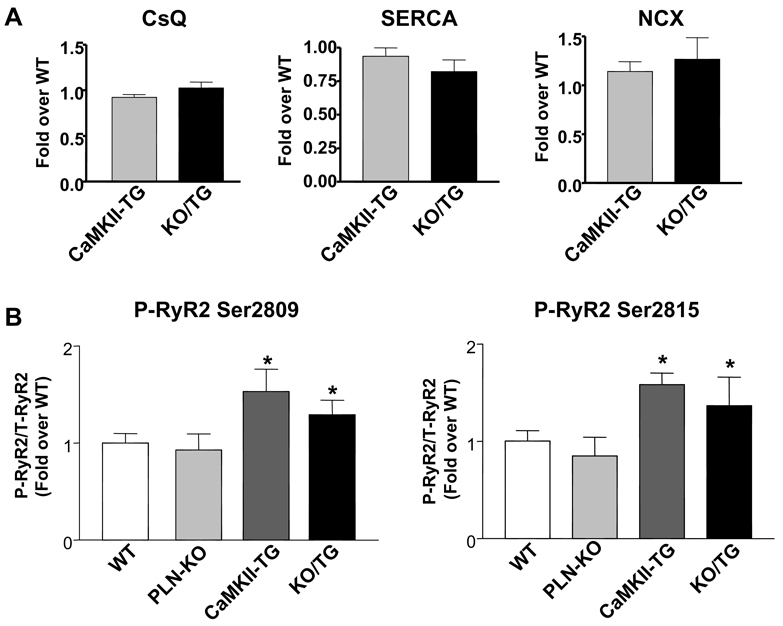
Rationale: We previously showed that transgenic mice expressing Ca(2+)/calmodulin-dependent protein kinase II delta(C) (CaMKII-TG) develop dilated cardiomyopathy associated with increased ryanodine receptors (RyR2) phosphorylation, enhanced sarcoplasmic reticulum (SR) Ca(2+) leak and lowering of SR Ca(2+) load. We hypothesized that phospholamban (PLN) ablation would restore SR Ca(2+) load and prevent the decreased ventricular contractility, dilation and mortality seen in CaMKII-TG.
Objective: Our objectives were to generate CaMKII-TG mice lacking PLN, determine whether the maladaptive effects of cardiac CaMKIIdelta(C) expression were corrected, and establish the mechanistic basis for these changes.
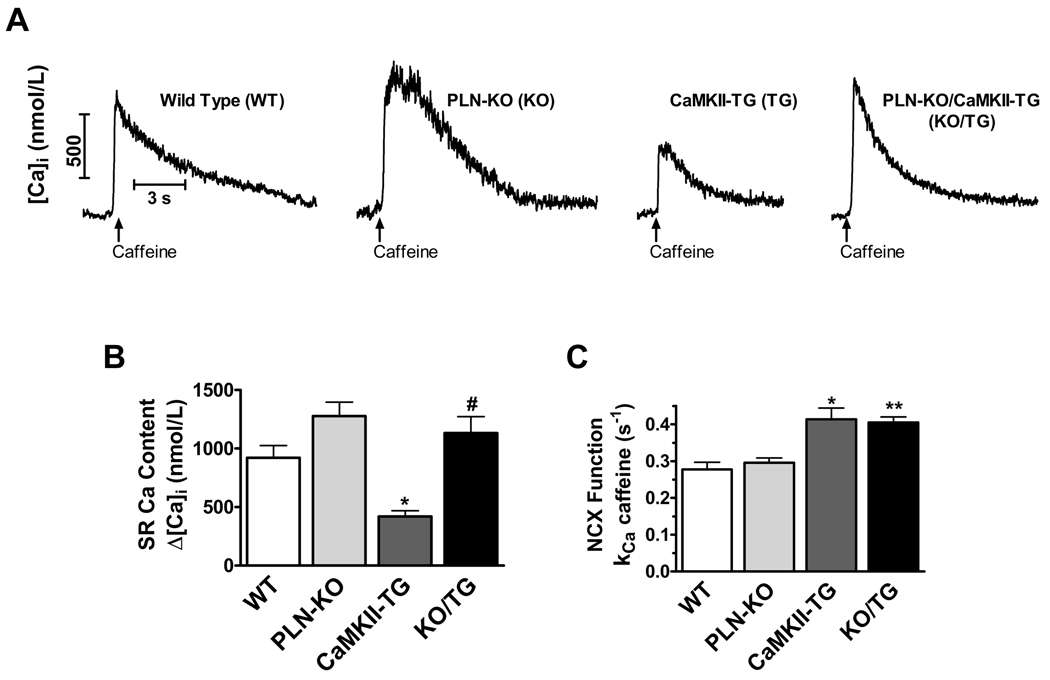
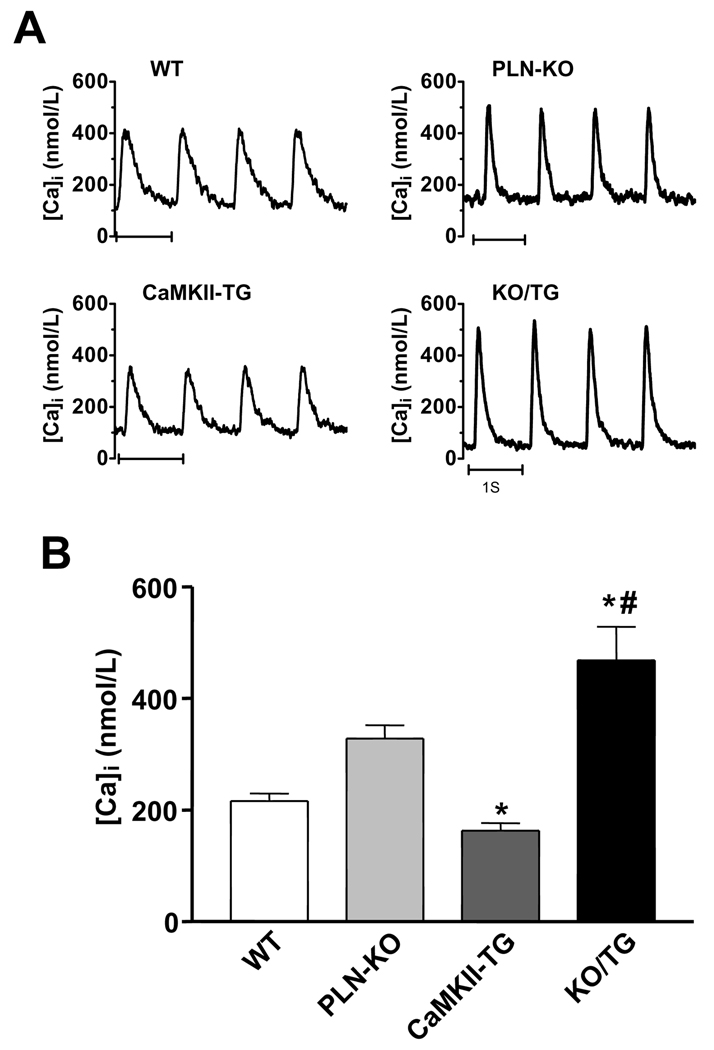
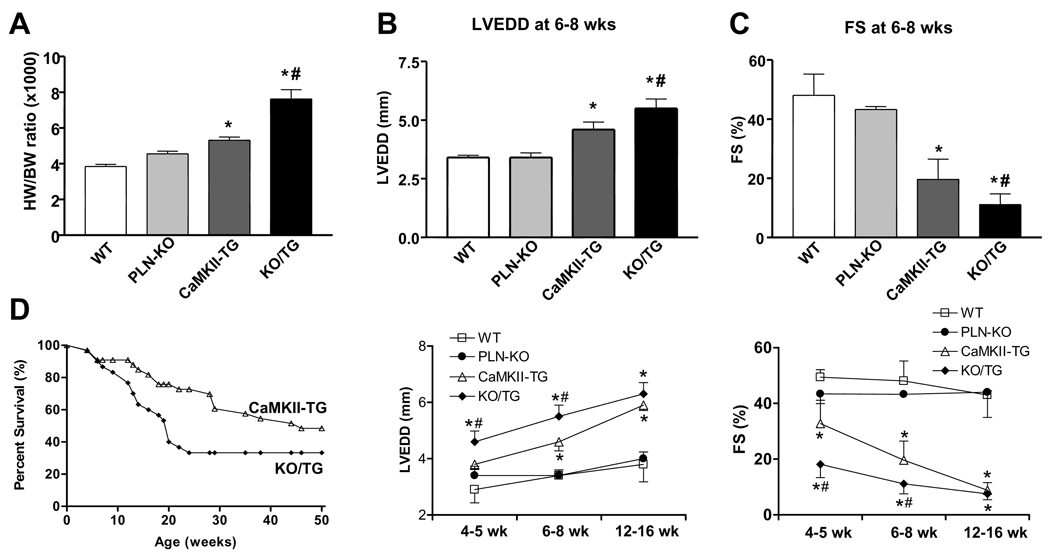
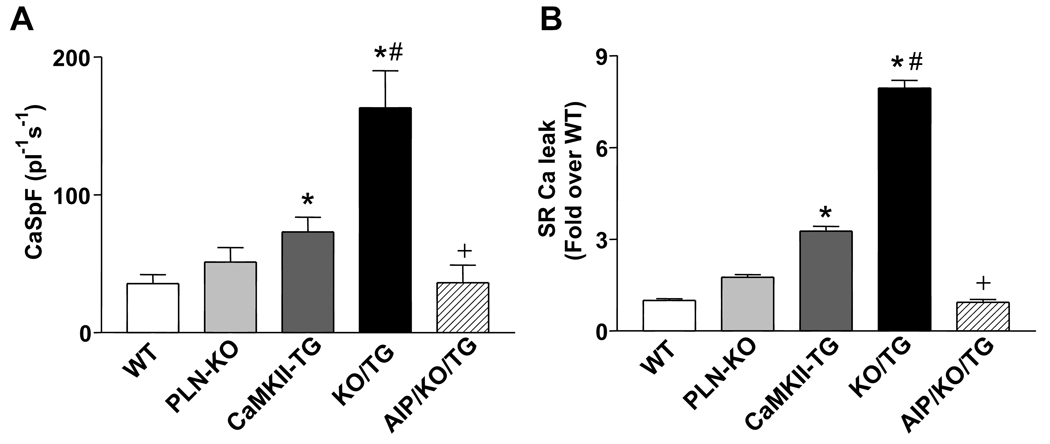
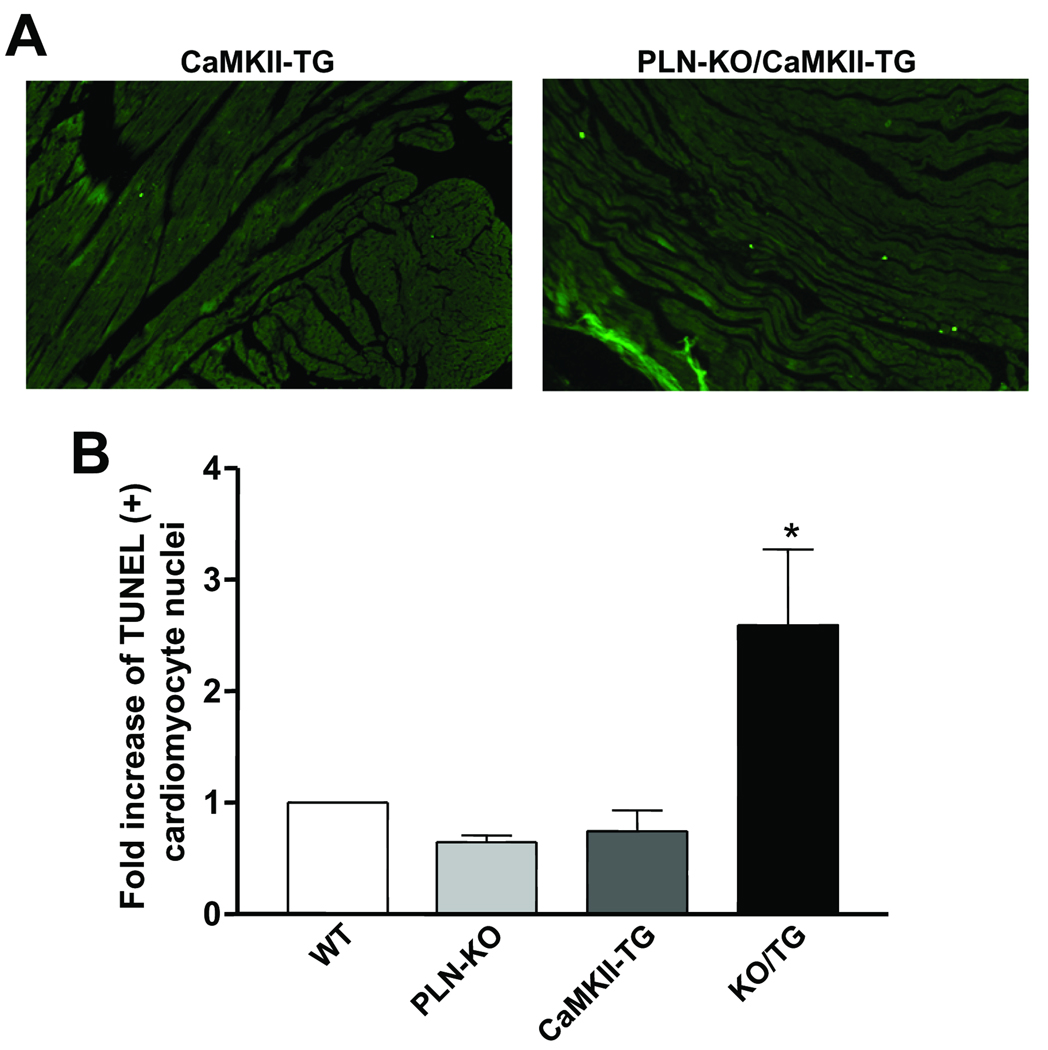
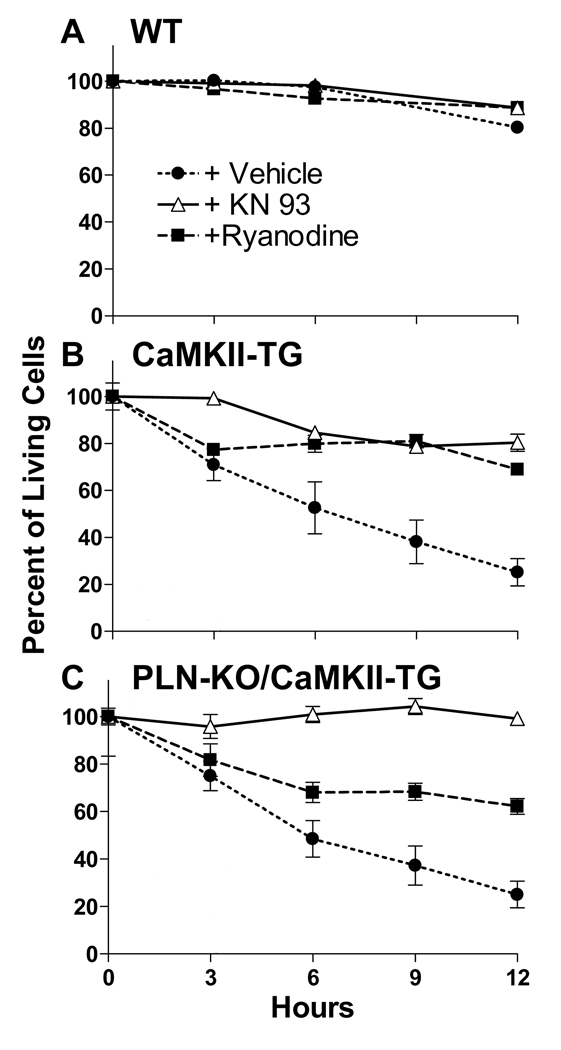
Methods and results: CaMKII-TG were crossed with PLN knockout (PLN-KO) mice to generate KO/TG mice. Myocytes from wild type (WT), CaMKII-TG, PLN-KO and KO/TG were compared. The decreased SR Ca(2+) load and twitch Ca(2+) transients seen in CaMKII-TG were normalized in KO/TG. Surprisingly the heart failure phenotype was exacerbated, as indicated by increased left ventricular dilation, decreased ventricular function, increased apoptosis and greater mortality. In KO/TG myocytes SR Ca(2+) sparks and leak were significantly increased, presumably because of the combined effects of restored SR Ca(2+) load and RyR2 phosphorylation. Mitochondrial Ca(2+) loading was increased in cardiomyocytes from KO/TG versus WT or CaMKII-TG mice and this was dependent on elevated SR Ca(2+) sparks. Cardiomyocytes from KO/TG showed poor viability, improved by inhibiting SR Ca(2+) release and mitochondrial Ca(2+) loading.
Conclusions: Normalizing cardiomyocyte SR Ca(2+) loading in the face of elevated CaMKII and RyR2 phosphorylation leads to enhanced SR Ca(2+) leak and mitochondrial Ca(2+) elevation, associated with exacerbated cell death, heart failure and mortality.
Figures

Comment in
-
Targeting sarcoplasmic reticulum Ca2+ uptake to improve heart failure: hit or miss.Circ Res. 2010 Feb 5;106(2):230-3. doi: 10.1161/CIRCRESAHA.109.210740. Circ Res. 2010. PMID: 20133907 No abstract available.
References
-
- Zhang T, Maier LS, Dalton ND, Miyamoto S, Ross J, Jr, Bers DM, Brown JH. The δC isoform of CaMKII is activated in cardiac hypertrophy and induces dilated cardiomyopathy and heart failure. Circ Res. 2003;92:912–919. - PubMed
-
- Ling H, Zhang T, Pereira L, Means CK, Cheng H, Gu Y, Dalton ND, Peterson KL, Chen J, Bers D, Heller Brown J. Requirement for Ca2+/calmodulin-dependent kinase II in the transition from pressure overload-induced cardiac hypertrophy to heart failure in mice. J Clin Invest. 2009;119:1230–1240. - PMC - PubMed
-
- Kranias EG. Regulation of Ca2+ transport by cyclic 3',5'-AMP-dependent and calcium-calmodulin-dependent phosphorylation of cardiac sarcoplasmic reticulum. Biochim Biophys Acta. 1985;844:193–199. - PubMed
-
- Luo W, Grupp IL, Harrer J, Ponniah S, Grupp G, Duffy JJ, Doetschman T, Kranias EG. Targeted ablation of the phospholamban gene is associated with markedly enhanced myocardial contractility and loss of beta-agonist stimulation. Circ Res. 1994;75:401–409. - PubMed
-
- Li L, Chu G, Kranias EG, Bers DM. Cardiac myocyte calcium transport in phospholamban knockout mouse: relaxation and endogenous CaMKII effects. Am J Physiol. 1998;274:H1335–H1347. - PubMed
Publication types
MeSH terms
Substances
Grants and funding
- HL46345/HL/NHLBI NIH HHS/United States
- P01 HL080101/HL/NHLBI NIH HHS/United States
- R01 HL064724/HL/NHLBI NIH HHS/United States
- R01 HL026057/HL/NHLBI NIH HHS/United States
- P01 HL046345/HL/NHLBI NIH HHS/United States
- R01 HL030077/HL/NHLBI NIH HHS/United States
- T32 GM007752/GM/NIGMS NIH HHS/United States
- HL30077/HL/NHLBI NIH HHS/United States
- R37 HL030077/HL/NHLBI NIH HHS/United States
- HL80101/HL/NHLBI NIH HHS/United States
- GM007752/GM/NIGMS NIH HHS/United States
- HL26057/HL/NHLBI NIH HHS/United States
- R37 HL026057/HL/NHLBI NIH HHS/United States
LinkOut - more resources
Full Text Sources
Molecular Biology Databases
Research Materials
Miscellaneous
