


Cardiac fibroblast: the renaissance cell
- PMID: 19959782
- PMCID: PMC3345531
- DOI: 10.1161/CIRCRESAHA.109.209809
Cardiac fibroblast: the renaissance cell
Abstract
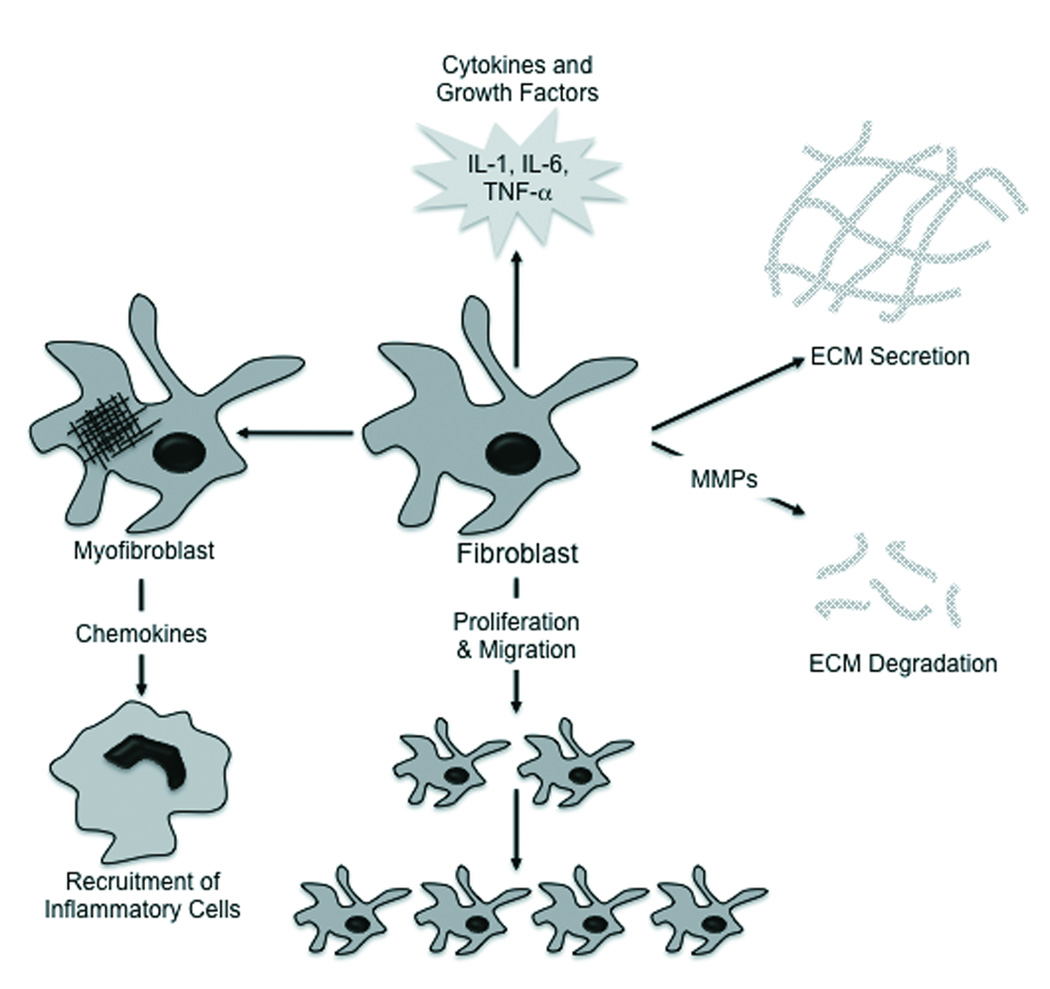
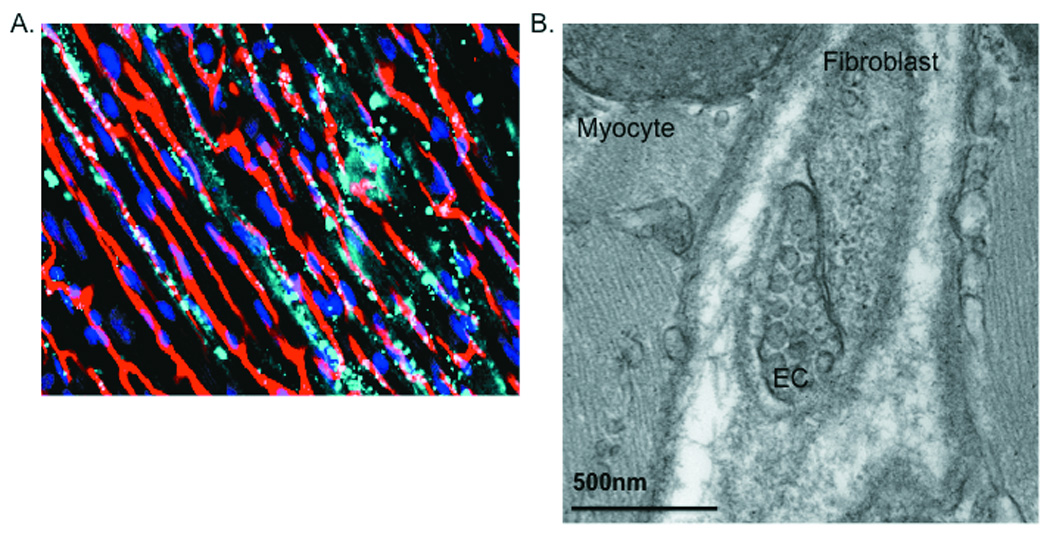
The permanent cellular constituents of the heart include cardiac fibroblasts, myocytes, endothelial cells, and vascular smooth muscle cells. Previous studies have demonstrated that there are undulating changes in cardiac cell populations during embryonic development, through neonatal development and into the adult. Transient cell populations include lymphocytes, mast cells, and macrophages, which can interact with these permanent cell types to affect cardiac function. It has also been observed that there are marked differences in the makeup of the cardiac cell populations depending on the species, which may be important when examining myocardial remodeling. Current dogma states that the fibroblast makes up the largest cell population of the heart; however, this appears to vary for different species, especially mice. Cardiac fibroblasts play a critical role in maintaining normal cardiac function, as well as in cardiac remodeling during pathological conditions such as myocardial infarct and hypertension. These cells have numerous functions, including synthesis and deposition of extracellular matrix, cell-cell communication with myocytes, cell-cell signaling with other fibroblasts, as well as with endothelial cells. These contacts affect the electrophysiological properties, secretion of growth factors and cytokines, as well as potentiating blood vessel formation. Although a plethora of information is known about several of these processes, relatively little is understood about fibroblasts and their role in angiogenesis during development or cardiac remodeling. In this review, we provide insight into the various properties of cardiac fibroblasts that helps illustrate their importance in maintaining proper cardiac function, as well as their critical role in the remodeling heart.
Figures


Comment in
-
Using serum transforming growth factor-beta to predict myocardial fibrosis.Circ Res. 2010 Mar 5;106(4):e3; author reply e4. doi: 10.1161/CIRCRESAHA.109.215921. Circ Res. 2010. PMID: 20203307 No abstract available.
References
-
- Nag A. Study of non-muscle cells of the adult mammalian heart: a fine structural analysis and distribution. Cytobios. 1980;28:41–61. - PubMed
-
- Zak R. Development and proliferative capacity of cardiac muscle cells. Circ Res. 1974;32(Suppl 2):17–26. - PubMed
-
- Baudino TA, Carver W, Giles W, Borg TK. Cardiac fibroblasts: friend or foe? Am J Physiol Heart Circ Physiol. 2006;291:H1015–H1026. - PubMed
-
- Camelliti P, Borg TK, Kohl P. Structural and functional characterization of cardiac fibroblasts. Cardiovasc Res. 2005;65:40–51. - PubMed
-
- Harvey PR, Rosenthal N. Heart Development. vol. 1. New York: Academic; 1999.
Publication types
MeSH terms
Grants and funding
LinkOut - more resources
Full Text Sources
Other Literature Sources
Medical
