


Signaling in TRPV1-induced platelet activating factor (PAF) in human esophageal epithelial cells
- PMID: 19959817
- PMCID: PMC2822503
- DOI: 10.1152/ajpgi.00409.2009
Signaling in TRPV1-induced platelet activating factor (PAF) in human esophageal epithelial cells
Abstract
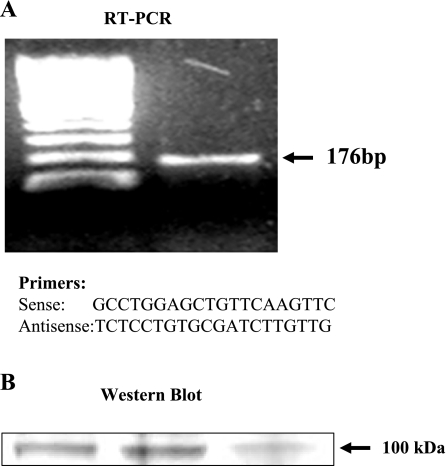
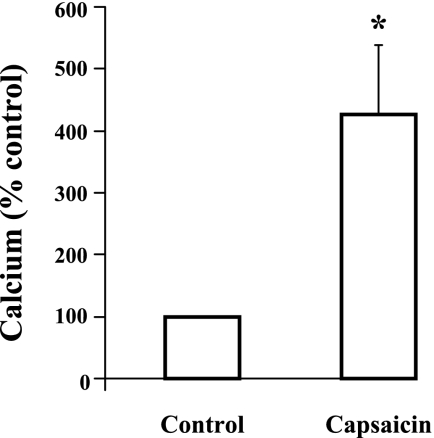
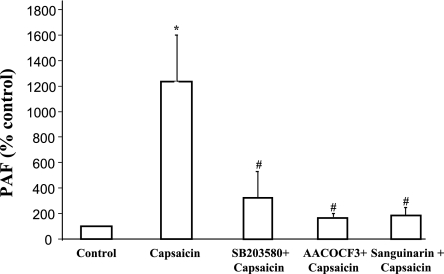
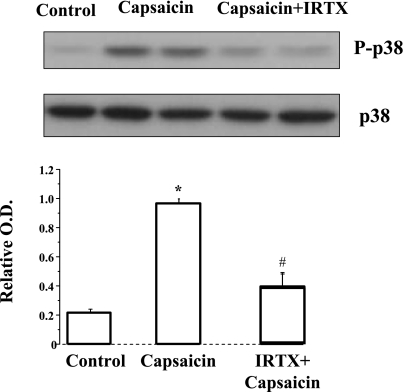
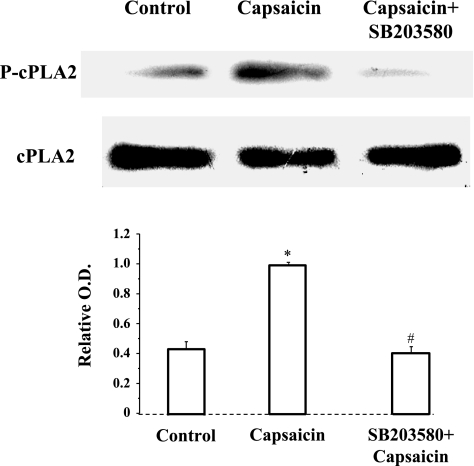
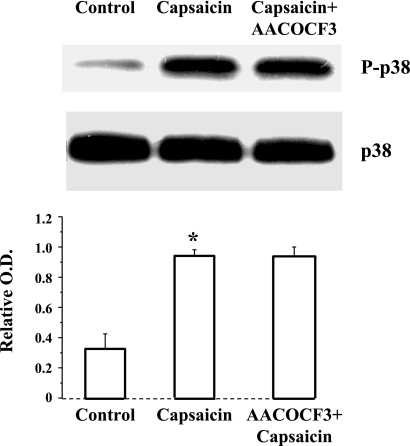
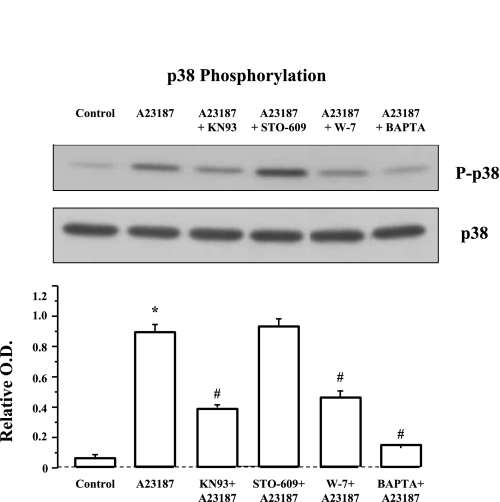
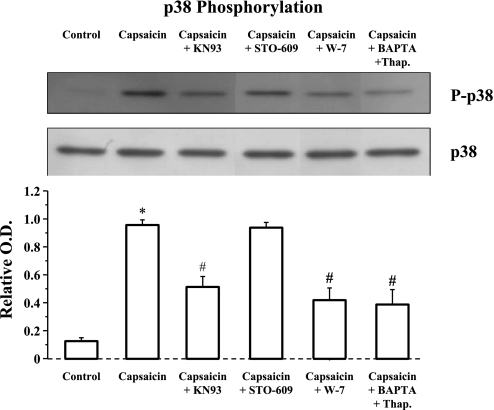
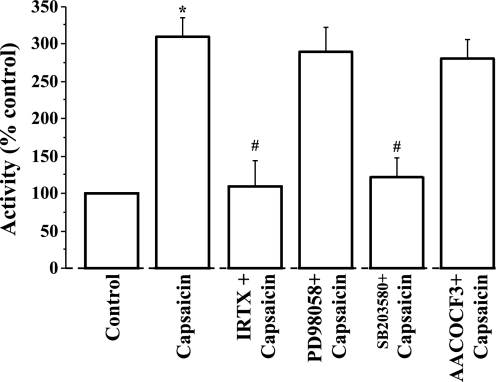
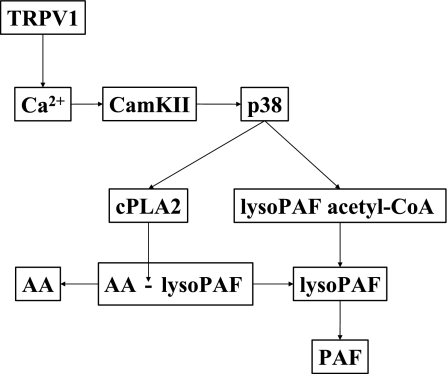
Transient receptor potential channel, vanilloid subfamily member 1 (TRPV1) receptors were identified in human esophageal squamous epithelial cell line HET-1A by RT-PCR and by Western blot. In fura-2 AM-loaded cells, the TRPV1 agonist capsaicin caused a fourfold cytosolic calcium increase, supporting a role of TRPV1 as a capsaicin-activated cation channel. Capsaicin increased production of platelet activating factor (PAF), an important inflammatory mediator that acts as a chemoattractant and activator of immune cells. The increase was reduced by the p38 MAP kinase (p38) inhibitor SB203580, by the cytosolic phospholipase A2 (cPLA(2)) inhibitor AACOCF3, and by the lyso-PAF acetyltransferase inhibitor sanguinarin, indicating that capsaicin-induced PAF production may be mediated by activation of cPLA(2), p38, and lyso-PAF acetyltransferase. To establish a sequential signaling pathway, we examined the phosphorylation of p38 and cPLA(2) by Western blot. Capsaicin induced phosphorylation of p38 and cPLA(2). Capsaicin-induced p38 phosphorylation was not affected by AACOCF3. Conversely, capsaicin-induced cPLA(2) phosphorylation was blocked by SB203580, indicating that capsaicin-induced PAF production depends on sequential activation of p38 and cPLA(2). To investigate how p38 phosphorylation may result from TRPV1-mediated calcium influx, we examined a possible role of calmodulin kinase (CaM-K). p38 phosphorylation was stimulated by the calcium ionophore A23187 and by capsaicin, and the response to both agonists was reduced by a CaM inhibitor and by CaM-KII inhibitors, indicating that calcium induced activation of CaM and CaM-KII results in P38 phosphorylation. Acetyl-CoA transferase activity increased in response to capsaicin and was inhibited by SB203580, indicating that p38 phosphorylation in turn causes activation of acetyl-CoA transferase to produce PAF. Thus epithelial cells produce PAF in response to TRPV1-mediated calcium elevation.
Figures
References
-
- Alappatt C, Johnson CA, Clay KL, Travers JB. Acute keratinocyte damage stimulates platelet-activating factor production. Arch Dermatol Res 292: 256–259, 2000 - PubMed
-
- Allen BG, Walsh MP. The biochemical basis of the regulation of smooth muscular contraction. Trends Biochem Sci 19: 362–368, 1994 - PubMed
-
- Baker PR, Owen JS, Nixon AB, Thomas LN, Wooten R, Daniel LW, O'Flaherty JT, Wykle RL. Regulation of platelet-activating factor synthesis in human neutrophils by MAP kinases. Biochim Biophys Acta 1592: 175–184, 2002 - PubMed
-
- Benveniste J, Chignard M. A role for PAF-acether (platelet-activating factor) in platelet-dependent vascular diseases? Circulation 72: 713–717, 1985 - PubMed
Publication types
MeSH terms
Substances
Grants and funding
LinkOut - more resources
Full Text Sources
