


Thrombus on the eustachian valve leading to recurrent pulmonary embolism: a rare problem requiring aggressive management
- PMID: 19960137
- PMCID: PMC2807839
- DOI: 10.1016/s0828-282x(09)70537-9
Thrombus on the eustachian valve leading to recurrent pulmonary embolism: a rare problem requiring aggressive management
Abstract
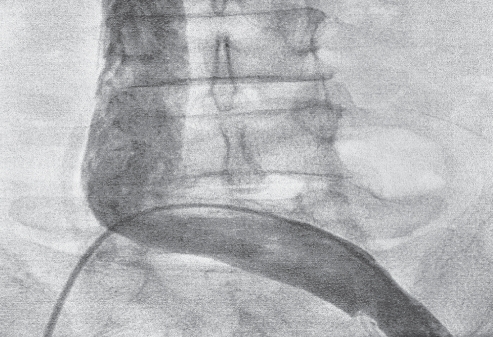
The eustachian valve is an embryological remnant of the inferior vena cava valve that is absent or inconspicuous in the adult. Even when prominent, it is considered to be a benign finding. The present report describes a patient with deep venous thrombosis who had recurrent pulmonary embolism despite thrombolysis and anticoagulation. He was found to have an adherent thrombus on the eustachian valve and his symptoms resolved completely following surgical thrombectomy. The present report highlights that the eustachian valve can, on rare occasions, harbour pathology and can adversely impact the outcomes of coexisting medical problems such as deep venous thrombosis. Infective endocarditis, pulmonary embolism and systemic embolism via a patent foramen ovale are the major complications of eustachian valve pathology. Transesophageal echocardiography appears to be superior to transthoracic echocardiography in identifying eustachian valve pathology and should be considered in all patients with thromboembolism without a known source.
La valvule d’Eustache est un reliquat embryologique de la valvule de la veine cave inférieure qui est absente ou imperceptible chez l’adulte. Même quand elle est proéminente, elle est considérée bénigne. Le présent rapport décrit le cas d’un patient souffrant de thrombose veineuse profonde qui a subi une embolie pulmonaire récurrente malgré la thrombolyse et l’anticoagulation. Ce patient s’est révélé porteur d’un thrombus adhérent au niveau de la valvule d’Eustache et ses symptômes sont entièrement rentrés dans l’ordre après une thrombectomie chirurgicale. Le présent rapport rappelle que la valvule d’Eustache peut, quoique rarement, héberger une pathologie et exercer un impact négatif sur l’issue des problèmes de santé coexistants, comme la thrombose veineuse profonde. L’endocardite infectieuse, l’embolie pulmonaire et l’embolie systémique rendues possibles par un foramen ovale perméable sont les principales complications d’une pathologie de la valvule d’Eustache. L’échocardiographie transœsophagienne semble supérieure à l’échocardiographie transthoracique pour l’identification d’une pathologie de la valvule d’Eustache et elle est à envisager chez tous les patients souffrant de thromboembolie d’étiologie inconnue.
Figures

References
-
- Jolly N, Kaul UA, Khalilullah M. Right atrial thrombus over eustachian valve – successful lysis with streptokinase. Int J Cardiol. 1991;30:354–6. - PubMed
-
- Barriales V, Tamargo JA, Aguado MG, et al. Floating thrombi on the Eustachian valve as a complication of venous thromboembolic disease. Int J Cardiol. 2004;93:289–91. - PubMed
-
- Schuchlenz HW, Saurer G, Weihs W, Rehak P. Persisting eustachian valve in adults: Relation to patent foramen ovale and cerebrovascular events. J Am Soc Echocardiogr. 2004;17:231–3. - PubMed
-
- De Keyser JL, Herregods MC, Dujardin K, Mullens W. The Eustachian valve in pulmonary embolism: Rescue or perilous? Eur J Echocardiogr. 2006;7:336–8. - PubMed
Publication types
MeSH terms
LinkOut - more resources
Full Text Sources
Medical
Molecular Biology Databases
