


Anti-cancer therapies that utilize cell penetrating peptides
- PMID: 19961434
- PMCID: PMC7485746
- DOI: 10.2174/157489210790936252
Anti-cancer therapies that utilize cell penetrating peptides
Abstract
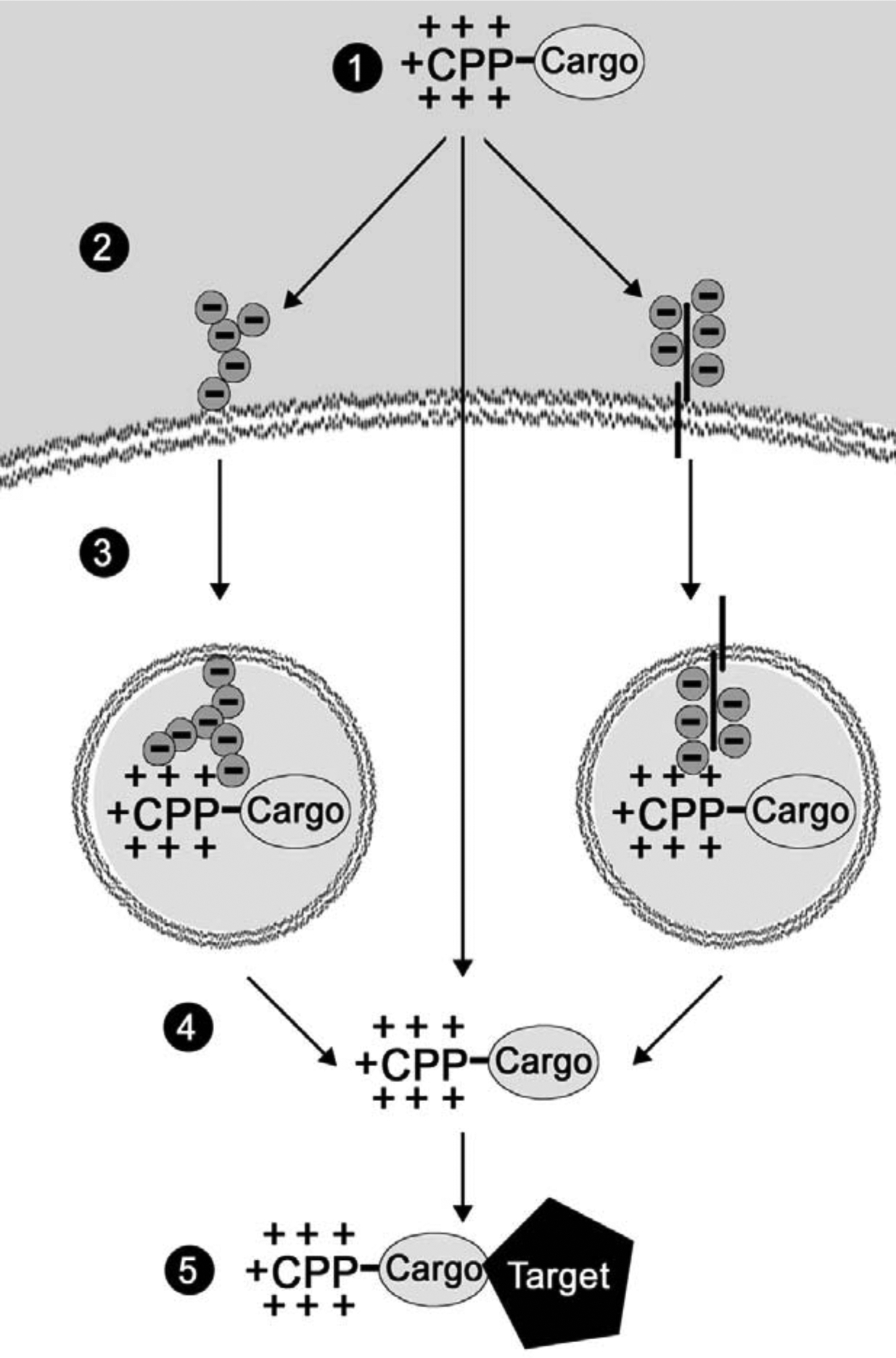
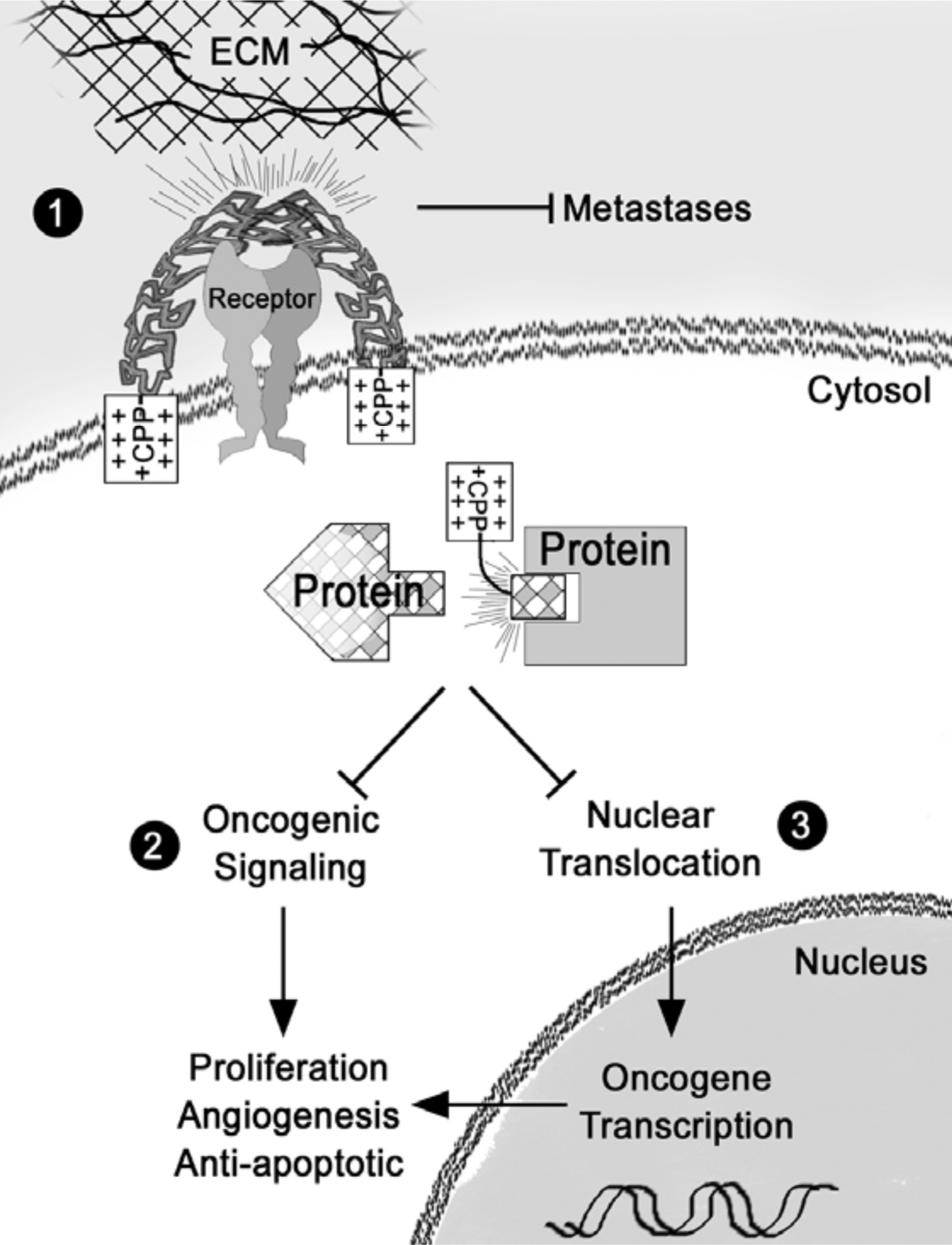
Cell penetrating peptides (CPPs) are 9-35mer cationic and/or amphipathic peptides that are rapidly internalized across cell membranes. Importantly, they can be linked to a variety of cargo, including anti-cancer therapeutics, making CPPs an efficient, effective and non-toxic mechanism for drug delivery. In this review, we discuss a number of CPP conjugated therapies (CTTs) that are either patented are in the progress of patenting, and show strong promise for clinical efficacy. The CTTs discussed here target a number of different processes specific to cancer progression, including proliferation, survival and migration. In addition, many of these CTTs also increase sensitivity to current anti-cancer therapy modalities, including radiation and other DNA damaging chemotherapies, thereby decreasing the toxic dosage required for effective treatment. Mechanistically, these CTTs function in a dominant-negative manner by blocking tumor-specific protein-protein interactions with the CPP-conjugated peptide or protein. The treatment of both cell lines and mouse models demonstrates that this method of molecular targeting results in equal if not greater efficacy than current standards of care, including DNA damaging agents and topoisomerase inhibitors. For the treatment of invasive carcinoma, these CTTs have significant clinical potential to deliver highly targeted therapies without sacrificing the patient's quality of life.
Conflict of interest statement
CONFLICT OF INTEREST
There are no conflicts of interest.
Figures
References
-
- Yu Z, Wu J, Wu S, Jia P, Tong Y, Wu X, et al. A recombinant cell-permeable p53 fusion protein is selectively stabilized under hypoxia and inhibits tumor cell growth. Cancer Lett 2009; 279: 101–7. - PubMed
-
- Hu M, Wang J, Chen P, Reilly RM. HIV-1 Tat peptide immunoconjugates differentially sensitize breast cancer cells to selected antiproliferative agents that induce the cyclin-dependent kinase inhibitor p21WAF-1/CIP-1. Bioconjug Chem 2006; 17: 1280–7. - PubMed
-
- Chiu YL, Ali A, Chu CY, Cao H, Rana TM. Visualizing a correlation between siRNA localization, cellular uptake, and RNAi in living cells. Chem Biol 2004; 11: 1165–75. - PubMed
-
- Hong FD, Clayman GL. Isolation of a peptide for targeted drug delivery into human head and neck solid tumors. Cancer Res 2000; 60: 6551–6. - PubMed
Publication types
MeSH terms
Substances
Grants and funding
LinkOut - more resources
Full Text Sources
Other Literature Sources