. 2009:2009:2811-4.
doi: 10.1109/IEMBS.2009.5333570.

Metadata and annotations for multi-scale electrophysiological data

Affiliations

Metadata and annotations for multi-scale electrophysiological data

Mark R Bower et al. Annu Int Conf IEEE Eng Med Biol Soc. 2009.

Abstract

The increasing use of high-frequency (kHz), long-duration (days) intracranial monitoring from multiple electrodes during pre-surgical evaluation for epilepsy produces large amounts of data that are challenging to store and maintain. Descriptive metadata and clinical annotations of these large data sets also pose challenges to simple, often manual, methods of data analysis. The problems of reliable communication of metadata and annotations between programs, the maintenance of the meanings within that information over long time periods, and the flexibility to re-sort data for analysis place differing demands on data structures and algorithms. Solutions to these individual problem domains (communication, storage and analysis) can be configured to provide easy translation and clarity across the domains. The Multi-scale Annotation Format (MAF) provides an integrated metadata and annotation environment that maximizes code reuse, minimizes error probability and encourages future changes by reducing the tendency to over-fit information technology solutions to current problems. An example of a graphical utility for generating and evaluating metadata and annotations for "big data" files is presented.


Figures
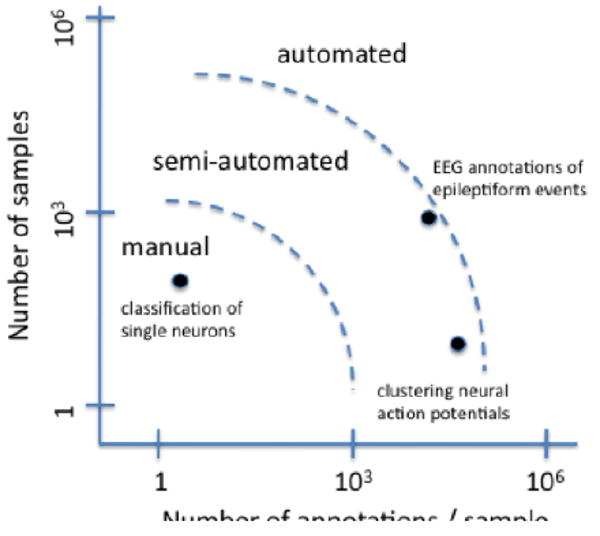
Figure 1
Figure 1
Increasing amounts of annotations and metadata require increasingly automated solutions to data management. In addition, the timeframe in which the annotations must be generated or retrieved also affects the degree of automation required.
Figure 2
Figure 2
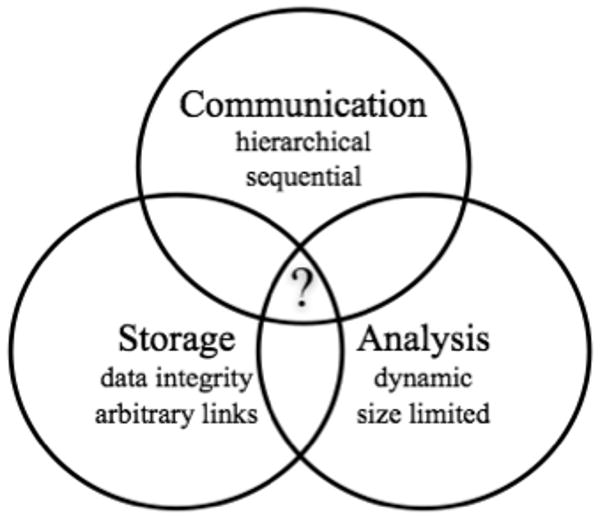
Problem domains involved in handling multi-scale electrophysiological data. An integrated solution would take advantage of the strengths of existing solutions that would allow easy translations between the domains.
Figure 3
Figure 3
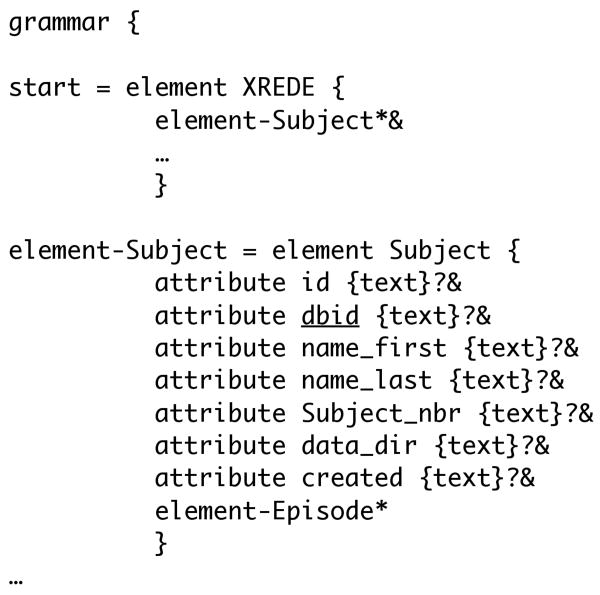
A portion of the XREDE XML schema written in RELAX NG Compact format. The use of XML validation provides another check on data integrity, while documenting the relationships that must hold in both the data analysis classes and in the database.
Figure 4
Figure 4
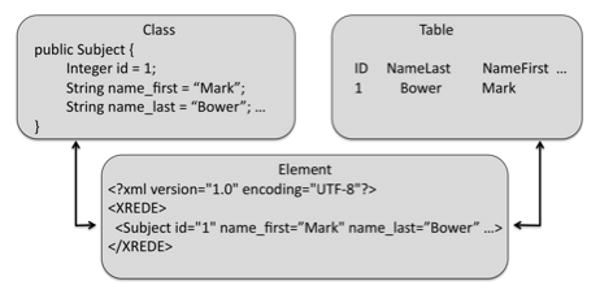
The Class-Element-Table integration for annotations. While it is possible to translate directly between objects and database storage, the use of XML validation in an intermediate state provides a check on data integrity, while documenting the relationships that must hold in both the data analysis classes and in the database.
Figure 5
Figure 5
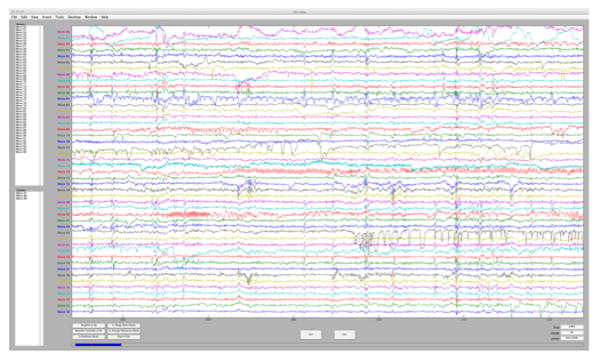
Screen capture from the multi-scale EEG viewer. The viewer provides an interactive display of continuously-recorded macro- and microelectrode files and user-defined annotations. Annotations are stored in a database via an XML file.

References

    1. Howe D, Costanzo M, Fey P, Gojobori T, Hannick L, Hide W, Hill DP, Kania R, Schaeffer M, St Pierre S, Twigger S, White O, Yon Rhee S. Big data: The future of biocuration. Nature. 2008 Sep 4;455(7209):47–50. 2008. - PMC - PubMed
    1. Brinkmann BH, Bower MR, Stengel KA, Worrell GA, Stead M. Large-scale Electrophysiology: Acquisition, Compression, Encryption, and Storage of Big Data. J Neurosci Methods. 2009 May 30;180(1):185–92. 2009. - PMC - PubMed
    1. Benson DA, Boguski MS, Lipman DJ, Ostell J, Ouellette BF, Rapp BA, Wheeler DL. GenBank. Nucleic Acids Research. 1999;27(1):12–17. - PMC - PubMed
    1. Eckel B. Thinking in Java. Prentice Hall; 2006.
    1. Gamma E, Helm R, Johnson R, Vlissides JM. Design Patterns: Elements of Reusable Object-Oriented Software. Addison-Wesley; 1994.

Publication types

LinkOut - more resources