


Effect of statins on HDL-C: a complex process unrelated to changes in LDL-C: analysis of the VOYAGER Database
- PMID: 19965573
- PMCID: PMC3035518
- DOI: 10.1194/jlr.P002816
Effect of statins on HDL-C: a complex process unrelated to changes in LDL-C: analysis of the VOYAGER Database
Abstract
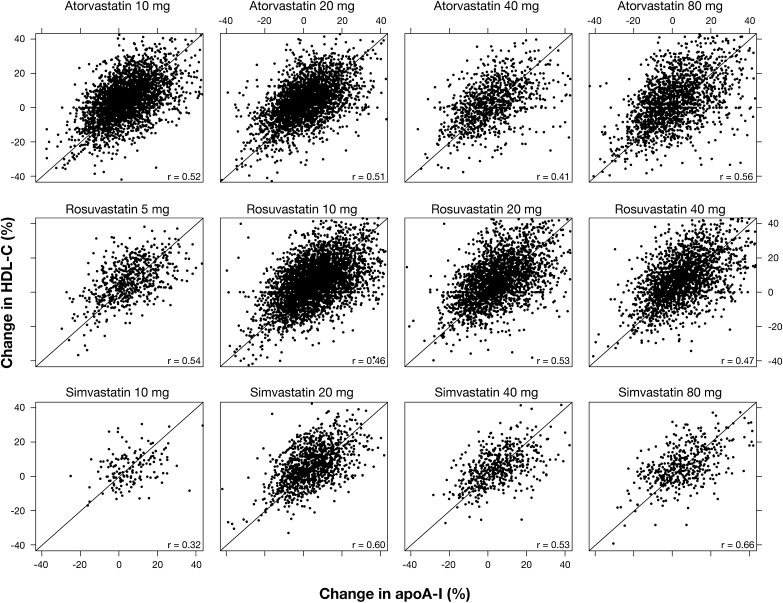
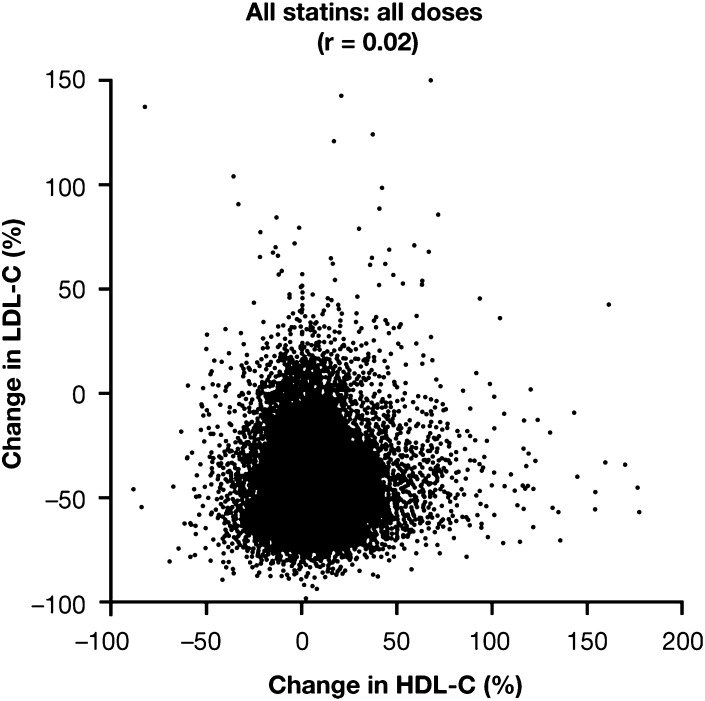
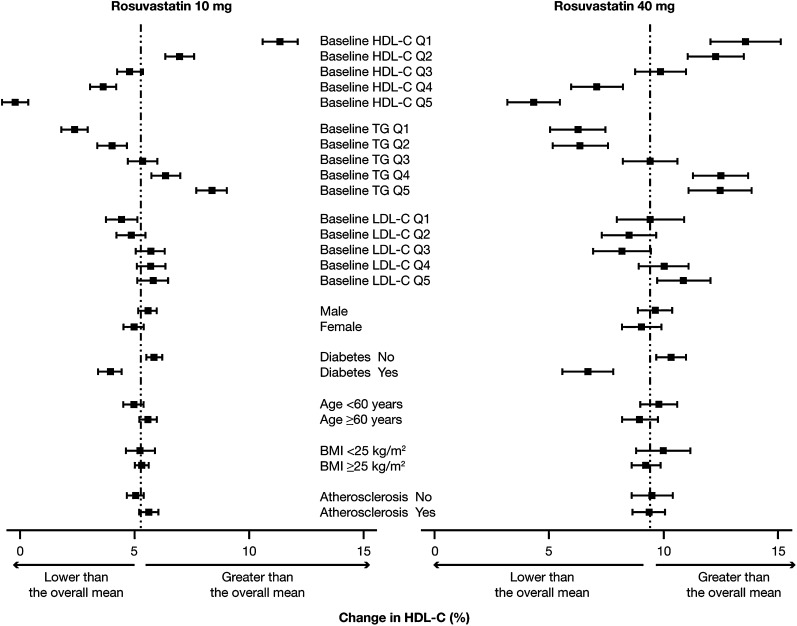
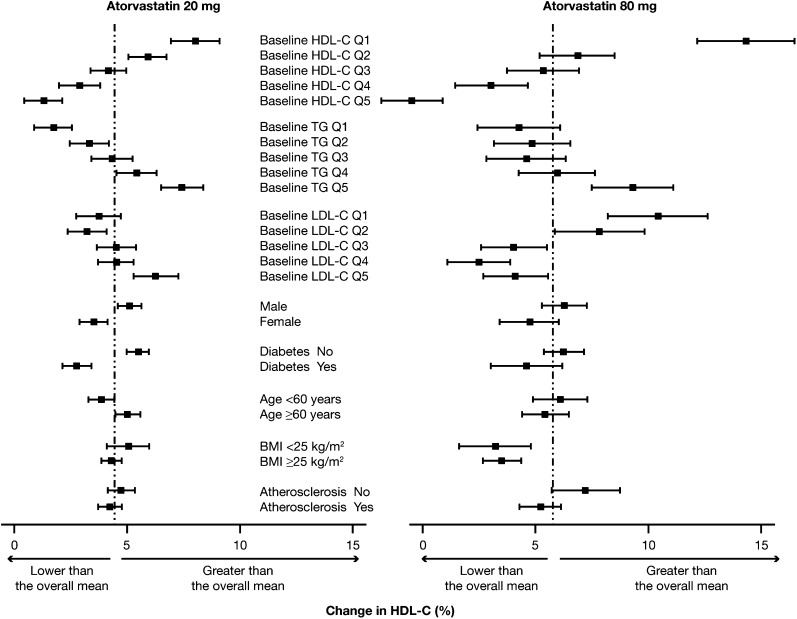
The relationship between statin-induced increases in HDL cholesterol (HDL-C) concentration and statin-induced decreases in LDL cholesterol (LDL-C) is unknown. The effects of different statins on HDL-C levels, relationships between changes in HDL-C and changes in LDL-C, and predictors of statin-induced increases in HDL-C have been investigated in an individual patient meta-analysis of 32,258 dyslipidemic patients included in 37 randomized studies using rosuvastatin, atorvastatin, and simvastatin. The HDL-C raising ability of rosuvastatin, and simvastatin was comparable, with both being superior to atorvastatin. Increases in HDL-C were positively related to statin dose with rosuvastatin and simvastatin but inversely related to dose with atorvastatin. There was no apparent relationship between reduction in LDL-C and increase in HDL-C, whether analyzed overall for all statins (correlation coefficient = 0.005) or for each statin individually. Percentage increase in apolipoprotein A-I was virtually identical to that of HDL-C at all doses of the three statins. Baseline concentrations of HDL-C and triglyceride (TG) and presence of diabetes were strong, independent predictors of statin-induced elevations of HDL-C. Statins vary in their HDL-C raising ability. The HDL-C increase achieved by all three statins was independent of LDL-C decrease. However, baseline HDL-C and TGs and the presence of diabetes were predictors of statin-induced increases in HDL-C.
Figures
References
-
- Baigent C., Keech A., Kearney P. M., Blackwell L., Buck G., Pollicino C., Kirby A., Sourjina T., Peto R., Collins R., et al. ; Cholesterol Treatment Trialists' (CTT) Collaborators. 2005. Efficacy and safety of cholesterol-lowering treatment: prospective meta-analysis of data from 90,056 participants in 14 randomised trials of statins. Lancet. 366: 1267–1278. - PubMed
-
- Sipahi I., Nicholls S. J., Tuzcu E. M., Nissen S. E. 2006. Coronary atherosclerosis can regress with very intensive statin therapy. Cleve. Clin. J. Med. 73: 937–944. - PubMed
-
- Nicholls S. J., Tuzcu E. M., Sipahi I., Grasso A. W., Schoenhagen P., Hu T., Wolski K., Crowe T., Desai M. Y., Hazen S. L., et al. 2007. Statins, high-density lipoprotein cholesterol, and regression of coronary atherosclerosis. JAMA. 297: 499–508. - PubMed
-
- Jones P. H., Davidson M. H., Stein E. A., Bays H. E., McKenney J. M., Miller E., Cain V. A., Blasetto J. W. 2003. STELLAR Study Group. Comparison of the efficacy and safety of rosuvastatin versus atorvastatin, simvastatin, and pravastatin across doses (STELLAR* Trial). Am. J. Cardiol. 92: 152–160. - PubMed
Publication types
MeSH terms
Substances
LinkOut - more resources
Full Text Sources
Medical
Miscellaneous
