


Safety and efficacy of testosterone gel in the treatment of male hypogonadism
- PMID: 19966909
- PMCID: PMC2785864
- DOI: 10.2147/cia.s4466
Safety and efficacy of testosterone gel in the treatment of male hypogonadism
Abstract
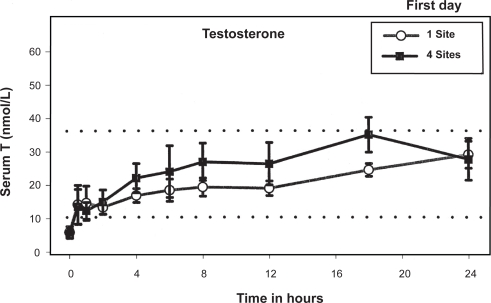
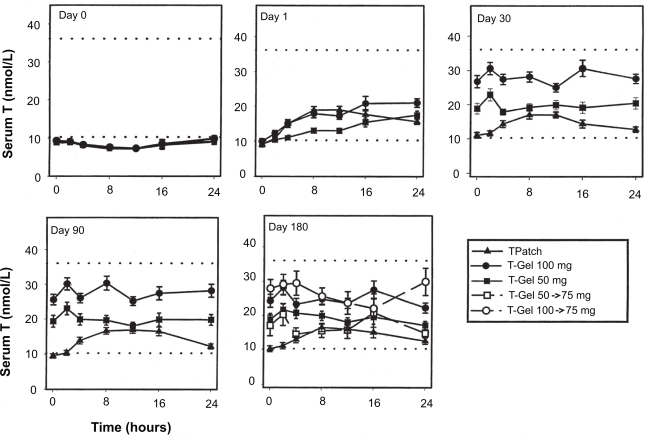
Transdermal testosterone gels were first introduced in the US in 2000. Since then, they have emerged as a favorable mode of testosterone substitution. Serum testosterone levels reach a steady-state in the first 24 hours of application and remain in the normal range for the duration of the application. This pharmacokinetic profile is comparable to that of testosterone patch but superior to injectable testosterone esters that are associated with peaks and troughs with each dose. Testosterone gels are as efficacious as patches and injectable forms in their effects on sexual function and mood. Anticipated increases in prostate-specific antigen with testosterone therapy are not significantly different with testosterone gels, and the risk of polycythemia is lower than injectable modalities. Application site reactions, a major drawback of testosterone patches, occur less frequently with testosterone gels. However, inter-personal transfer is a concern if appropriate precautions are not taken. Superior tolerability and dose flexibility make testosterone gel highly desirable over other modalities of testosterone replacement. Androgel and Testim, the two currently available testosterone gel products in the US, have certain brand-specific properties that clinicians may consider prior to prescribing.
Keywords: Androgel; Testim; hypogonadism; testosterone gel.
Figures
References
-
- Araujo AB, O’Donnell AB, Brambilla DJ, et al. Prevalence and incidence of androgen deficiency in middle-aged and older men: estimates from the Massachusetts Male Aging Study. J Clin Endocrinol Metab. 2004;89(12):5920–5926. - PubMed
-
- Harman SM, Metter EJ, Tobin JD, Pearson J, Blackman MR. Longitudinal effects of aging on serum total and free testosterone levels in healthy men Baltimore Longitudinal Study of Aging. J Clin Endocrinol Metab. 2001;86(2):724–731. - PubMed
-
- Araujo AB, Esche GR, Kupelian V, et al. Prevalence of symptomatic androgen deficiency in men. J Clin Endocrinol Metab. 2007;92(11):4241–4247. - PubMed
-
- Petak SM, Nankin HR, Spark RF, Swerdloff RS, Rodriguez-Rigau LJ. American Association of Clinical Endocrinologists Medical Guidelines for clinical practice for the evaluation and treatment of hypogonadism in adult male patients – 2002 update. Endocr Pract. 2002;8(6):440–456. - PubMed
-
- Bhasin S, Cunningham GR, Hayes FJ, et al. Testosterone therapy in adult men with androgen deficiency syndromes: an endocrine society clinical practice guideline. J Clin Endocrinol Metab. 2006;91(6):1995–2010. - PubMed
Publication types
MeSH terms
Substances
LinkOut - more resources
Full Text Sources
