


Systematic cultural adaptation of cognitive-behavioral therapy to reduce alcohol use among HIV-infected outpatients in western Kenya
- PMID: 19967441
- PMCID: PMC2949418
- DOI: 10.1007/s10461-009-9647-6
Systematic cultural adaptation of cognitive-behavioral therapy to reduce alcohol use among HIV-infected outpatients in western Kenya
Abstract
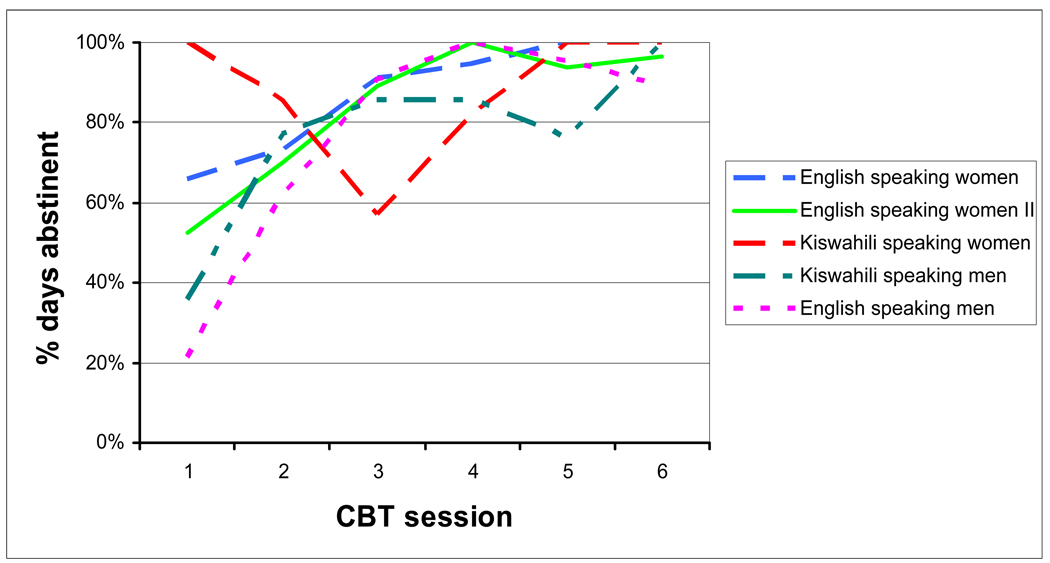
Two-thirds of those with HIV worldwide live in sub-Saharan Africa. Alcohol use is associated with the HIV epidemic through risky sex and suboptimal ARV adherence. In western Kenya, hazardous drinking was reported by HIV (53%) and general medicine (68%) outpatients. Cognitive behavioral treatment (CBT) has demonstrated strong efficacy to reduce alcohol use. This article reports on a systematic cultural adaptation and pilot feasibility study of group paraprofessional-delivered CBT to reduce alcohol use among HIV-infected outpatients in Eldoret, Kenya. Following adaptation and counselor training, five pilot groups were run (n = 27). Overall attendance was 77%. Percent days abstinent from alcohol (PDA) before session 1 was 52-100% (women) and 21-36% (men), and by session 6 was 96-100% (women) and 89-100% (men). PDA effect sizes (Cohen's d) between first and last CBT session were 2.32 (women) and 2.64 (men). Participants reported treatment satisfaction. Results indicate feasibility, acceptability and preliminary efficacy for CBT in Kenya.
Figures
References
-
- UNAIDS/WHO. AIDS epidemic update: December 2007. Geneva: UNAIDS/WHO;
-
- Ayisi JG, van Eijk AM, ter Kuil OF, et al. Risk factors for HIV infection among asymptomatic pregnant women attending an antenatal clinic in western Kenya. Int J STD AIDS. 2000;11:393–401. - PubMed
-
- Seage GR3, Holte S, Gross M, et al. Case-crossover study of partner and situational factors for unprotected sex. J Acquir Immune Defic Syndr. 2002;31:432–439. - PubMed
-
- Braithwaite RS, McGinnis KA, Conigliaro J, et al. A temporal and dose-response association between alcohol consumption and medication adherence among veterans in care. Alcohol Clin Exp Res. 2005;29:1190–1197. - PubMed
-
- Justice AC, Lasky E, McGinnis KA, et al. Comorbid disease and alcohol use among veterans with HIV infection: a comparison of measurement strategies. Med Care. 2006;44 Suppl 2:S52–S60. - PubMed
Publication types
MeSH terms
Grants and funding
LinkOut - more resources
Full Text Sources
Medical
