


Cognitive behavioral therapy for insomnia improves sleep and decreases pain in older adults with co-morbid insomnia and osteoarthritis
- PMID: 19968014
- PMCID: PMC2725255
Cognitive behavioral therapy for insomnia improves sleep and decreases pain in older adults with co-morbid insomnia and osteoarthritis
Abstract
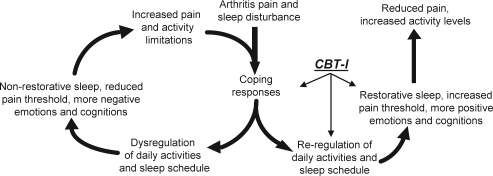
Study objectives: Osteoarthritis pain affects more than half of all older adults, many of whom experience co-morbid sleep disturbance. Pain initiates and exacerbates sleep disturbance, whereas disturbed sleep maintains and exacerbates pain, which implies that improving the sleep of patients with osteoarthritis may also reduce their pain. We examined this possibility in a secondary analysis of a previously published randomized controlled trial of cognitive behavioral therapy for insomnia (CBT-I) in patients with osteoarthritis and co-morbid insomnia.
Methods: Twenty-three patients (mean age 69.2 years) were randomly assigned to CBT-I and 28 patients (mean age 66.5 years) to an attention control. Neither directly addressed pain management. Twelve subjects crossed over to CBT-I after control treatment. Sleep and pain were assessed by self-report at baseline, after treatment, and (for CBT-I only) at 1-year follow-up.
Results: CBT-I subjects reported significantly improved sleep and significantly reduced pain after treatment. Control subjects reported no significant improvements. One-year follow-up found maintenance of improved sleep and reduced pain for both the CBT-I group alone and among subjects who crossed over from control to CBT-I.
Conclusions: CBT-I but not an attention control, without directly addressing pain control, improved both immediate and long-term self-reported sleep and pain in older patients with osteoarthritis and comorbid insomnia. These results are unique in suggesting the long-term durability of CBT-I effects for co-morbid insomnia. They also indicate that improving sleep, per se, in patients with osteoarthritis may result in decreased pain. Techniques to improve sleep may be useful additions to pain management programs in osteoarthritis, and possibly other chronic pain conditions as well.
Figures
Comment in
-
Is CBT-I effective for pain?J Clin Sleep Med. 2009 Aug 15;5(4):363-4. J Clin Sleep Med. 2009. PMID: 19968015 Free PMC article. No abstract available.
References
-
- Buckwalter JA, Heckman JD, Petrie DP. Aging of the North American population: new challenges for orthopaedics. J Bone Joint Surg. 2003;85A:748–58. - PubMed
-
- Dieppe PA, Lohmander LS. Pathogenesis and management of pain in osteoarthritis. Lancet. 2005;365:965–73. - PubMed
-
- Foley D, Ancoli-Israel S, Britz P, Walsh J. Sleep disturbance and chronic disease in older adults: results of the 2003 National Sleep Foundation Sleep in America Survey. J Psychosom Res. 2004;56:497–502. - PubMed
-
- Moffit PF, Kalucy RS, Baum FE, Cooke RD. Sleep difficulties, pain and other correlates. J Intern Med. 1991;230:245–49. - PubMed
-
- Smith MT, Haythornthwaite JA. How do sleep disturbance and chronic pain inter-relate? Insights from the longitudinal and cognitive-behavioral clinical trials literature. Sleep Med Rev. 2004;8:119–32. - PubMed
Publication types
MeSH terms
Grants and funding
LinkOut - more resources
Full Text Sources
Medical