


Improvement of idiopathic central sleep apnea with zolpidem
- PMID: 19968044
- PMCID: PMC2670330
Improvement of idiopathic central sleep apnea with zolpidem
Abstract
Study objectives: We hypothesized that the non-benzodiazepine hypnotic zolpidem would improve idiopathic central sleep apnea (ICSA) by enhancing sleep stability, resulting in fewer arousals, which in turn would lessen oscillation in arterial CO2 and produce a decrease in central apnea/hypopnea events. Zolpidem might also decrease ventilatory control responsiveness during arousals, thereby reducing hyperpnea, hypocapnia, and subsequent apneas.
Patients and study design: This was a case series in which all patients with ICSA seen in the Henry Ford Sleep Disorders Clinic from January 1, 2004, to December 31, 2006, were offered zolpidem, as well as other therapeutic options of acetazolamide, continuous positive airway pressure (CPAP), bilevel pressure support, or assist control ventilatory support. Those 20 patients who chose zolpidem were prescribed 10 mg at bedtime.
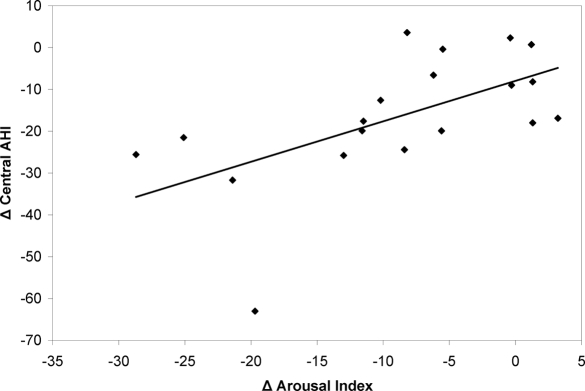
Measurements and results: After a therapeutic trial averaging 9 weeks, a follow-up polysomnogram showed that the overall apnea/hypopnea index (AHI) and central AHI (CAHI) decreased, 30.0 +/- 18.1 (SD) to 13.5 +/- 13.3 (p = 0.001), and 26.0 +/- 17.2 to 7.1 +/- 11.8 (p < 0.001), respectively, without an overall change in obstructive AHI or arterial oxygen saturation. The total number of arousals per hour decreased with zolpidem use, 24.0 +/- 11.6 to 15.1 +/- 7.7 (p < 0.001), leading to a significant improvement in sleep efficiency. There was a positive correlation between the decrease in CAHI and the arousal index. Consistent with the hypnotic effect of zolpidem, sleep latency decreased, stage 1 sleep percentage decreased, and stage 2 percentage increased (all significant), without changes in stage 3-4 or REM sleep. Excessive daytime sleepiness, measured by the Epworth Sleepiness Scale (ESS) decreased from 13 +/- 5 to 8 +/- 5 (p < 0.001). Three patients experienced a significant increase in obstructive events.
Conclusion: In an open-label trial, ICSA patients studied experienced a decrease in central apnea/hypopneas with zolpidem. They also had improved sleep continuity and decreased subjective daytime sleepiness, without a worsening of oxygenation or obstructive events in the majority of patients. However, in the absence of a randomized, controlled trial, zolpidem cannot be recommended for treatment of ICSA at this time.
Figures
Comment in
-
Effective treatment for idiopathic central sleep apnea?J Clin Sleep Med. 2009 Apr 15;5(2):130-1. J Clin Sleep Med. 2009. PMID: 19968045 Free PMC article. No abstract available.
References
-
- DeBaker WA, Verbraeken J, Willemen M, Wittescale W, DeCock W, Van de Hening P. Central apnea index decreases after prolonged treatment with acetazolamide. Am J Respir Crit Care Med. 1995;151:87–91. - PubMed
-
- Guilleminault C, van den Hoed J, Mitler M. Clinical overview of the sleep apnea syndromes. New York, NY: Alan R Liss; 1978. pp. 1–11.
-
- Bradley TD, Phillipson EA. Central sleep apnea. Clin Chest Med. 1992;13:493–505. - PubMed
-
- Roehrs T, Conway W, Wittig R. Sleep complaints in patients with sleep-related respiratory disturbances. Am Rev Respir Dis. 1985;132:520–23. - PubMed
-
- Bradley TD, McNicholas WT, Rutherford R. Clinical and physiologic heterogeneity of the central sleep apnea syndrome. Am Rev Respir Dis. 1986;134:217–21. - PubMed
Publication types
MeSH terms
Substances
LinkOut - more resources
Full Text Sources
Other Literature Sources