


Late-life and life history predictors of older adults' high-risk alcohol consumption and drinking problems
- PMID: 19969428
- PMCID: PMC2835829
- DOI: 10.1016/j.drugalcdep.2009.11.005
Late-life and life history predictors of older adults' high-risk alcohol consumption and drinking problems
Abstract
Aims: This prospective, longitudinal study focused on late-life and life history predictors of high-risk alcohol consumption and drinking problems during a 20-year interval as adults matured from age 55-65 to 75-85.
Design, setting, participants: A sample of older community residents (N=719) who had consumed alcohol in the past year or shortly before was surveyed at baseline and 10 and 20 years later.
Measurements: At each contact point, participants completed an inventory that assessed their alcohol consumption, drinking problems, and personal and life context factors. Participants also provided information about their life history of drinking and help-seeking.
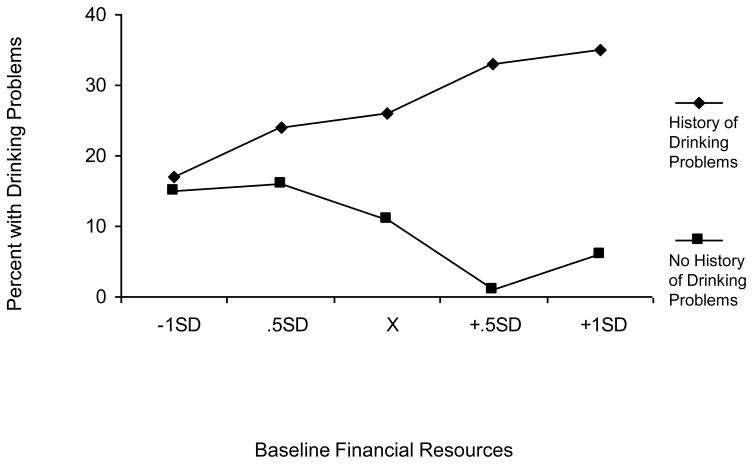
Results: Older adults who, at baseline, had more friends who approved of drinking, relied on substances for tension reduction, and had more financial resources were more likely to engage in high-risk alcohol consumption and to incur drinking problems at 10- and 20-year follow-ups. With respect to life history factors, drinking problems by age 50 were associated with a higher likelihood of late-life high-risk alcohol consumption and drinking problems; having tried to cut down on drinking and participation in Alcoholics Anonymous were associated with a lower likelihood of high-risk consumption and problems.
Conclusion: Specific late-life and life history factors can identify older adults likely to engage in excessive alcohol consumption 10 and 20 years later. Targeted screening that considers current alcohol consumption and life context, and history of drinking problems and help-seeking, could help identify older adults at higher risk for excessive or problematic drinking.
Published by Elsevier Ireland Ltd.
Figures
References
-
- Akers RL, La Greca AJ, Cochran J, Sellers C. Social learning theory and alcohol behavior among the elderly. Sociol Quart. 1989;30:625–638.
-
- American Geriatrics Society. Clinical Guidelines: Alcohol Use Disorders in Older Adults. 2003. [accessed on April 16, 2009]. www.americangeriatrics.org/products/positionpapers/alcohol.shtml.
-
- Babor TF, Stephens RS, Marlatt A. Verbal report methods in clinical research on alcoholism: Response bias and its minimization. J Stud Alcohol. 1987;48:410–424. - PubMed
-
- Bamberger PA, Sonnenstuhl WJ, Vashdi D. Screening older, blue-collar workers for drinking problems: An assessment of the efficacy of the Drinking Problems Index. J Occupat Health Psychol. 2006;11:119–134. - PubMed
-
- Bandura A. Self-efficacy: The exercise of control. New York: Freeman; 1997.
Publication types
MeSH terms
Grants and funding
LinkOut - more resources
Full Text Sources
Medical
Miscellaneous
