


Critical appraisal of the role of pitavastatin in treating dyslipidemias and achieving lipid goals
- PMID: 19997573
- PMCID: PMC2788597
- DOI: 10.2147/vhrm.s5551
Critical appraisal of the role of pitavastatin in treating dyslipidemias and achieving lipid goals
Abstract
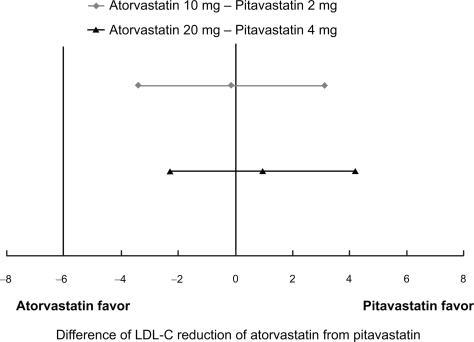
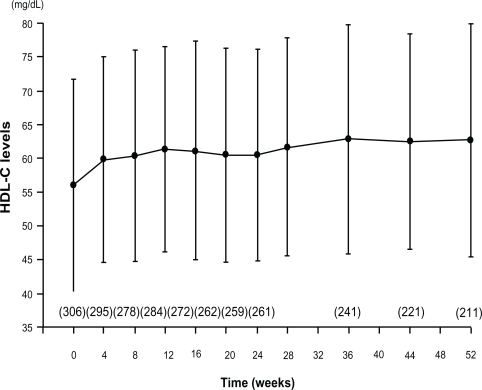
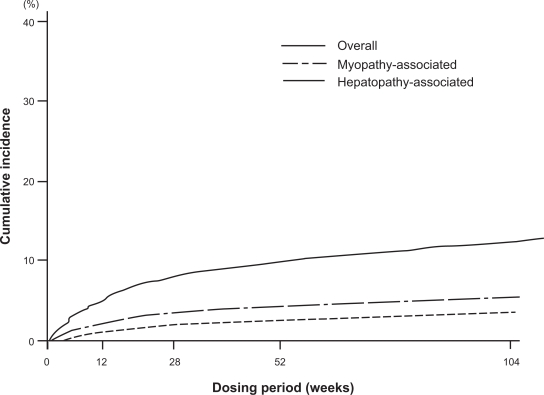
Pitavastatin is a potent HMG-CoA reductase inhibitor and efficient hepatocyte low-density lipoprotein cholesterol (LDL-C) receptor inducer, producing robust reduction of the serum LDL-C levels, even at a low dose. Pitavastatin and its lactone form are minimally metabolized by CYP enzymes, and are therefore associated with minimal drug-drug interactions (DDIs). Pitavastatin 2 to 4 mg has potent LDL-C-reducing activity, equivalent to that of atorvastatin 10 to 20 mg; several clinical trials have revealed consistently superior high-density lipoprotein cholesterol (HDL-C) elevating activity of pitavastatin than that of atorvastatin. Pitavastatin-induced HDL-C elevation has been shown to be sustained, even incremental, in long-term clinical trials. Pitavastatin was as well-tolerated as atorvastatin or simvastatin in double-blind randomized clinical trials. Two-year long-term safety and effectiveness of pitavastain has been confirmed in a large-scale, prospective post-marketing surveillance. The safety and efficacy profile of pitavastatin is favorable for the treatment of dyslipidemia, especially in metabolic syndrome patients. In addition to control of LDL-C, adequate control of triglyceride (TG) and HDL-C, hypertension and hyperglycemia is also necessary in metabolic syndrome patients. Pitavastatin produces adequate control of LDL-C and TG, along with potent and incremental HDL-C elevation, with a low frequency of DDIs.
Keywords: HMG-CoA reductase inhibitor; drug–drug interaction; efficacy; pitavastatin; safety.
Figures
References
-
- Teramoto T, Sasaki J, Ueshima H, et al. Executive summary of Japan Atherosclerosis Society (JAS) guideline for diagnosis and prevention of atherosclerotic cardiovascular diseases for Japanese. J Atheroscler Thromb. 2007;14(2):45–50. - PubMed
-
- Grundy SM, Cleeman JI, Merz CN, et al. National Heart, Lung, and Blood Institute; American College of Cardiology Foundation; American Heart Association Implications of recent clinical trials for the National Cholesterol Education Program Adult Treatment Panel III guidelines Circulation 20041102227–239.Erratum in: Circulation 2004;110(6):763. - PubMed
-
- Graham I, Atar D, Borch-Johnsen K, et al. European guidelines on cardiovascular disease prevention in clinical practice: full text. Fourth Joint Task Force of the European Society of Cardiology and other societies on cardiovascular disease prevention in clinical practice (constituted by representatives of nine societies and by invited experts) Eur J Cardiovasc Prev Rehabil. 2007;14(Suppl 2):S1–S113. - PubMed
-
- Baigent C, Keech A, Kearney PM, et al. Cholesterol Treatment Trialists’ (CTT) Collaborators Efficacy and safety of cholesterol-lowering treatment: prospective meta-analysis of data from 90,056 participants in 14 randomised trials of statins. Lancet. 2005;366(9493):1267–1278. - PubMed
Publication types
MeSH terms
Substances
LinkOut - more resources
Full Text Sources
Medical
Miscellaneous
