


Amyloid β-peptide directly induces spontaneous calcium transients, delayed intercellular calcium waves and gliosis in rat cortical astrocytes
- PMID: 20001968
- PMCID: PMC2810812
- DOI: 10.1042/AN20090035
Amyloid β-peptide directly induces spontaneous calcium transients, delayed intercellular calcium waves and gliosis in rat cortical astrocytes
Abstract
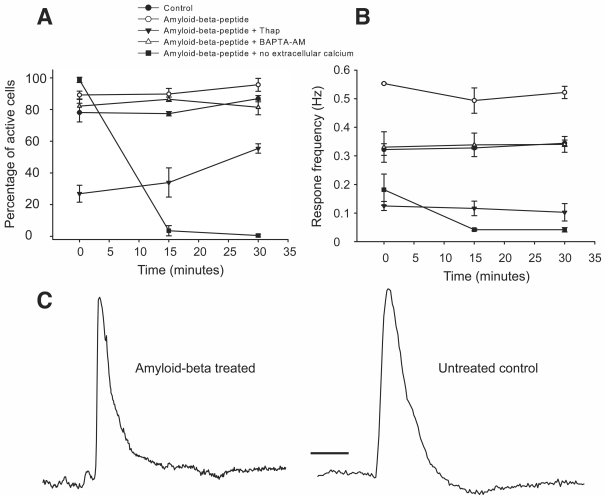
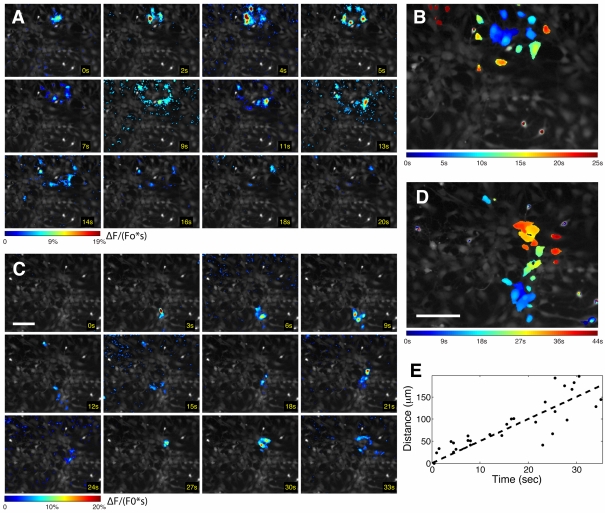
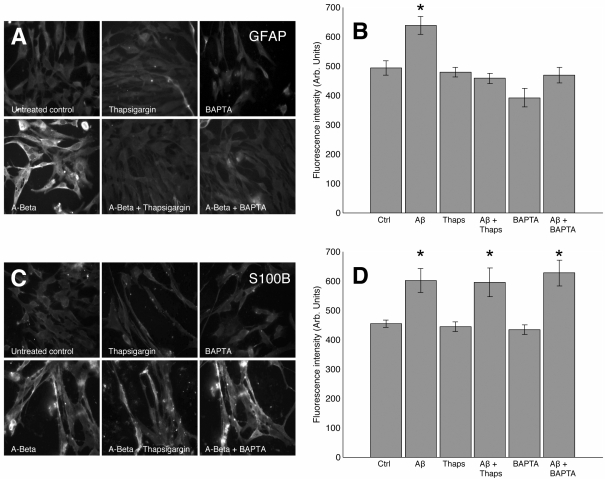
The contribution of astrocytes to the pathophysiology of AD (Alzheimer's disease) and the molecular and signalling mechanisms that potentially underlie them are still very poorly understood. However, there is mounting evidence that calcium dysregulation in astrocytes may be playing a key role. Intercellular calcium waves in astrocyte networks in vitro can be mechanically induced after Aβ (amyloid β-peptide) treatment, and spontaneously forming intercellular calcium waves have recently been shown in vivo in an APP (amyloid precursor protein)/PS1 (presenilin 1) Alzheimer's transgenic mouse model. However, spontaneous intercellular calcium transients and waves have not been observed in vitro in isolated astrocyte cultures in response to direct Aβ stimulation in the absence of potentially confounding signalling from other cell types. Here, we show that Aβ alone at relatively low concentrations is directly able to induce intracellular calcium transients and spontaneous intercellular calcium waves in isolated astrocytes in purified cultures, raising the possibility of a potential direct effect of Aβ exposure on astrocytes in vivo in the Alzheimer's brain. Waves did not occur immediately after Aβ treatment, but were delayed by many minutes before spontaneously forming, suggesting that intracellular signalling mechanisms required sufficient time to activate before intercellular effects at the network level become evident. Furthermore, the dynamics of intercellular calcium waves were heterogeneous, with distinct radial or longitudinal propagation orientations. Lastly, we also show that changes in the expression levels of the intermediate filament proteins GFAP (glial fibrillary acidic protein) and S100B are affected by Aβ-induced calcium changes differently, with GFAP being more dependent on calcium levels than S100B.
Figures
References
-
- Abramov AY, Canevari L, Duchen MR. Calcium signals induced by amyloid β peptide and their consequences in neurons and astrocytes in culture. Biochim Biophys Acta. 2004;1742:81–87. - PubMed
-
- Barger SW, Basile AS. Activation of microglia by secreted amyloid precursor protein evokes release of glutamate by cystine exchange and attenuates synaptic function. J Neurochem. 2001;76:846–854. - PubMed
-
- Benveniste EN, Nguyen VT, O'Keefe GM. Immunological aspects of microglia: relevance to Alzheimer's disease. Neurochem Int. 2001;39:381–391. - PubMed
Publication types
MeSH terms
Substances
Grants and funding
LinkOut - more resources
Full Text Sources
Miscellaneous
