


Opiate-induced oesophageal dysmotility
- PMID: 20003176
- PMCID: PMC3092396
- DOI: 10.1111/j.1365-2036.2009.04212.x
Opiate-induced oesophageal dysmotility
Abstract
Background: Opiates have well characterized (troublesome) untoward effects on the gastrointestinal tract. Opioid bowel dysfunction has been a subject of research and even drug design, but surprisingly little is known with regard to clinical effects of opiates on the oesophagus.
Aim: To characterize opiate effects on motor function of the oesophagus in patients presenting with dysphagia.
Methods: Retrospective review of 15 patients with dysphagia referred for oesophageal manometry while on chronic opiates. Manometry was completed during opiate use and in three cases, after opiates were discontinued.
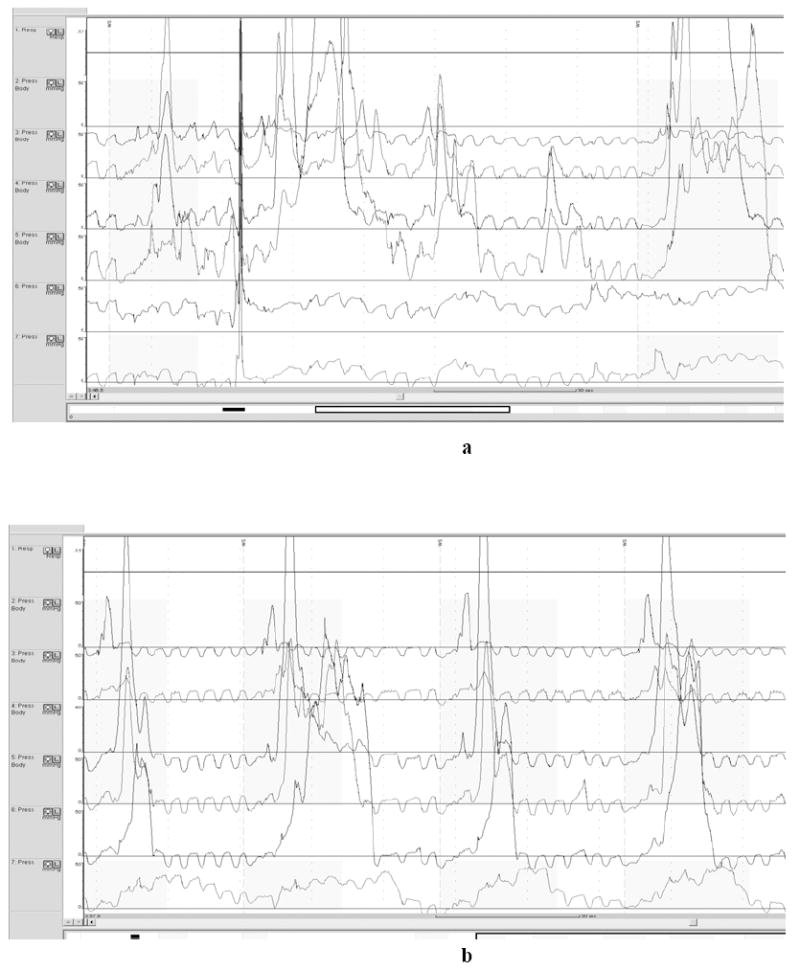
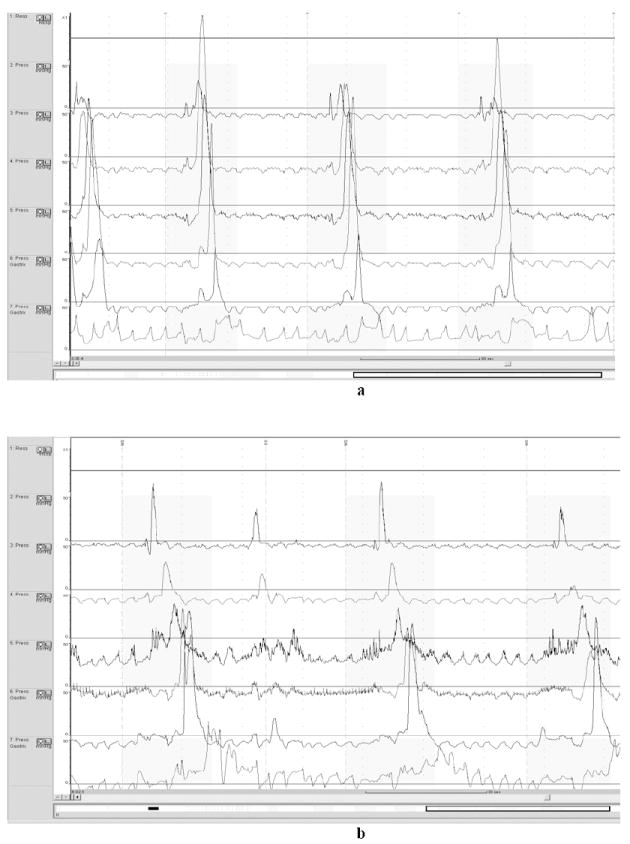
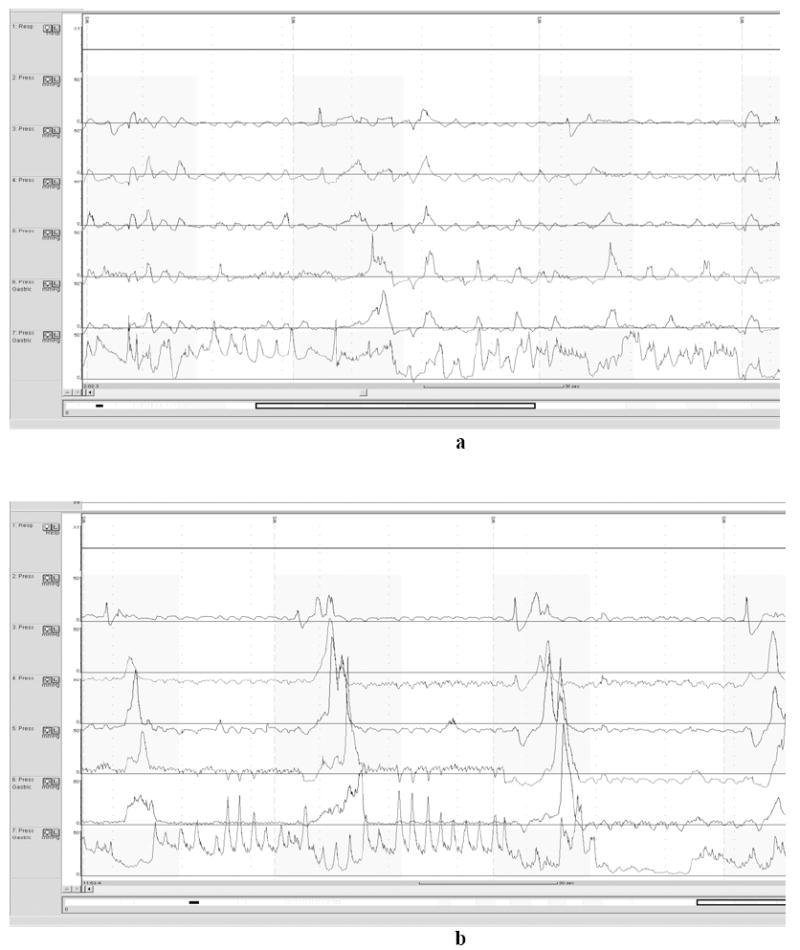
Results: All patients demonstrated motility abnormalities. Incomplete lower oesophageal sphincter (LOS) relaxation (11.5 +/- 1.6 mmHg) was seen in most cases. Ten patients demonstrated nonperistaltic contractions in > or =3 of 10 swallows. Additional abnormalities included high amplitude contractions; triple peaked contractions; and increased velocity. The average resting lower oesophageal sphincter (LOSP) met criteria for hypertensive LOS in three patients. These features were suggestive of spasm or achalasia. Repeat manometry off opiates was performed in three cases. LOS relaxation was noted to be complete upon repeat manometry in these cases. There was also improved peristalsis and normal velocity.
Conclusions: A range of manometric abnormalities were seen in patients with dysphagia in the setting of opiate use: impaired LOS relaxation, high amplitude/velocity and simultaneous oesophageal waves. These data suggest that the oesophagus is susceptible to the effects of opiates and care must be taken before ascribing dysphagia to a primary oesophageal motility disorder in patients taking opiates.
Figures
References
-
- Wood JD, Galligan JJ. Function of opioids in the enteric nervous system. Neurogastroenterol Motil. 2004;16(Suppl 2):17–28. - PubMed
-
- Sternini C, Patierno S, Selmer IS, Kirchgessner A. The opioid system in the gastrointestinal tract. Neurogastroenterol Motil. 2004;16(Suppl 2):3–16. - PubMed
-
- Rattan S, Goyal RK. Identification and localization of opioid receptors in the opossum lower esophageal sphincter. The Journal of pharmacology and experimental therapeutics. 1983;224(2):391–7. - PubMed
-
- Penagini R, Picone A, Bianchi PA. Effect of morphine and naloxone on motor response of the human esophagus to swallowing and distension. The American journal of physiology. 1996;271(4 Pt 1):G675–80. - PubMed
-
- Currier DS, Levin KR, Campbell C. Dysphagia with intrathecal fentanyl. Anesthesiology. 1997;87(6):1570–1. - PubMed
Publication types
MeSH terms
Substances
Grants and funding
LinkOut - more resources
Full Text Sources
Other Literature Sources
Medical
Miscellaneous