


A cross-curricular physical activity intervention to combat cardiovascular disease risk factors in 11-14 year olds: 'activity knowledge circuit'
- PMID: 20003492
- PMCID: PMC2803189
- DOI: 10.1186/1471-2458-9-466
A cross-curricular physical activity intervention to combat cardiovascular disease risk factors in 11-14 year olds: 'activity knowledge circuit'
Abstract
Background: Cardiovascular disease is the leading cause of mortality worldwide. Risk factors associated with cardiovascular disease have been shown to track from childhood through to adulthood. Previous school-based physical activity interventions have demonstrated modest improvements to cardiovascular disease risk factors by implementing extra-curricular activities or improving current physical education curriculum. Few have attempted to increase physical activity in class-room taught curriculum subjects. This study will outline a school-based cross-curricular physical activity intervention to combat cardiovascular disease risk factors in 11-14 year old children.
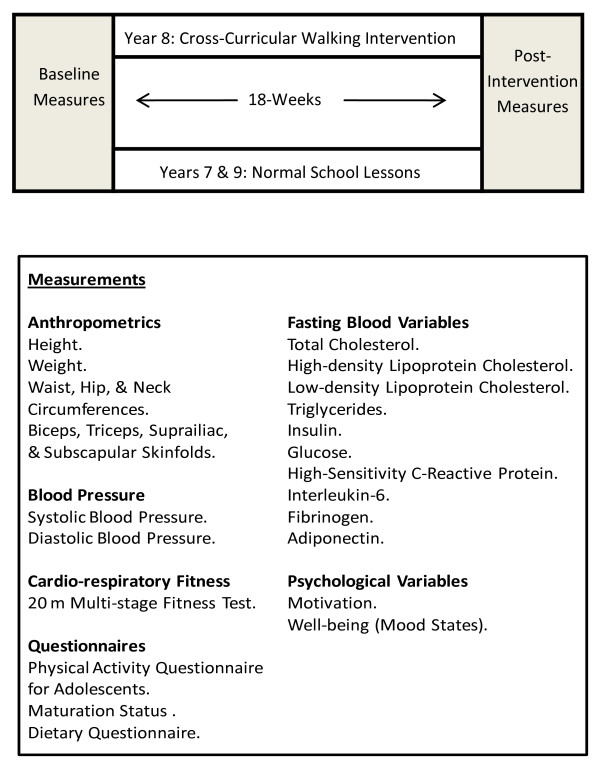
Method/design: A South Wales Valley school of low socio-economic status has been selected to take part. Participants from year eight (12-13 years) are to be assigned to an intervention group, with maturation-matched participants from years seven (11-12 years) and nine (13-14 years) assigned to a control group. A cross-curricular physical activity intervention will be implemented to increase activity by two hours a week for 18 weeks. Participants will briskly walk 3200 m twice weekly during curriculum lessons (60 minutes duration). With the exception of physical education, all curriculum subjects will participate, with each subject delivering four intervention lessons. The intervention will be performed outdoors and on school premises. An indoor course of equal distance will be used during adverse weather conditions. Cardiovascular disease risk factors will be measured pre- and post-intervention for intervention and control groups. These will take place during physical education lessons and will include measures of stature, mass, waist, hip, and neck circumferences, together with skinfold measure's taken at four sites. Blood pressure will be measured, and fitness status assessed via the 20 m multi-stage fitness test. Questionnaires will be used to determine activity behaviour (physical activity questionnaire for adolescence), diet (seven day food diary) and maturation status. Fasting blood variables will include total cholesterol, low-density lipoprotein cholesterol, high density lipoprotein cholesterol, triglycerides, insulin, glucose, high-sensitivity C-reactive protein, interleukin-6, adiponectin, and fibrinogen. Motivational variables and psychological well-being will be assessed by questionnaire.
Discussion: Our study may prove to be a cost effective strategy to increase school time physical activity to combat cardiovascular disease risk factors in children.
Trial registration: [NCT00998478].
Figures
References
-
- Preventing chronic diseases a vital investment. World Health Organization. Switzerland; 2005.
-
- Twisk JWR, Kemper HCG, van Mechelen W, Post GB. Tracking of risk factors for coronary heart disease over a 14-year period. American Journal of Epidemiology. 1997;145:888–898. - PubMed
-
- Reaven GM. Role of insulin resistance in human disease. Diabetes. 1988;37:1495–1507. - PubMed
Publication types
MeSH terms
Associated data
LinkOut - more resources
Full Text Sources
Medical
Research Materials
