


Lung endothelial barrier protection by iloprost in the 2-hit models of ventilator-induced lung injury (VILI) involves inhibition of Rho signaling
- PMID: 20004361
- PMCID: PMC2814140
- DOI: 10.1016/j.trsl.2009.09.002
Lung endothelial barrier protection by iloprost in the 2-hit models of ventilator-induced lung injury (VILI) involves inhibition of Rho signaling
Abstract
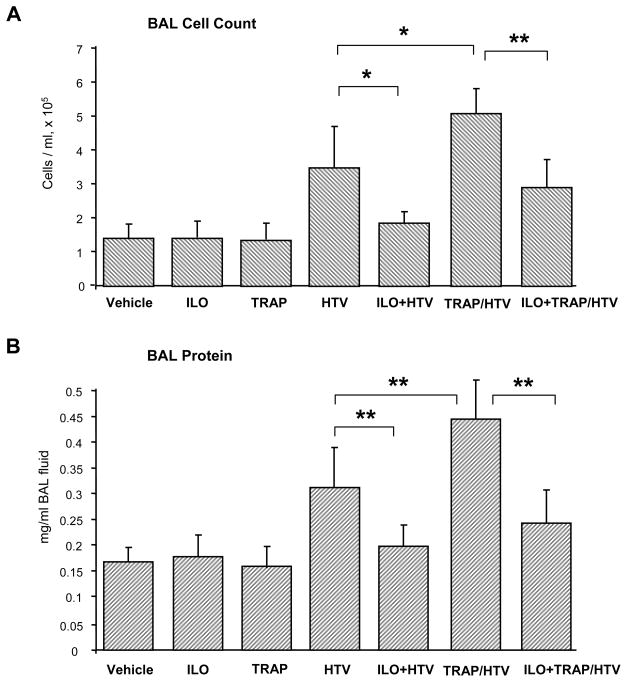
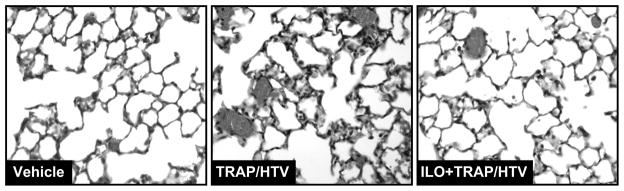
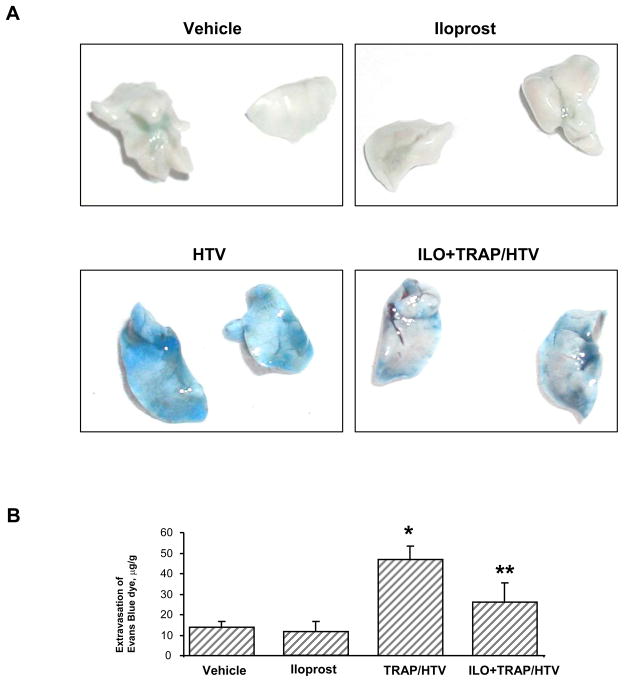
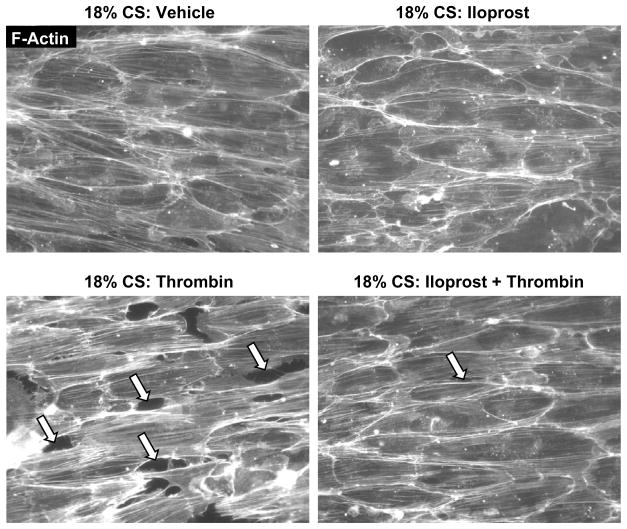
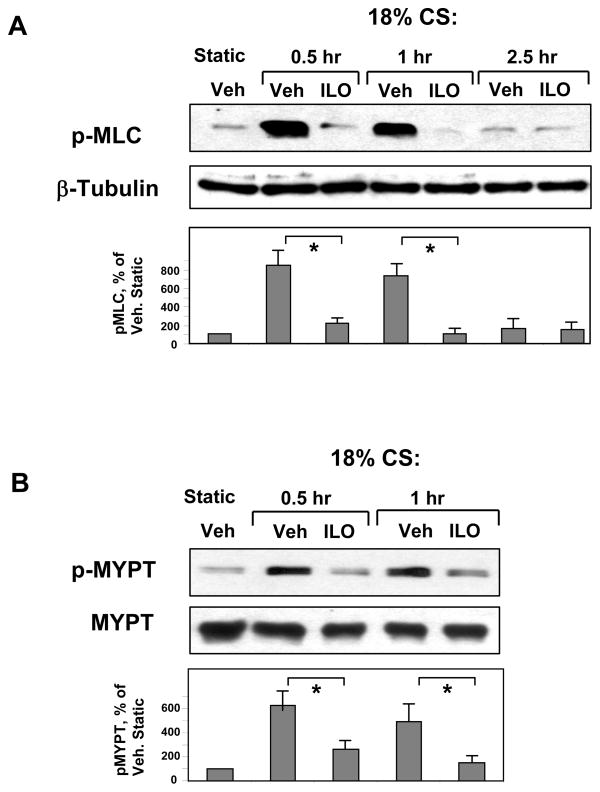
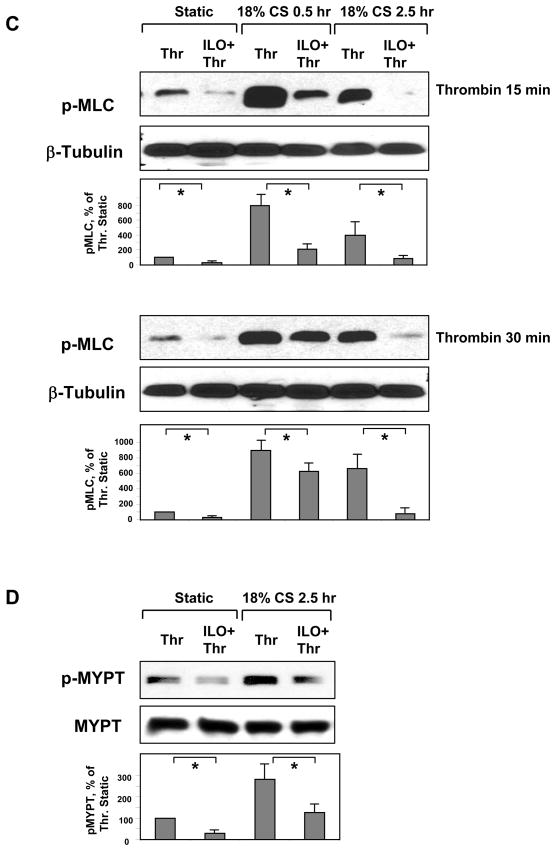
Mechanical ventilation at high tidal volume (HTV) may cause pulmonary capillary leakage and acute lung inflammation culminating in ventilator-induced lung injury. Iloprost is a stable, synthetic analog of prostaglandin I(2) used to treat pulmonary hypertension, which also showed endothelium-dependent antiedemagenic effects in the models of lung injury. To test the hypothesis that iloprost may attenuate lung inflammation and lung endothelial barrier disruption caused by pathologic lung distension and coagulation system component thrombin, we used cell and animal 2-hit models of ventilator-induced lung injury. Mice received a triple injection of iloprost (2 microg/kg, intravenous instillation) at 0, 40, and 80 min after the onset of HTV mechanical ventilation (30 mL/kg, 4h), combined with the administration of a thrombin receptor-activating peptide 6 (TRAP6, 3 x 10(-7)mol/mouse, intratracheal instillation). After 4h of ventilation, bronchoalveolar lavage (BAL), histologic analysis, and measurements of Evans blue accumulation in the lung tissue were performed. The effects of iloprost on endothelial barrier dysfunction were subsequently assessed in pulmonary endothelial cells (ECs) exposed to thrombin and pathologic (18%) cyclic stretch. The combination of HTV and TRAP6 enhanced the accumulation of neutrophils in BAL fluid and lung parenchyma, as well as increased the BAL protein content and endothelial permeability judged by Evans blue extravasation in the lung tissue. These effects were markedly attenuated by iloprost. The application of 18% cyclic stretch to pulmonary ECs enhanced the thrombin-induced EC paracellular gap formation and Rho-GTPase-mediated phosphorylation of regulatory myosin light chains and myosin phosphatase. Iloprost markedly inhibited the Rho-kinase-mediated site-specific phosphorylation of myosin phosphatase, and it prevented cyclic stretch- and thrombin-induced endothelial monolayer disruption. This study characterizes for the first time the protective effects of iloprost in the in vitro and in vivo 2-hit models of VILI and supports consideration of iloprost as a new therapeutic treatment of VILI.
Figures
References
-
- Slutsky AS, Tremblay LN. Multiple system organ failure. Is mechanical ventilation a contributing factor? Am J Respir Crit Care Med. 1998;157(6 Pt 1):1721–5. - PubMed
-
- Dos Santos CC, Slutsky AS. Invited review: mechanisms of ventilator-induced lung injury: a perspective. J Appl Physiol. 2000;89(4):1645–55. - PubMed
-
- Uhlig S. Ventilation-induced lung injury and mechanotransduction: stretching it too far? Am J Physiol Lung Cell Mol Physiol. 2002;282(5):L892–6. - PubMed
-
- Oeckler RA, Hubmayr RD. Ventilator-associated lung injury: a search for better therapeutic targets. Eur Respir J. 2007;30(6):1216–26. - PubMed
-
- Schultz MJ, Haitsma JJ, Zhang H, Slutsky AS. Pulmonary coagulopathy as a new target in therapeutic studies of acute lung injury or pneumonia--a review. Crit Care Med. 2006;34(3):871–7. - PubMed
Publication types
MeSH terms
Substances
Grants and funding
LinkOut - more resources
Full Text Sources
Other Literature Sources
Miscellaneous
