. 2010 Mar;10(2):143-50.
doi: 10.1016/j.mito.2009.12.141. Epub 2009 Dec 22.

Oligodendroglial differentiation induces mitochondrial genes and inhibition of mitochondrial function represses oligodendroglial differentiation

Affiliations

Oligodendroglial differentiation induces mitochondrial genes and inhibition of mitochondrial function represses oligodendroglial differentiation

Robert Schoenfeld et al. Mitochondrion. 2010 Mar.

Abstract

Demyelination occurs in multiple inherited mitochondrial diseases. We studied which genes were induced as a consequence of differentiation in rodent and human oligodendroglia. Cholesterol, myelin and mitochondrial genes were significantly increased with oligodendroglial differentiation. Mitochondrial DNA content per cell and acetyl CoA-related transcripts increased significantly; thus, the large buildup of cholesterol necessary for myelination appears to require mitochondrial production of acetyl-CoA. Oligodendroglia were treated with low doses of the mitochondrial inhibitor rotenone to test the dependence of differentiation on mitochondrial function. Undifferentiated cells were resistant to rotenone, whereas differentiating cells were much more sensitive. Very low doses of rotenone that did not affect viability or ATP synthesis still inhibited differentiation, as measured by reduced levels of the myelin transcripts 2',3'-Cyclic Nucleotide-3'-Phosphodiesterase and Myelin Basic Protein. Thus, mitochondrial transcripts and mtDNA are amplified during oligodendroglial differentiation, and differentiating oligodendroglia are especially sensitive to mitochondrial inhibition, suggesting mechanisms for demyelination observed in mitochondrial disease.


Figures
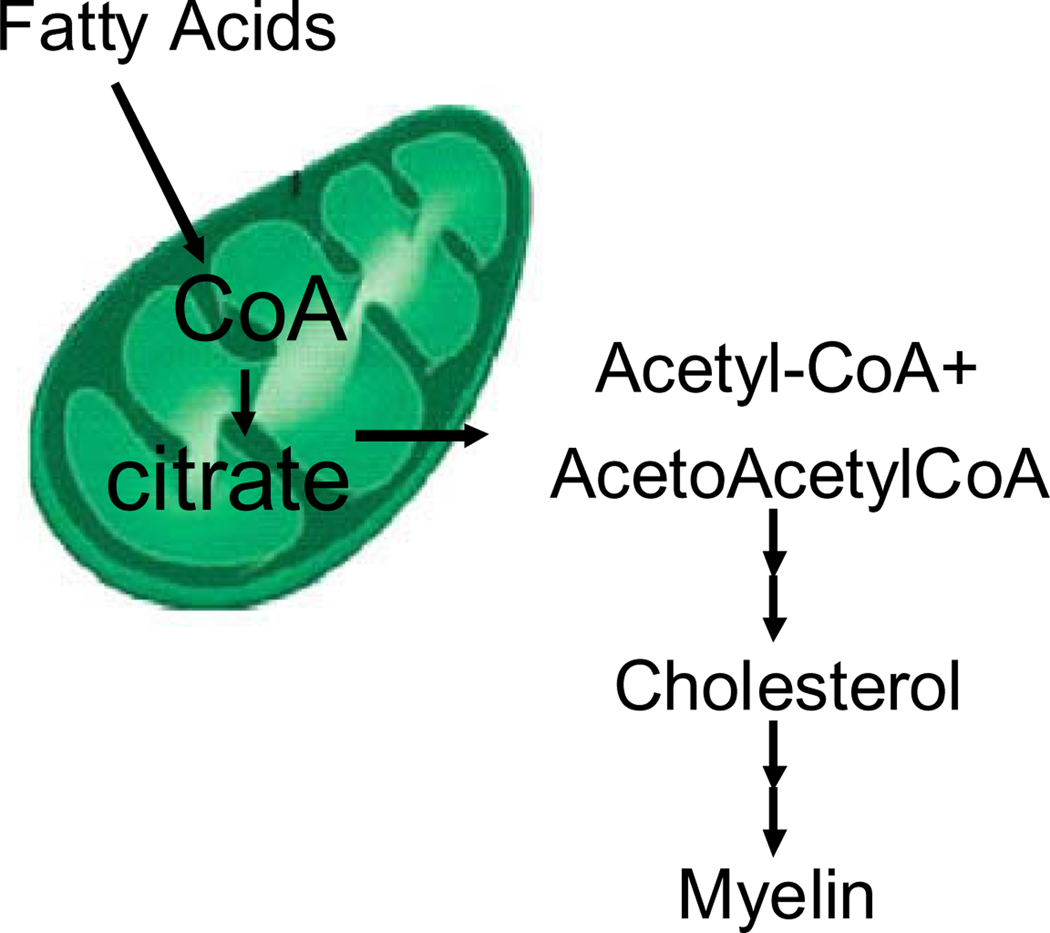
Fig. 1
Fig. 1
Mitochondrial origin of acetyl-CoA for cholesterol synthesis in oligodendrocytes.
Fig. 2
Fig. 2
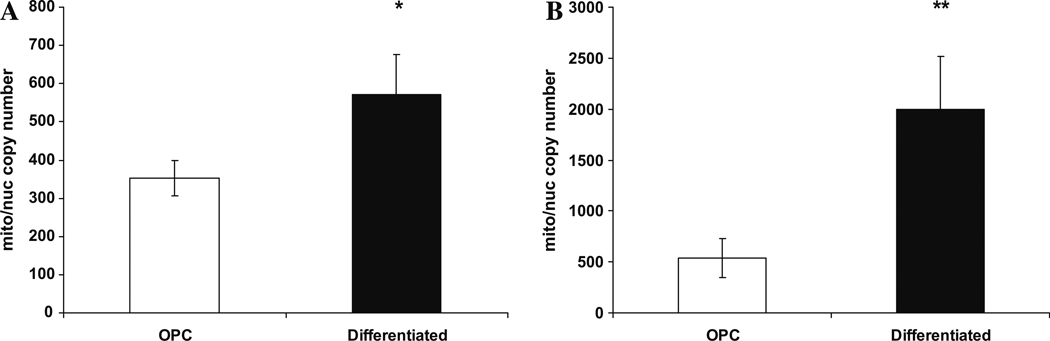
Mitochondrial/nuclear copy number in undifferentiated and differentiated: (A) rat oligos and (B) Human HOG cells. White bars = undifferentiated; black bars = differentiated; * = p < .05; ** = p < .0005. Error bars indicate 2 SEM.
Fig. 3
Fig. 3
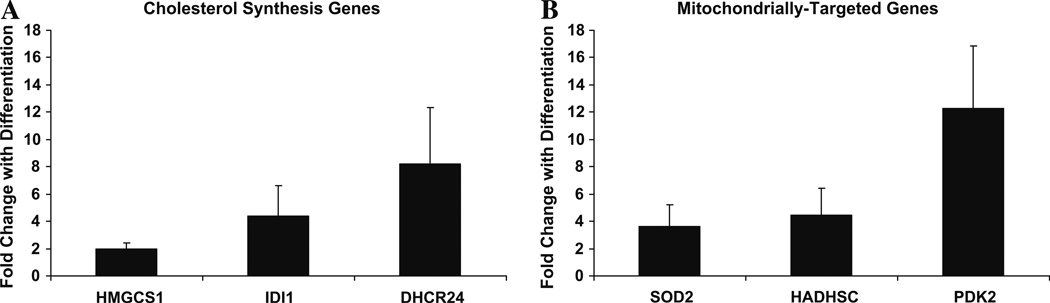
Quantitative RT-PCR of cholesterol biosynthesis and mitochondrial genes in rat cells confirms significant fold induction with differentiation. Four undifferentiated and 4 differentiated samples were tested in triplicate. (A) cholesterol synthesis genes; (B) mitochondrially-targeted genes. Analysis with student’s t-test indicated up-regulation at p < 0.05 for all samples. Error bars = 2 SEM.
Fig. 4
Fig. 4
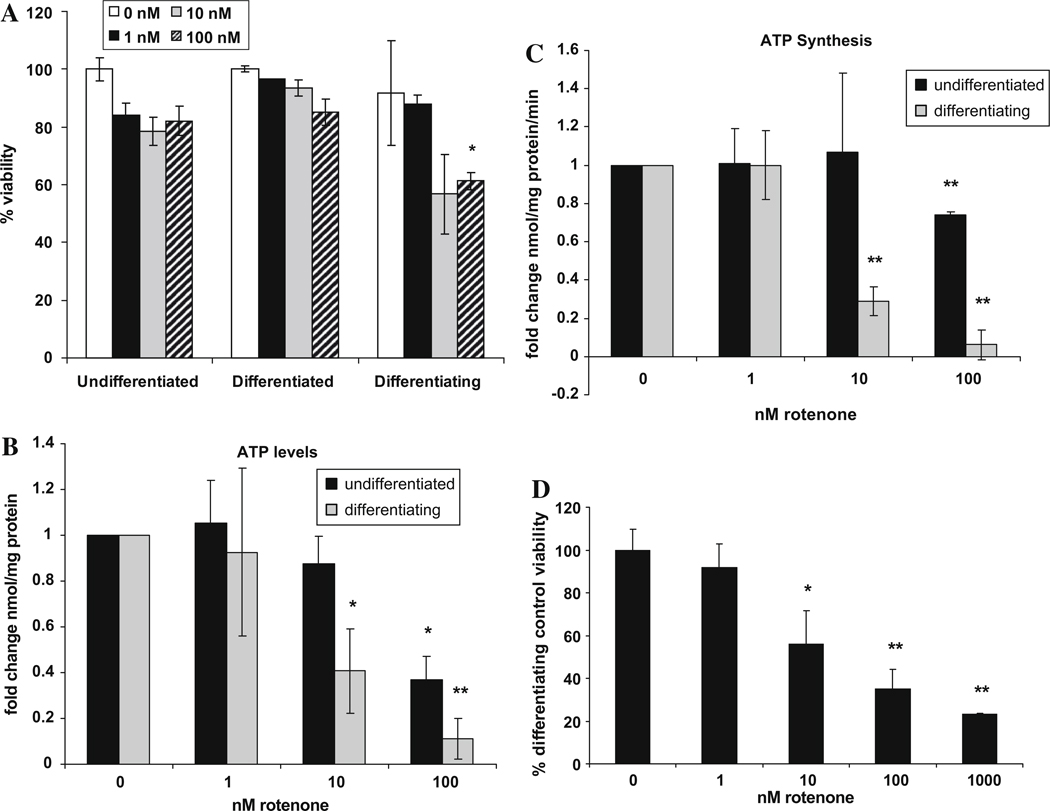
(A) Differentiating Human HOG cells are more sensitive to rotenone than undifferentiated and differentiated cells. Viability was measured in Human-ODCs (undifferentiated, differentiating for 1 day and 10-day differentiated) treated with rotenone for 24 h. (B) Differentiating Human HOG cells contain lower ATP levels than do undifferentiated cells. Differentiating cells were exposed to rotenone for 10 days, undifferentiated cells for 4 h. Total cellular ATP (µmol/mg protein) was measured in 3 independent experiments, and normalized to untreated cells. (C) Differentiating Human HOG cells have lower ATP synthesis rates (complexes I–V, µmol/min/mg protein) than do undifferentiated cells (cells were treated as in Fig. 4B). (D) One nM rotenone does not decrease viability in 10-day rotenone-differentiation of oligodendrocytes, however 10–1000 nM produces a dose-dependent decrease in viability. Means of three independent experiments are expressed as viable cells/untreated. Error bars represent SEM, *p < 0.05, **p < 0.005.
Fig. 5
Fig. 5
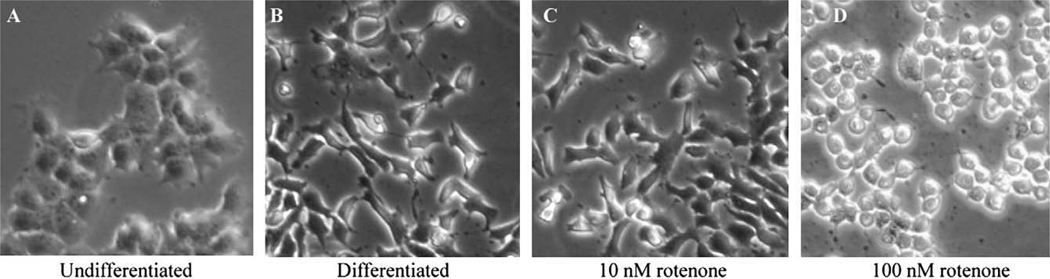
Differentiation of Human HOG cells after 4 days of rotenone treatment. Human-ODCs were differentiated for 10 days in the absence (B) or presence of 10 or 100 nM rotenone (C and D).
Fig. 6
Fig. 6
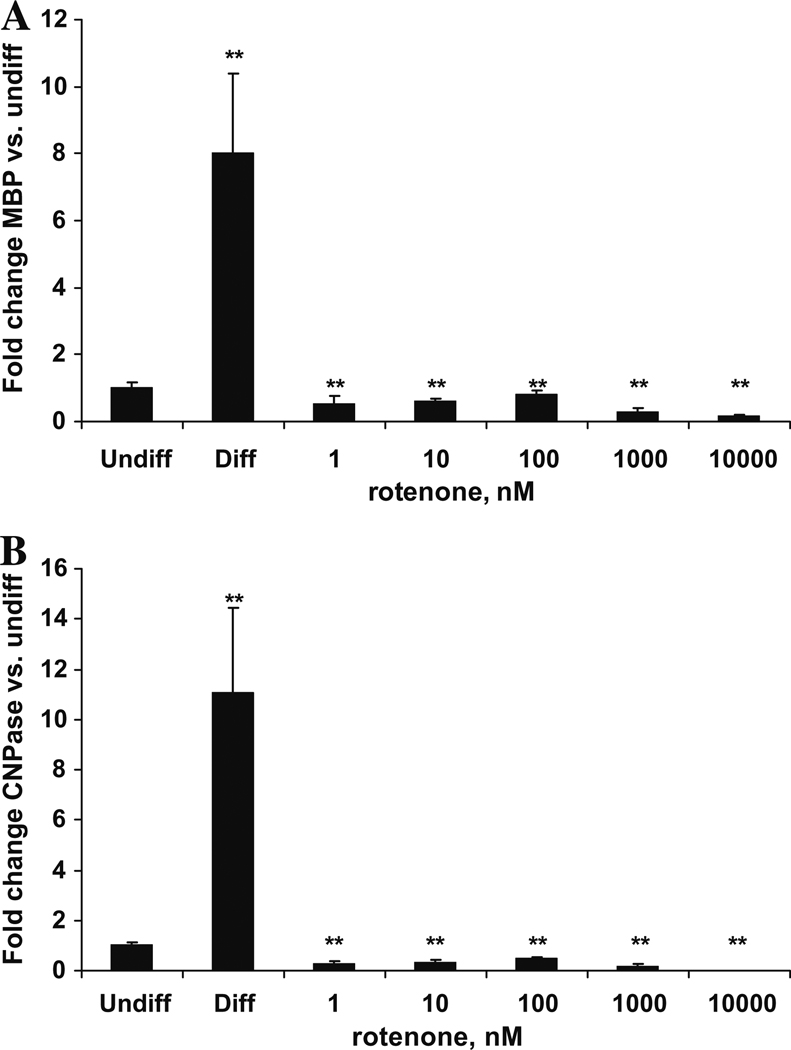
Differentiated Human HOG cells express more Myelin Basic Protein (MBP) and Cyclic Nucleotide Phosphodiesterase CNPase transcript than undifferentiated cells, but not when differentiated with >1 nM rotenone. Human HOG cells were differentiated for 10 days with or without rotenone, transcript levels were examined by quantitative RT-PCR. Transcripts were normalized to vimentin and expressed per undifferentiated or untreated samples. Error bars represent SEM, **p < 0.005.

References

    1. Al-Mahdawi S, Pinto RM, Varshney D, Lawrence L, Lowrie MB, Hughes S, et al. GAA repeat expansion mutation mouse models of Friedreich ataxia exhibit oxidative stress leading to progressive neuronal and cardiac pathology. Genomics. 2006;88:580–590. - PMC - PubMed
    1. Atorino L, Silvestri L, Koppen M, Cassina L, Ballabio A, Marconi R, et al. Loss of m-AAA protease in mitochondria causes complex I deficiency and increased sensitivity to oxidative stress in hereditary spastic paraplegia. J. Cell Biol. 2003;163:777–787. - PMC - PubMed
    1. Baumann N, Pham-Dinh D. Biology of oligodendrocyte and myelin in the mammalian central nervous system. Physiol. Rev. 2001;81:871–927. - PubMed
    1. Bizzozero OA, Sanchez P, Tetzloff SU. Effect of ATP depletion on the palmitoylation of myelin proteolipid protein in young and adult rats. J. Neurochem. 1999;72:2610–2616. - PubMed
    1. Bjorkhem I, Meaney S. Brain cholesterol: long secret life behind a barrier. Arterioscler. Thromb. Vasc. Biol. 2004;24:806–815. - PubMed

Publication types

MeSH terms

LinkOut - more resources