


Toxicity of non-steroidal anti-inflammatory drugs to Gyps vultures: a new threat from ketoprofen
- PMID: 20007163
- PMCID: PMC2880042
- DOI: 10.1098/rsbl.2009.0818
Toxicity of non-steroidal anti-inflammatory drugs to Gyps vultures: a new threat from ketoprofen
Abstract
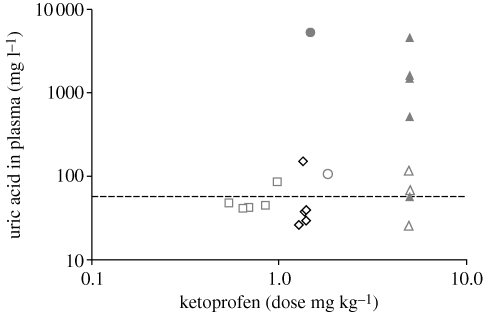
Three Gyps vulture species are on the brink of extinction in South Asia owing to the veterinary non-steroidal anti-inflammatory drug (NSAID) diclofenac. Carcasses of domesticated ungulates are the main food source for Asia's vultures and birds die from kidney failure after consuming diclofenac-contaminated tissues. Here, we report on the safety testing of the NSAID ketoprofen, which was not reported to cause mortality in clinical treatment of scavenging birds and is rapidly eliminated from livestock tissues. Safety testing was undertaken using captive non-releasable Cape griffon vultures (Gyps coprotheres) and wild-caught African white-backed vultures (G. africanus), both previously identified as susceptible to diclofenac and suitable surrogates. Ketoprofen doses ranged from 0.5 to 5 mg kg(-1) vulture body weight, based upon recommended veterinary guidelines and maximum levels of exposure for wild vultures (estimated as 1.54 mg kg(-1)). Doses were administered by oral gavage or through feeding tissues from cattle dosed with ketoprofen at 6 mg kg(-1) cattle body weight, before slaughter. Mortalities occurred at dose levels of 1.5 and 5 mg kg(-1) vulture body weight (within the range recommended for clinical treatment) with the same clinical signs as observed for diclofenac. Surveys of livestock carcasses in India indicate that toxic levels of residual ketoprofen are already present in vulture food supplies. Consequently, we strongly recommend that ketoprofen is not used for veterinary treatment of livestock in Asia and in other regions of the world where vultures access livestock carcasses. The only alternative to diclofenac that should be promoted as safe for vultures is the NSAID meloxicam.
Figures
References
-
- Cuthbert R., Parry-Jones J., Green R. E., Pain D. J.2006NSAIDs and scavenging birds: potential impacts beyond Asia's critically endangered vultures. Biol. Lett. 3, 90–93 (doi:10.1098/rsbl.2006.0554) - DOI - PMC - PubMed
-
- EMEA 1995Committee for Veterinary Medicinal Products: Ketoprofen Summary Report. EMEA/MRL/020/95. See http://www.emea.europa.eu/pdfs/vet/mrls/002095en.pdf
-
- Green R. E., Newton I., Shultz S., Cunningham A. A., Gilbert M., Pain D. J., Prakash V.2004Diclofenac poisoning as a cause of vulture population declines across the Indian subcontinent. J. Appl. Ecol. 41, 793–800 (doi:10.1111/j.0021-8901.2004.00954.x) - DOI
-
- Green R. E., Taggart M. A., Senacha K. R., Raghavan B., Pain D. J., Jhala Y., Cuthbert R.2007Rate of decline of the oriental white-backed vulture population in India estimated from a survey of diclofenac residues in carcasses of ungulates. PLoS ONE 2, e686 (doi:10.1371/journal.pone.0000686) - DOI - PMC - PubMed
-
- Mulcahy D. M., Larsen S. R.2003Differential mortality of male spectacled eiders (Somateria fischeri) and king eiders (Somateria spectabilis) subsequent to anesthesia with propofol, bupivacaine, and ketoprofen. J. Avian Med. Surg. 17, 117–123 (doi:10.1647/2001-024) - DOI
Publication types
MeSH terms
Substances
LinkOut - more resources
Full Text Sources
