


Dynamics and heterogeneity in the process of human frailty and aging: evidence from the U.S. older adult population
- PMID: 20007299
- PMCID: PMC2981448
- DOI: 10.1093/geronb/gbp102
Dynamics and heterogeneity in the process of human frailty and aging: evidence from the U.S. older adult population
Abstract
Objectives: This study investigated the dynamics and heterogeneity of the frailty index (FI) conceived as a systemic indicator of biological aging in the community-dwelling older adult population in the United States.
Methods: We used panel data on multiple birth cohorts from the Health and Retirement Survey 1993-2006 and growth curve models to estimate age trajectories of the FI and their differences by sex, race, and socioeconomic status (SES) within cohorts.
Results: The FI for cohorts born before 1942 exhibit quadratic increases with age and accelerated increases in the accumulation of health deficits. More recent cohorts exhibit higher average levels of and rates of increment in the FI than their predecessors do at the same ages. Females, non-Whites, and individuals with low education and income exhibit greater degrees of physiological deregulation than their male, White, and high-SES counterparts at any age. Patterns of sex, race, and SES differentials in rates of aging vary across cohorts.
Discussion: Adjusting for social behavioral factors, the analysis provides evidence for physiological differences in the aging process among recent cohorts of older adults, points to the need for biological explanations of female excess in general system damage, and reveals the insufficiency of any single mechanism for depicting the racial and SES differences in the process of physiological deterioration.
Figures
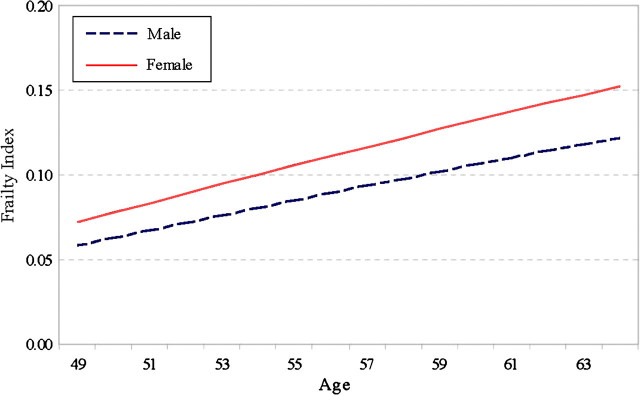
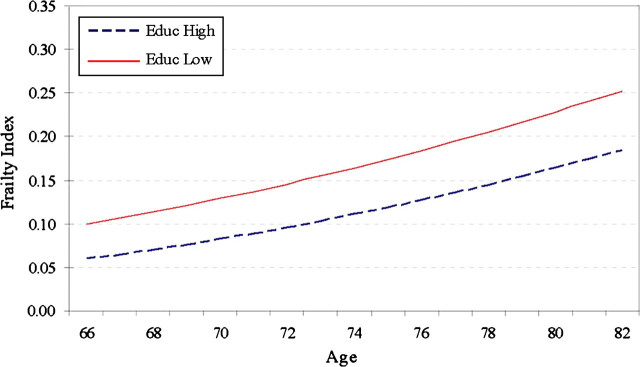
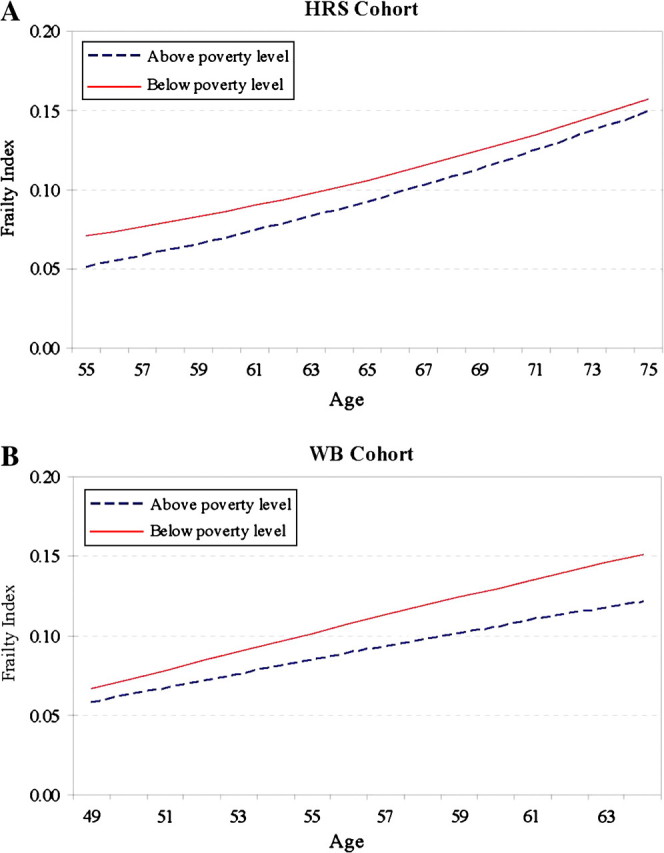
 which indicates the expected FI score when all the other variables are held constant (set at 0) or for the reference group. For women (sex = 1) at the age of 49, for instance, where (49–56) means the age value is centered around the cohort median age of 56, which is further divided by 10, as described in the text. Subsequent figures are constructed similarly.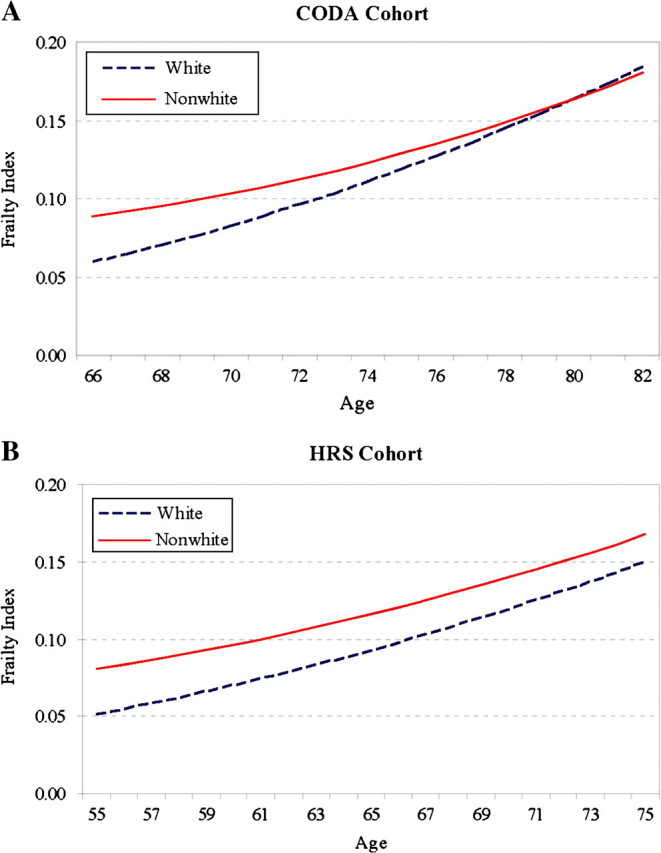
References
-
- Banks J, Marmot M, Oldfield Z, Smith JP. Disease and disadvantage in the United States and in England. Journal of the American Medical Association. 2006;295:2037–2045. - PubMed
-
- Bortz W., II. A conceptual framework of frailty: A review. Journal of Gerontology: Medical Sciences. 2002;57:M283–M288. - PubMed
-
- Finch CE. The biology of human longevity: Inflammation, nutrition, and aging in the evolution of life spans. Amsterdam: Elsevier; 2007.
-
- Finch CE, Crimmins EM. Inflammatory exposure and historical changes in human life spans. Science. 2004;305:1736–1739. - PubMed
Publication types
MeSH terms
Grants and funding
LinkOut - more resources
Full Text Sources
Medical
