


Intellectual enrichment is linked to cerebral efficiency in multiple sclerosis: functional magnetic resonance imaging evidence for cognitive reserve
- PMID: 20008455
- PMCID: PMC2822636
- DOI: 10.1093/brain/awp307
Intellectual enrichment is linked to cerebral efficiency in multiple sclerosis: functional magnetic resonance imaging evidence for cognitive reserve
Abstract
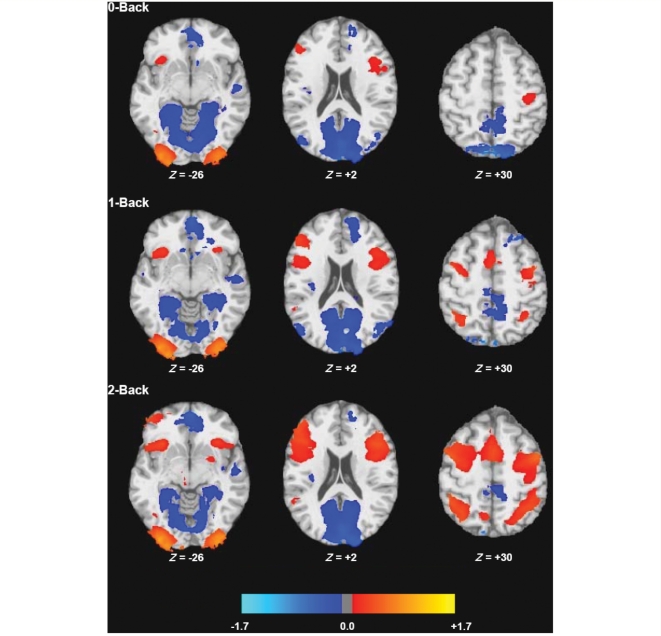
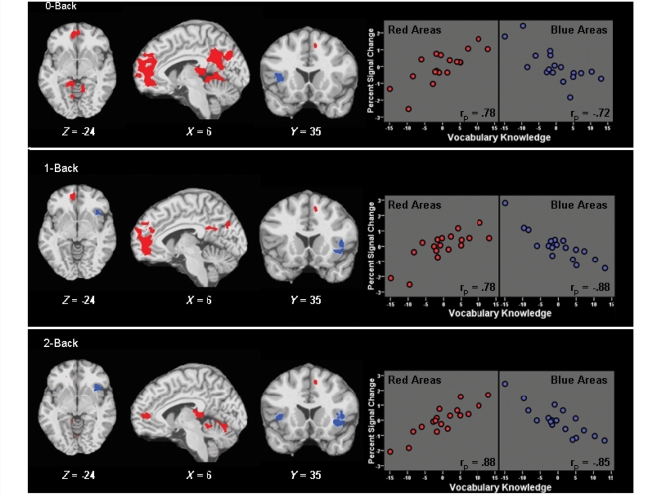
The cognitive reserve hypothesis helps to explain the incomplete relationship between brain disease and cognitive status in people with neurologic diseases, including Alzheimer's; disease and multiple sclerosis. Lifetime intellectual enrichment (estimated with education or vocabulary knowledge) lessens the negative impact of brain disease on cognition, such that people with greater enrichment are able to withstand more severe neuropathology before suffering cognitive impairment or dementia. The current research is the first to investigate directly the relationship between intellectual enrichment and an index of cerebral activity (the blood oxygen level dependent signal) in a neurologic sample. Multiple sclerosis patients completed a vocabulary-based estimate of lifetime intellectual enrichment. Disease severity was estimated with brain atrophy. Cognitive status was measured with the Symbol Digit Modalities Test. Cerebral activity (functional magnetic resonance imaging blood oxygen level dependent signal) and behavioural performance (accuracy, reaction time) were recorded during the visual N-Back working memory task (three levels of demand: 0-, 1-, 2-Back). All patients produced perfect/nearly perfect accuracy during lower demands (0- and 1-Back), and reaction time was unrelated to intellectual enrichment; however, voxelwise partial correlations controlling for brain atrophy revealed strong positive correlations between intellectual enrichment and cerebral activity within the brain's; default network (e.g. anterior and posterior cingulate corticies), indicating that patients with greater enrichment were able to maintain resting state activity during cognitive processing better. In turn, intellectual enrichment was negatively associated with prefrontal recruitment, suggesting that patients with lesser enrichment required more cerebral resources to perform the same cognitive task as patients with greater enrichment. This same pattern of enrichment-related cerebral activity was observed when cognitive demands increased (2-Back), and intellectual enrichment was negatively associated with reaction time. Principle components analysis revealed a single cognitive reserve network across tasks (greater default network, lesser prefrontal recruitment). Expression of this network almost fully mediated the positive relationship between intellectual enrichment and cognitive status (Symbol Digit Modalities Test). Also, expression of this network was positively associated with brain atrophy when controlling for cognitive status, indicating that patients with greater expression of this network can withstand more severe brain disease before exhibiting cognition similar to patients with lesser network expression. Of note, similar functional magnetic resonance imaging research with healthy adults has not found an association between intelligence and cerebral efficiency. The unique relationship between intellectual enrichment and cerebral efficiency in neurologic patients is consistent with the cognitive reserve hypothesis, which does not posit that enrichment leads to gains in neurocognitive functioning per se; rather, enrichment protects against neurocognitive decline secondarily to disease.
Figures
References
-
- Alexander GE, Furey ML, Grady CL, Pietrini P, Brady DR, Mentis MJ, et al. Association of premorbid intellectual function with cerebral metabolism in Alzheimer's; disease: implications for the cognitive reserve hypothesis. Am J Psychiat. 1997;154:165–172. - PubMed
-
- Ardekani BA, Guckemus S, Bachman A, Hoptman MJ, Wojtaszek M, Nierenberg J. Quantitative comparison of inter-subject volumetric MRI registration methods. J Neurosci Meth. 2005;142:67–76. - PubMed
-
- Bai F, Zhang Z, Yu H, Shi Y, Yuan Y, Zhu W, et al. Default-mode network activity distinguishes amnestic type mild cognitive impairment from healthy aging: a combined structural and resting-state functional MRI study. Neurosci Lett. 2008;438:111–115. - PubMed
-
- Benedict RH, Bruce JM, Dwyer MG, Abdelrahman N, Hussein S, Weinstock-Guttman B, et al. Neocortical atrophy, third ventricular width, and cognitive dysfunction in multiple sclerosis. Arch Neurol. 2006a;63:1301–1306. - PubMed
