Exploratory analysis of diabetic retinopathy progression through 3 years in a randomized clinical trial that compares intravitreal triamcinolone acetonide with focal/grid photocoagulation
- PMID: 20008708
- PMCID: PMC2872985
- DOI: 10.1001/archophthalmol.2009.308
Exploratory analysis of diabetic retinopathy progression through 3 years in a randomized clinical trial that compares intravitreal triamcinolone acetonide with focal/grid photocoagulation
Abstract
Objective: To compare the effect of intravitreal triamcinolone acetonide with focal/grid photocoagulation on the progression of diabetic retinopathy.
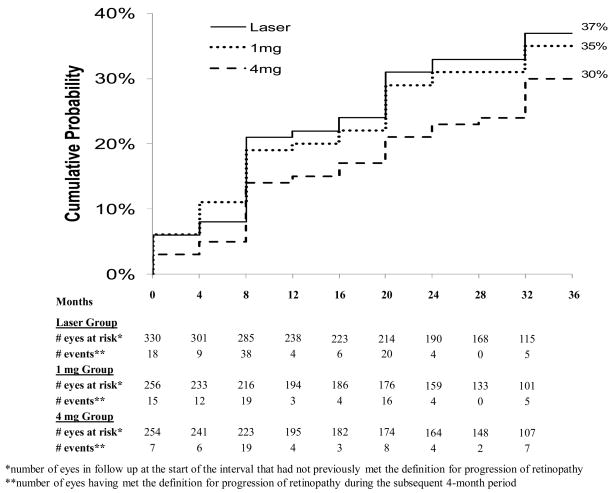
Methods: We performed an exploratory analysis of participants with diabetic macular edema randomly assigned to receive laser therapy or intravitreal triamcinolone acetonide (1 or 4 mg). Fundus photographs were obtained at baseline and 1, 2, and 3 years. The main outcome measure was progression to proliferative diabetic retinopathy or worsening of 2 or more severity levels on reading-center masked assessment of 7-field fundus photographs, plus additional eyes that received panretinal photocoagulation or had a vitreous hemorrhage.
Results: From July 15, 2004, through May 5, 2006, 840 eyes from 693 participants were enrolled in the study and randomly assigned to receive laser therapy (n = 330), 1 mg of triamcinolone acetonide (n = 256), or 4 mg of triamcinolone acetonide (n = 254). The cumulative probability of progression of retinopathy at 2 years was 31% (laser group), 29% (1-mg group), and 21% (4-mg group) (P = .64 in the 1-mg group and .005 in the 4-mg group compared with the laser group). These differences appeared to be sustained at 3 years.
Conclusions: Intravitreal triamcinolone acetonide (4 mg) appeared to reduce the risk of progression of diabetic retinopathy. Given the exploratory nature of this analysis and because intravitreal triamcinolone adverse effects include cataract formation and glaucoma, use of this treatment merely to reduce the rates of progression of proliferative diabetic retinopathy or worsening of the level of diabetic retinopathy does not seem warranted at this time.
Figures
References
-
- The Diabetic Retinopathy Study Research Group. Preliminary report on effects of photocoagulation therapy. Am J Ophthalmol. 1976;81(4):383–96. - PubMed
-
- Aiello LP. Angiogenic pathways in diabetic retinopathy. N Engl J Med. 2005;353:839–41. - PubMed
-
- Diabetes Control and Complication Trial Research Group. The effect of intensive diabetic treatment on the progression of diabetic retinopathy in insulin-dependent diabetes mellitus. Arch Ophthalmol. 1995;113:36–51. - PubMed
-
- UK Prospective Diabetes Study Group. Intensive blood-glucose control with sulphonylureas or insulin compared with conventional treatment and risk of complications in patients with type 2 diabetes (UKPDS 33). UK Prospective Diabetes Study (UKPDS) Group. Lancet. 1998;352:837–53. - PubMed
-
- Ferris FL, 3rd, Patz A. Macular edema. A complication of diabetic retinopathy. Surv Ophthalmol. 1984;28 (Suppl):452–61. - PubMed