


In vivo subcellular targeting analysis validates a novel peroxisome targeting signal type 2 and the peroxisomal localization of two proteins with putative functions in defense in Arabidopsis
- PMID: 20009535
- PMCID: PMC2884121
- DOI: 10.4161/psb.5.2.10412
In vivo subcellular targeting analysis validates a novel peroxisome targeting signal type 2 and the peroxisomal localization of two proteins with putative functions in defense in Arabidopsis
Abstract
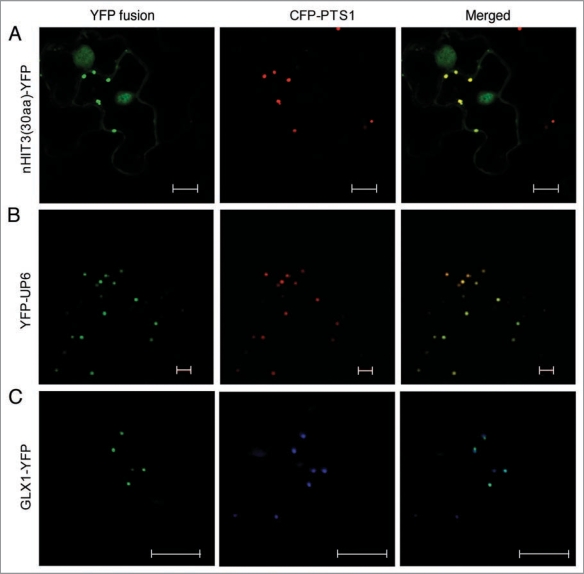
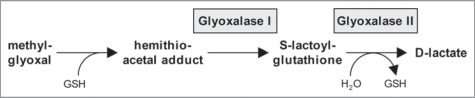
Plant peroxisomes are essential organelles that house diverse metabolic activities. To understand the full spectrum of peroxisomal functions, we recently performed a proteomic analysis of Arabidopsis leaf peroxisomes followed by in vivo subcellular targeting validation of some novel proteins. Here, we continue with the targeting analysis and demonstrate that the nonapeptide RVx5HF, which is present near the N terminus of the newly identified peroxisomal protein, HIT3 (histidine triad family protein 3), is a functional peroxisome targeting signal type 2 (PTS2). In addition, we have confirmed the peroxisomal localization of UP6 (unknown protein 6) and GLX1 (glyoxalase 1 homolog), two proteins with possible roles in stress responses and glutathione-dependent detoxification, respectively. These data, together with results from our previous analysis of the peroxisomal proteome, reinforce the notion that peroxisomes are involved in various stress responses and suggest glutathione as a major antioxidant in plant peroxisomes.
Figures
Comment on
-
In-depth proteome analysis of Arabidopsis leaf peroxisomes combined with in vivo subcellular targeting verification indicates novel metabolic and regulatory functions of peroxisomes.Plant Physiol. 2009 May;150(1):125-43. doi: 10.1104/pp.109.137703. Epub 2009 Mar 27. Plant Physiol. 2009. PMID: 19329564 Free PMC article.
References
-
- Reumann S, Quan S, Aung K, Yang P, Manandhar-Shrestha K, Holbrook D, et al. In-depth proteome analysis of Arabidopsis leaf peroxisomes combined with in vivo subcellular targeting verification indicates novel metabolic and regulatory functions of peroxisomes. Plant Physiol. 2009;150:125–143. - PMC - PubMed
Publication types
LinkOut - more resources
Full Text Sources
Molecular Biology Databases
Research Materials
Miscellaneous
