


Human dopamine beta-hydroxylase (DBH) regulatory polymorphism that influences enzymatic activity, autonomic function, and blood pressure
- PMID: 20009769
- PMCID: PMC2860271
- DOI: 10.1097/HJH.0b013e328332bc87
Human dopamine beta-hydroxylase (DBH) regulatory polymorphism that influences enzymatic activity, autonomic function, and blood pressure
Abstract
Rationale: Dopamine beta-hydroxylase (DBH) plays an essential role in catecholamine synthesis by converting dopamine into norepinephrine. Here we systematically investigated DBH polymorphisms associated with enzymatic activity as well as autonomic and blood pressure (BP)/disease phenotypes in vivo.
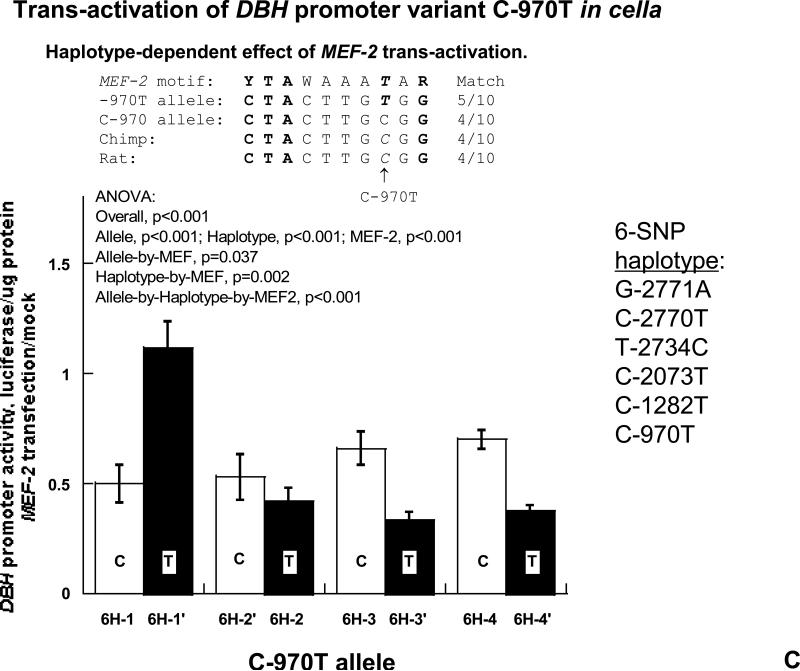
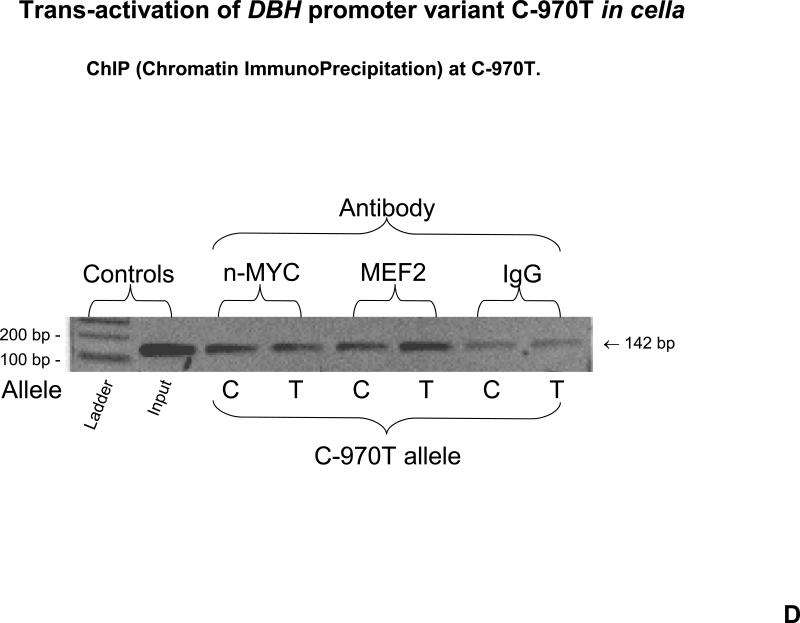
Methods and results: Seventy genetic variants were discovered at the locus; across ethnicities, much of the promoter was spanned by a 5' haplotype block, with a larger block spanning the promoter in whites than blacks. DBH secretion was predicted by genetic variants in the DBH promoter, rather than the amino acid coding region. The C allele of common promoter variant C-970T increased plasma DBH activity, epinephrine excretion, the heritable change in BP during environmental stress in twin pairs, and also predicted higher basal BP in three independent populations. Mutagenesis and expression studies with isolated/transfected DBH promoter/luciferase reporters in chromaffin cells indicated that variant C-970T was functional. C-970T partially disrupted consensus transcriptional motifs for n-MYC and MEF-2, and this variant affected not only basal expression, but also the response to exogenous/co-transfected n-MYC or MEF-2; during chromatin immunoprecipitation, these two endogenous factors interacted with the motif.
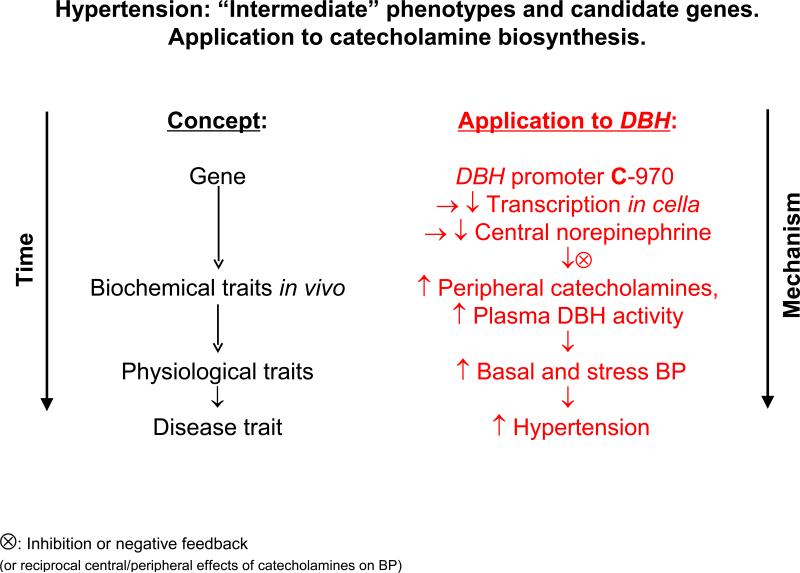
Conclusions: These results suggest that common DBH promoter variant C-970T plays a role in the pathogenesis of human essential hypertension: common genetic variation in the DBH promoter region seems to initiate a cascade of biochemical and physiological changes eventuating in alterations of basal BP. These observations suggest new molecular strategies for probing the pathophysiology, risk, and rational treatment of systemic hypertension.
Figures


References
-
- Kim CH, Zabetian CP, Cubells JF, Cho S, Biaggioni I, Cohen BM, Robertson D, et al. Mutations in the dopamine beta-hydroxylase gene are associated with human norepinephrine deficiency. Am J Med Genet. 2002;108:140–147. - PubMed
-
- De Potter WP, De Schaepdryver AF, Smith AD. Release of chromogranin A and dopamine-beta-hydroxylase from adrenergic nerves during nerve stimulation. Acta Physiol Scand Suppl. 1970;357:8. - PubMed
-
- Weinshilboum RM, Thoa NB, Johnson DG, Kopin IJ, Axelrod J. Proportional release of norepinephrine and dopamine-beta-hydroxylase from sympathetic nerves. Science. 1971;174:1349–1351. - PubMed
-
- O'Connor DT, Cervenka JH, Stone RA, Levine GL, Parmer RJ, Franco-Bourland RE, Madrazo I, et al. Dopamine beta-hydroxylase immunoreactivity in human cerebrospinal fluid: properties, relationship to central noradrenergic neuronal activity and variation in Parkinson's disease and congenital dopamine beta-hydroxylase deficiency. Clin Sci (Lond) 1994;86:149–158. - PubMed
-
- Weinshilboum RM, Raymond FA, Elveback LR, Weidman WH. Serum dopamine-beta-hydroxylase activity: sibling-sibling correlation. Science. 1973;181:943–945. - PubMed
Publication types
MeSH terms
Substances
Grants and funding
LinkOut - more resources
Full Text Sources
Other Literature Sources
Medical
Miscellaneous
