


Trends in Method of Diagnosis of Type 2 Diabetes Mellitus: Results from SHIELD
- PMID: 20011059
- PMCID: PMC2778350
- DOI: 10.1155/2009/796206
Trends in Method of Diagnosis of Type 2 Diabetes Mellitus: Results from SHIELD
Abstract
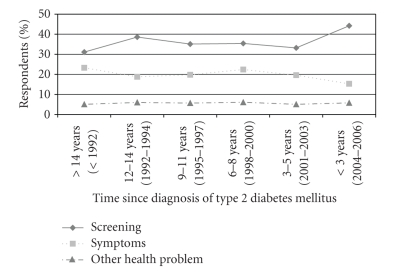
Aims. This study assessed whether recent screening recommendations have led to increased diagnosis of type 2 diabetes mellitus (T2DM) through routine screening. Methods. Respondents to the 2006 US SHIELD survey reported whether a physician told them they had T2DM, age at diagnosis, specialty of the physician who made the diagnosis, and whether the diagnosis was made after having symptoms, during routine screening, or when being treated for another health problem. Results. Of 3 022 T2DM respondents, 36% of respondents reported that T2DM diagnosis was made during routine screening alone, 20% after having symptoms alone, and 6% when being treated for another health problem alone. The proportion of T2DM respondents reporting a diagnosis based only on screening increased approximately 42% over a 15+-year time span (absolute increase from 31% to 44%) (P < .001), whereas symptom-based diagnosis did not change significantly (P = .10). T2DM was diagnosed primarily by family physicians (88.3%). Conclusion. These findings highlight the importance of regular screening for diabetes and the vital role of primary care physicians in recognizing individuals with T2DM.
Figures
References
-
- Centers for Disease Control and Prevention. National diabetes fact sheet: general information and national estimates on diabetes in the United States, 2005. U.S. Department of Health and Human Services, Centers for Disease Control and Prevention, Atlanta, Ga, USA, 2005.
-
- Harris MI, Klein R, Welborn TA, Knuiman MW. Onset of NIDDM occurs at least 4–7 yr before clinical diagnosis. Diabetes Care. 1992;15(7):815–819. - PubMed
-
- American Diabetes Association. Diabetes symptoms. Accessed April 7, 2009 http://www.diabetes.org/diabetes-symptoms.jsp.
-
- American Diabetes Association. Screening for type 2 diabetes. Diabetes Care. 2004;27(supplement 1):S11–S14.
LinkOut - more resources
Full Text Sources
