


Management of enterocutaneous fistulas
- PMID: 20011252
- PMCID: PMC2780046
- DOI: 10.1055/s-2004-828654
Management of enterocutaneous fistulas
Abstract
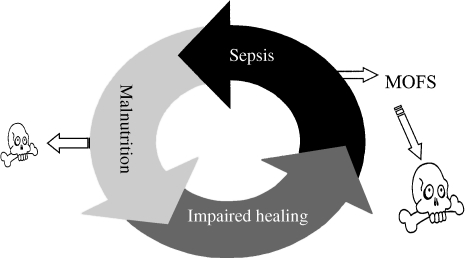
Despite advances in antimicrobial chemotherapy, nutritional support, and perioperative critical care, the development of an enterocutaneous fistula continues to represent a major therapeutic challenge, with appreciable morbidity and mortality. Specific problems that must be addressed for the successful management of patients with enterocutaneous fistulas are the control of sepsis, maintenance of adequate fluid and electrolyte balance, provision of adequate and complication-free nutritional support, and skin-stoma care. In addition, many patients with postoperative intestinal fistulation suffer from significant psychological morbidity, which must be addressed during often prolonged periods of rehabilitation. The complex nature of the care required for successful management of patients with enterocutaneous fistulas mandates a multidisciplinary team approach, with specialist nurses, dieticians, pharmacists, radiologists, physicians, and surgeons all having important roles to play.
Keywords: Sepsis; fistuloclysis; laparostomy; parenteral nutrition.
Figures
References
-
- Gomella L G, Lefor A T. Surgery on Call. Norwalk, CT: Appleton-Lange; 1990.
-
- Nightingale J MD. In: Nightingale JMD, editor. Intestinal Failure. London: Greenwich Medical Media; 2001. The short bowel. pp. 177–198.
-
- Nightingale J MD, Walker E R, Farthing M JG, Lennard-Jones J E. Effect of omeprazole on intestinal output in the short bowel syndrome. Aliment Pharmacol Ther. 1991;5:405–412. - PubMed
-
- Paran H, Neufeld D, Kaplan O, Klausner J, Freund U. Octreotide for treatment of postoperative alimentary fistulas. World J Surg. 1995;19:430–433. - PubMed
LinkOut - more resources
Full Text Sources
Other Literature Sources
