


Medical treatment of ulcerative colitis
- PMID: 20011280
- PMCID: PMC2780076
- DOI: 10.1055/s-2004-823066
Medical treatment of ulcerative colitis
Abstract
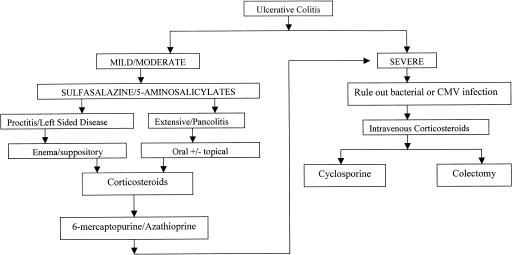
Ulcerative colitis is a chronic inflammatory disease of the colon with an increasing incidence worldwide. The medical management of this disease continues to expand as drugs to induce and maintain remission are sought to avoid the need for colectomy. This article will review the standard of care for the treatment of mild, moderate, and severe ulcerative colitis. The efficacy, optimal usage, and adverse events profile of agents such as 5-aminosalicylates, corticosteroids, azathioprine, and cyclosporine will be discussed and an algorithm for their use will be developed. Alternative and experimental therapies such as monoclonal antibodies, probiotics, and heparin will also be addressed.
Keywords: Ulcerative colitis; cyclosporine; medical therapy.
Figures
References
-
- Andres P G, Friedman L S. Epidemiology and the natural course of inflammatory bowel disease. Gastroenterol Clin North Am. 1999;28:255–281. - PubMed
-
- Halfvarson J, Bodin L, Tysk C, Lindberg E, Jarnerot G. Inflammatory bowel disease in a Swedish twin cohort: a long-term follow-up of concordance and clinical characteristics. Gastroenterology. 2003;124:1767–1773. - PubMed
-
- Andersson R E, Olaison G, Tysk C, Ekbom A. Appendectomy and protection against ulcerative colitis. N Engl J Med. 2001;344:808–814. - PubMed
-
- Moum B, Vatn M H, Ekbom A, et al. Incidence of inflammatory bowel disease in southeastern Norway: evaluation of methods after 1 year of registration. Southeastern Norway IBD Study Group of Gastroenterologists. Digestion. 1995;56:377–381. - PubMed
LinkOut - more resources
Full Text Sources
Other Literature Sources
