


The process of deciding about prophylactic surgery for breast and ovarian cancer: Patient questions, uncertainties, and communication
- PMID: 20014126
- PMCID: PMC3152786
- DOI: 10.1002/ajmg.a.33068
The process of deciding about prophylactic surgery for breast and ovarian cancer: Patient questions, uncertainties, and communication
Abstract
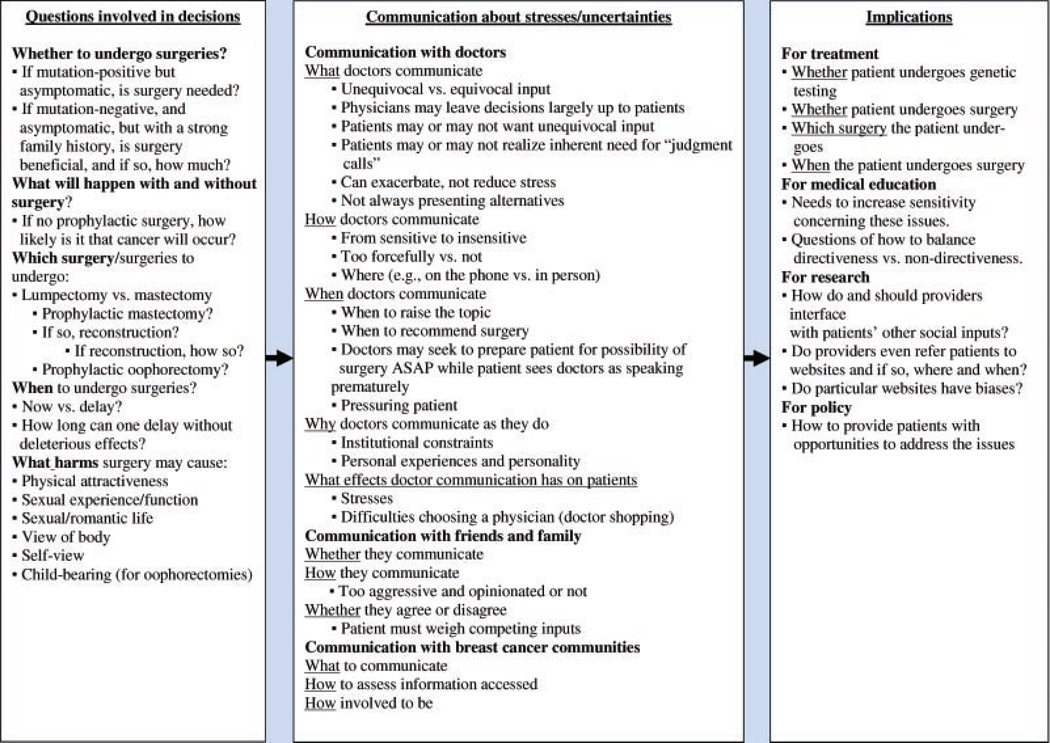
Many, women who have, or are at risk for, BRCA, 1/2 mutations or breast cancer decline prophylactic surgery, but questions remain as to how they make and experience these decisions. Our methods consisted of interviewing 32 women for 2 hr each; 19 were tested, 20 were symptomatic. Our results showed that these surgical options forced women to confront questions, involving stresses and uncertainties, regarding: implications of test results, prognoses with and without surgery, and effects of surgery (e.g., on self-image). Given these dilemmas, many women turned to doctors who then ranged in what and how they communicated about these issues, and how strongly they offered input. Some patients felt disappointed at provider non-directiveness, while others found providers too directive. Patients turned to family members and friends, who also ranged in how and what they communicated, and whether they agreed with the patient and/or each other. Many women turned to patient communities, but then had to decide how involved to be, and what information to provide or accept. These data suggest that providers and others may need to be more aware of the series of questions, involving stresses and uncertainties, that these women face, and the complex roles providers themselves may play. These data highlight needs for physicians to be able to address these issues flexibly, gauging patient preferences for information and paternalism (vs. autonomy). These data suggest areas for future research: for example, on how providers decide whether, what and how to communicate about these issues, and how these choices shape treatment decisions.
Figures
References
-
- American Board of Genetic Counseling. [Accessed June 16, 2008];2008 http://www.abgc.net/english/View.asp?x=1607.
-
- Anderson K, Jacobson JS, Heitjan DF, Graff Zivin J, Hershman D, Neugut AI, Grann VR. Cost-effectiveness of preventive strategies for women with BRCA1 or BRCA2 mutation. Ann Intern Med. 2006;144:397–406. - PubMed
-
- Antill Y, Reynolds J, Young M, Kirk J, Tucker K, Bogtstra T, Wong S, Dudding T, Di Iulio J, Phillips K. Risk-reducing surgery in women with family susceptibility for breast and/or ovarian cancer. Eur J Cancer. 2006;42:621–628. - PubMed
-
- Baars MJH, Henneman L, ten Kate LP. Deficiency of knowledge of genetics and genetic tests among general practitioners, gynecologists, and pediatricians: A global problem. Genet Med. 2005;7:605–610. - PubMed
-
- Barker KK. Electronic support groups, patient-consumers, and medicalization: The case of contested illness. J Health Soc Behav. 2008;49:20–36. - PubMed
Publication types
MeSH terms
Grants and funding
LinkOut - more resources
Full Text Sources
Medical
