


Is anticonvulsant treatment of mania a class effect? Data from randomized clinical trials
- PMID: 20015083
- PMCID: PMC6493801
- DOI: 10.1111/j.1755-5949.2009.00089.x
Is anticonvulsant treatment of mania a class effect? Data from randomized clinical trials
Abstract
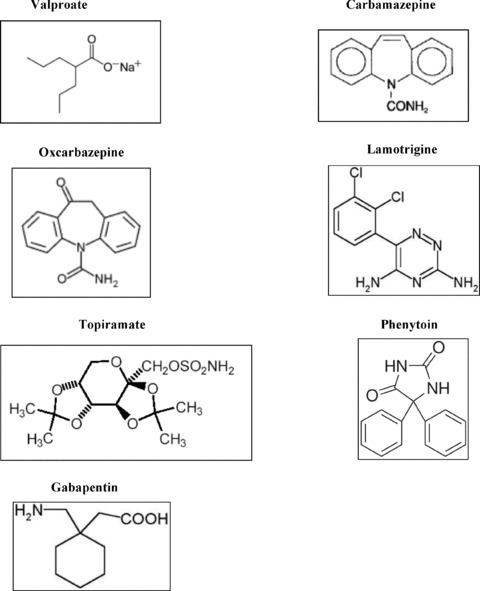
Our aim was to evaluate the efficacy and tolerability of anticonvulsant agents for the treatment of acute bipolar mania and ascertain if their effects on mania are a "class" effect. We conducted a systematic review of randomized controlled trials (RCTs) with placebo or active comparator, in acute bipolar mania in order to summarize available data on anticonvulsant treatment of mania/mixed episodes. We searched (PubMed/MEDLINE) with the combination of the words "acute mania" and "clinical trials" with each one of the following words: "anticonvulsants/antiepileptics,""valproic/valproate/divalproex,""carbamazepine,""oxcarbazepine,""lamotrigine,""gabapentin,""topiramate,""phenytoin,""zonisamide,""retigabine,""pregabalin,""tiagabine,""levetiracetam,""licarbazepine,""felbamate," and "vigabatrin." Original articles were found until November 1, 2008. Data from 35 randomized clinical trials suggested that not all anticonvulsants are efficacious for the treatment of acute mania. Valproate showed greater efficacy in reducing manic symptoms, with response rates around 50% compared to a placebo effect of 20-30%. It appears to have a more robust antimanic effect than lithium in rapid cycling and mixed episodes. As valproate, the antimanic effects of carbamazepine have been demonstrated. Evidences did not support the efficacy of the gabapentin, topiramate as well as lamotrigine as monotherapy in acute mania and mixed episodes. Oxcarbazepine data are inconclusive and data regarding other anticonvulsants are not available. Anticonvulsants are not a class when treating mania. While valproate and carbamazepine are significantly more effective than placebo, gabapentin, topiramate, and lamotrigine are not. However, some anticonvulsants may be efficacious in treating some psychiatric comorbidities that are commonly associated to bipolar illness.
© 2009 Blackwell Publishing Ltd.
Conflict of interest statement
Eduard Vieta received grant/research support from Almirall, Astra‐Zeneca, Bristol‐Myers Squibb, Eli Lilly, the European 7th Framework Program, GlaxoSmithKline, Janssen‐Cilag, Novartis, Organon, Otsuka, Pfizer, Sanofi‐Aventis, Seny Foundantion, Servier, the Spanish Ministry of Health (CIBERSAM), the Spanish Ministry of Science and Education, and the Sr¡tanley Medical Research Institute. Eduard Vieta has served as consultant for Astra‐Zeneca, Bristol‐Myers, Squibb, Eli Lilly, Forest Research Institute, GlaxoSmithKline, Janssen, Jazz, Lundbeck, Novartis, Organon, Otsuka, Pfizer, Sanofi‐Aventis, Servier, and UBC. He has been a member of the speakers boards from Almirall, Astra‐Zeneca, Bristol‐Myers, Eli Lilly, Esteve, GlaxoSmithKline, Janssen, Lundbeck, Novartis, Organon, Otsuka, Pfizer, Sanofi‐Aventis, and Servier.
Adriane Ribeiro Rosa has been a member of the speakers boards from Astra‐Zeneca.
Dr. Fountoulakis is member of the International Consultation Board of Wyeth for desvenlafaxine, national coordinator for the trial CL3‐20098‐062 and has received honoraria for lectures from AstraZeneca, Janssen‐Cilag, Eli‐Lilly, and research grants from AstraZeneca, Wyeth, Pfizer, Janssen, Lilly, and Pfizer Foundation.
Dr. Xenia Gonda has received travel grants from Richter, GlaxoSmithkline, Schering plough, Organon, Krka, and Lilly.
References
-
- Hirschfeld RMA, Keck CPE, Gitlin MJ, Price LH, Sajatovic M, Suples M, Thase ME, Perlis RH. Practice Guideline for the treatment of patients with bipolar disorder. Third Edition, Am J Psychiatry, in press.
-
- Bowden CL, Karren NU. Anticonvulsants in bipolar disorder. Aust N Z J Psychiatry 2006;40:386–393. - PubMed
-
- Fountoulakis KN, Vieta E. Treatment of bipolar disorder: A systematic review of available data and clinical perspectives. Int J Neuropsychopharmacol 2008;11:999–1029. - PubMed
-
- Vieta E, Sugranyes G, Goikolea JM. New anticonvulsants in bipolar disorder: All that glisters is not gold. Adv Schizophr Clin Psychitray 2008;4:106–113.
Publication types
MeSH terms
Substances
LinkOut - more resources
Full Text Sources
Medical
Research Materials
