


Bicarbonate-sensing soluble adenylyl cyclase is an essential sensor for acid/base homeostasis
- PMID: 20018667
- PMCID: PMC2806762
- DOI: 10.1073/pnas.0911790107
Bicarbonate-sensing soluble adenylyl cyclase is an essential sensor for acid/base homeostasis
Abstract
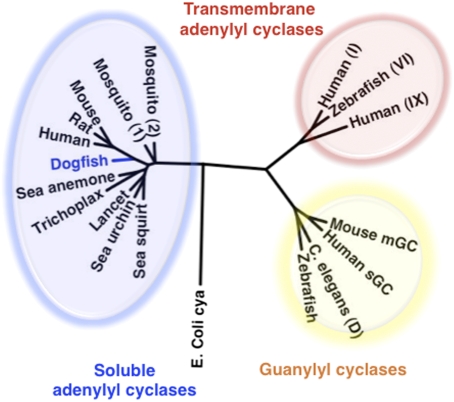
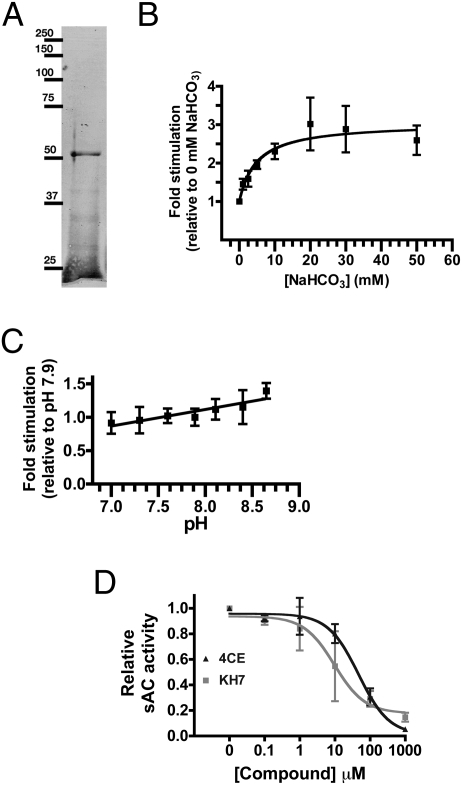
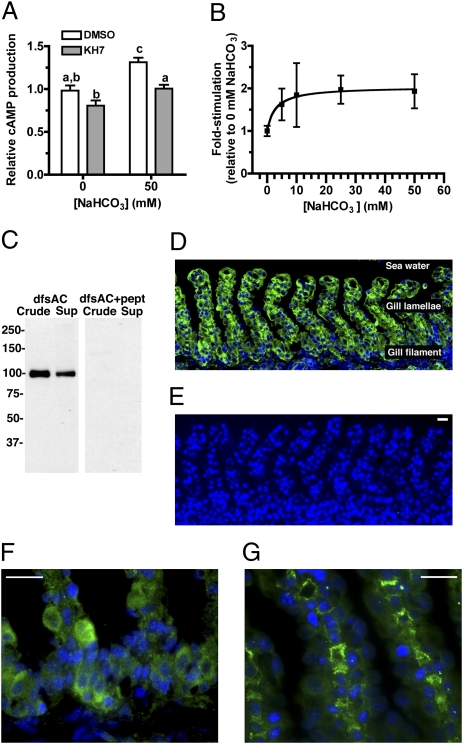
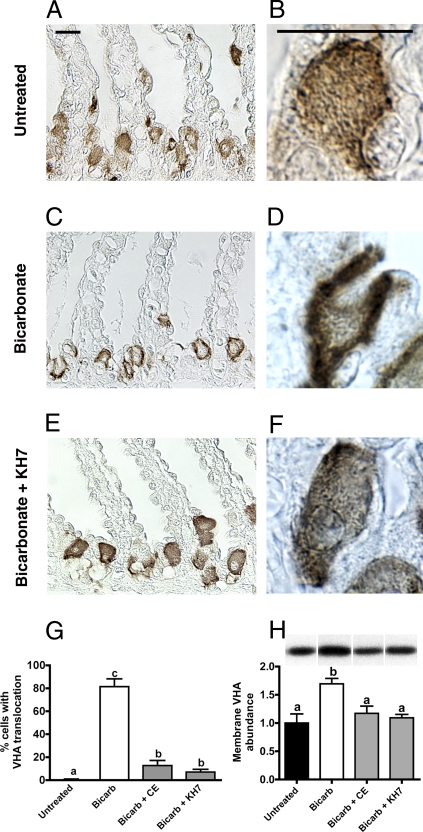
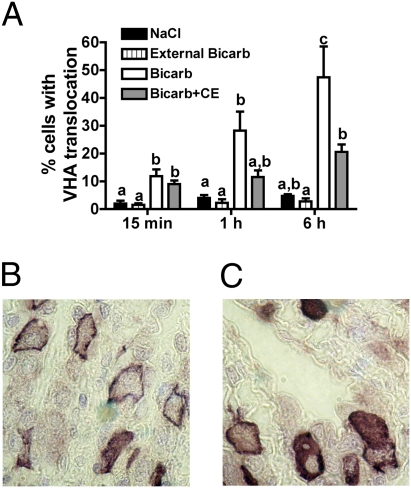
pH homeostasis is essential for life, yet it remains unclear how animals sense their systemic acid/base (A/B) status. Soluble adenylyl cyclase (sAC) is an evolutionary conserved signaling enzyme that produces the second messenger cAMP in response to bicarbonate ions (HCO(3)(-)). We cloned the sAC ortholog from the dogfish, a shark that regulates blood A/B by absorbing and secreting protons (H(+)) and HCO(3)(-) at its gills. Similar to mammalian sAC, dogfish soluble adenylyl cyclase (dfsAC) is activated by HCO(3)(-) and can be inhibited by two structurally and mechanistically distinct small molecule inhibitors. dfsAC is expressed in the gill epithelium, where the subset of base-secreting cells resides. Injection of inhibitors into animals under alkaline stress confirmed that dfsAC is essential for maintaining systemic pH and HCO(3)(-) levels in the whole organism. One of the downstream effects of dfsAC is to promote the insertion of vacuolar proton pumps into the basolateral membrane to absorb H(+) into the blood. sAC orthologs are present throughout metazoans, and mammalian sAC is expressed in A/B regulatory organs, suggesting that systemic A/B sensing via sAC is widespread in the animal kingdom.
Conflict of interest statement
The authors declare no conflict of interest.
Figures
References
-
- Chen Y, et al. Soluble adenylyl cyclase as an evolutionarily conserved bicarbonate sensor. Science. 2000;289:625–628. - PubMed
-
- Litvin TN, Kamenetsky M, Zarifyan A, Buck J, Levin LR. Kinetic properties of “soluble” adenylyl cyclase. Synergism between calcium and bicarbonate. J Biol Chem. 2003;278:15922–15926. - PubMed
Publication types
MeSH terms
Substances
Grants and funding
LinkOut - more resources
Full Text Sources
Other Literature Sources
