


Chemical carcinogenesis of the gastrointestinal tract in rodents: an overview with emphasis on NTP carcinogenesis bioassays
- PMID: 20019352
- PMCID: PMC3166531
- DOI: 10.1177/0192623309356452
Chemical carcinogenesis of the gastrointestinal tract in rodents: an overview with emphasis on NTP carcinogenesis bioassays
Abstract
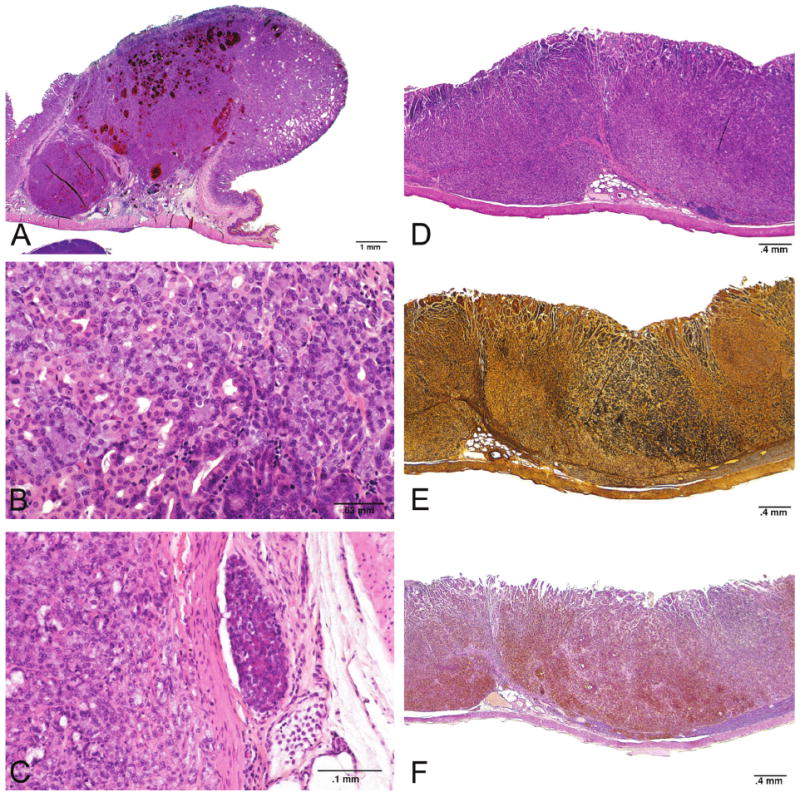
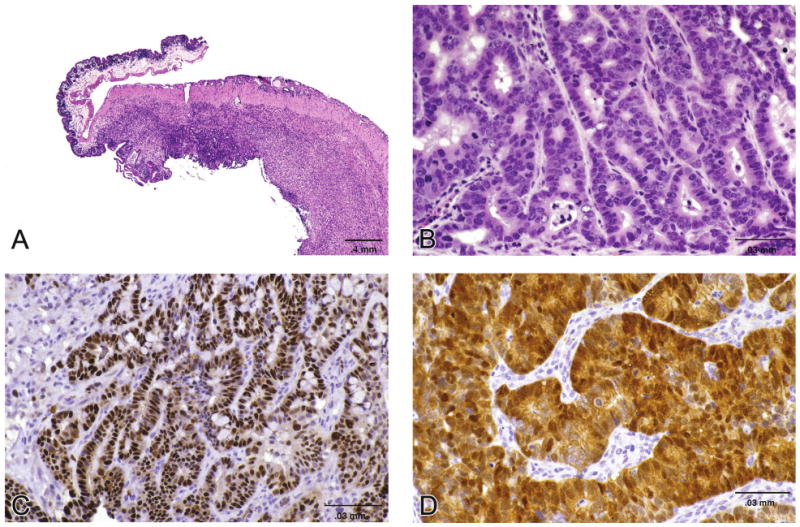
Cancers of the stomach and large intestine (LI) are the second and fourth leading causes of human cancer mortality. A review of the National Toxicology Program (NTP) database and the Carcinogenic Potency Database (CPDB) reveals that chemically induced neoplasms of the gastrointestinal tract (GIT) are relatively common. Within the GIT, epithelial tumors of the forestomach in mice and rats and LI of the rat are most common. Generally, there is a high species concordance for forestomach with at least 26 chemicals inducing tumors in both species. Glandular stomach tumors are rare, and the few reported are usually neuroendocrine tumors (carcinoids) originating from the enterochromaffin-like (ECL) cells. Of 290 carcinogenic agents identified by the NTP, 19 (7%) caused intestinal neoplasia, 14 in the rat and 5 in the mouse. Neoplasms occurred in both males and females, exclusively in the small intestine (SI) of the mouse and in the LI or both SI and LI in the rat. Enteric carcinogens (NTP) frequently induced neoplasms at other alimentary sites (oral cavity, esophagus, and stomach). In conclusion, the most common induced GIT tumors are squamous neoplasms of the forestomach, glandular neoplasms of the stomach are rare, and rats appear more prone to developing LI (colorectal) cancer compared to mice.
Figures




References
-
- Betton GR, Dormer CS, Wells T, Pert P, Price CA, Buckley P. Fundic mucosal ECL hyperplasi a and carcinoids in rodents following chronic administration of the histamine H2-receptor antagonist SK&F 93479 and other antisecretory agents. Toxicol Pathol. 1987;15:365. - PubMed
-
- Betton GR, Dormer CS, Wells T, Pert P, Price CA, Buckley P. Gastric ECL-cell hyperplasia and carcinoids in rodents following chronic administration of H2-antagonists SK&F 93479 and oxmetidine and omeprazole. Toxicol Pathol. 1988;16:2–98. - PubMed
-
- Carlsson E, Havu N, Mattsson H, Ekman L. Gastrin and gastric enterochromaffin-like cell carcinoids in the rat. Digestion. 1990;47:17–23. - PubMed
-
- Corpet DE, Pierre F. How good are rodent models of carcinogenesis in predicting efficacy in humans? A systematic review and meta-analysis of colon chemoprevention in rats, mice and men. Eur J Cancer. 2005;41:1911–22. - PubMed
Publication types
MeSH terms
Grants and funding
LinkOut - more resources
Full Text Sources
