


Joubert syndrome: Report of a neonatal case
- PMID: 20019935
- PMCID: PMC2791553
- DOI: 10.1093/pch/8.8.499
Joubert syndrome: Report of a neonatal case
Abstract
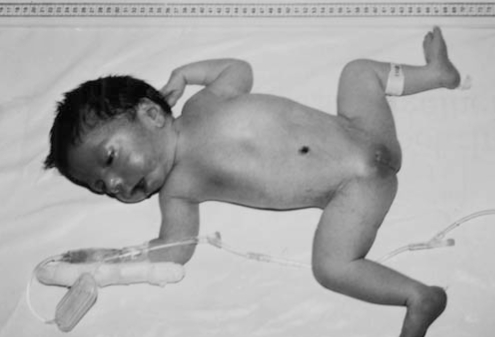
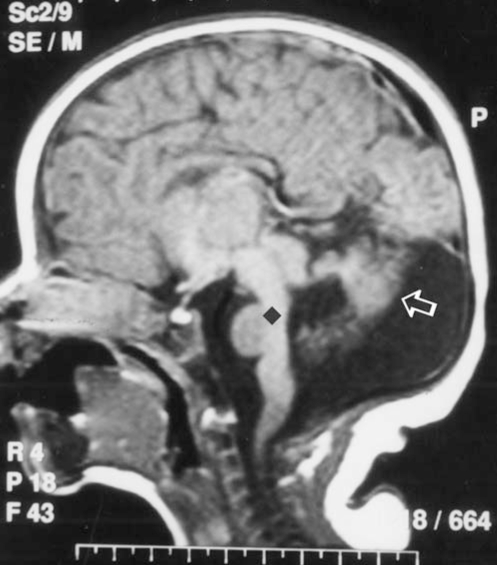
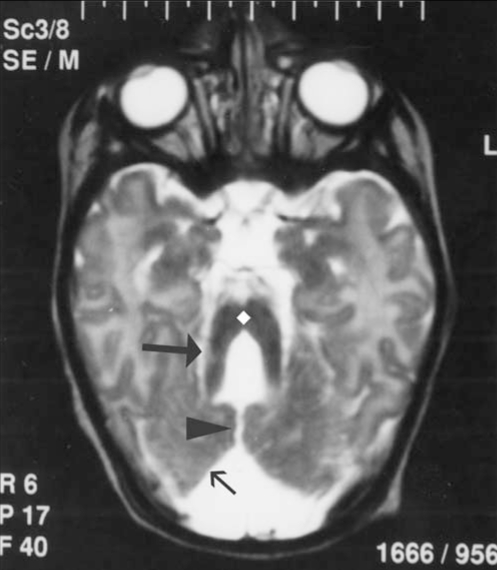
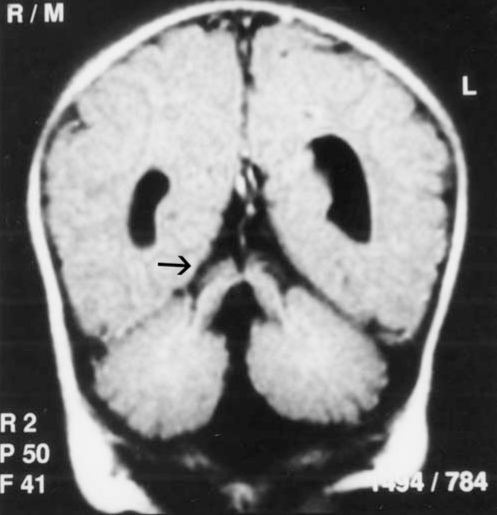
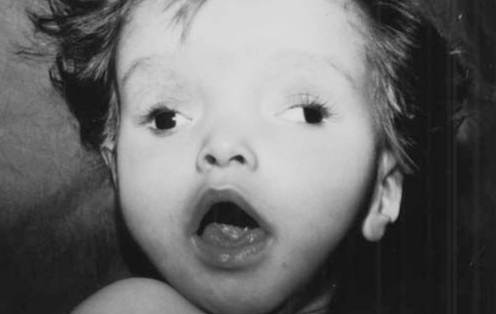
Joubert syndrome is an autosomal recessive disorder that is characterized by a variable combination of central nervous system, respiratory and eye anomalies. It is a syndrome with a variable phenotype: partial or complete absence of the cerebellar vermis is seen in all patients, while other cardinal findings include episodic tachypnea and apnea in the neonatal period, jerky eye movements, hypotonia, severe mental handicap, developmental delay, ataxia and impaired equilibrium. Even within sibships the phenotype may vary, making it difficult to establish the exact clinical diagnostic boundaries of Joubert syndrome. A case of Joubert syndrome in a newborn is reported and the importance of recognizing the syndrome in the neonatal period so that specific and effective supportive measures can be started as soon as possible is stressed.
Le syndrome de Joubert est un trouble récessif autosomique caractérisé par une association variable d’anomalies des systèmes nerveux central, respiratoire et oculaire. C’est un syndrome au phénotype variable : tous les patients présentent une absence partielle ou complète du vermis cérébelleux et, parmi les autres observations primordiales, une tachypnée et une apnée épisodiques pendant la période néonatale, de brusques mouvements oculaires, une hypotonie, un handicap intellectuel marqué, un retard du développement, une ataxie et une atteinte de l’équilibre. Même au sein de la fratrie, le phénotype peut varier, ce qui rend difficile l’établissement de balises diagnostiques cliniques exactes pour le syndrome de Joubert. Le cas d’un syndrome de Joubert chez un nouveau-né est présenté, et est soulignée l’importance de dépister le syndrome pendant la période néonatale, pour que des mesures de soutien précises et efficaces puissent être mises en place le plus rapidement possible.
Keywords: Abnormal respiratory pattern; Ataxia; Cerebellar hypoplasia; Joubert syndrome; Newborn.
Figures
References
-
- Joubert M, Eisenring JJ, Robb JP, Anderman F. Familial agenesis of the cerebellar vermis. A syndrome of episodic hyperpnea, abnormal eye movements, ataxia and mental retardation. Neurology. 1969;19:813–25. - PubMed
-
- Boltshauser E, Isler W. Episodic hyperpnea, abnormal eye movements, retardation, ataxia, associated with dysplasia of the cerebellar vermis. Neuropadiatrie. 1977;8:57–66. - PubMed
-
- Saraiva JM, Baraitser M. JS Joubert syndrome: A review. Am J Med Genet. 1992;43:726–31. - PubMed
-
- Steinlin M, Schmid M, Landau K, Boltshauser E. Follow-up in children with Joubert syndrome. Neuropediatrics. 1997;28:204–11. - PubMed
-
- Maria BL, Hoang KB, Tusa RJ, et al. ‘Joubert syndrome’ revisited: Key ocular motor signs with magnetic resonance imaging correlation. J Child Nerol. 1977;12:423–30. - PubMed
Publication types
LinkOut - more resources
Full Text Sources